The laminate kitchen floor was cold under my socks at 5:12 in the morning when the coffee pot finished its sputter, but I barely noticed because my hands were still shaking from the night before.
Simon and Michelle had left our house ten minutes earlier, their taillights cutting red arcs through the fog on our gravel road, leaving behind a four-page document that felt more like a prison sentence than a birth plan.
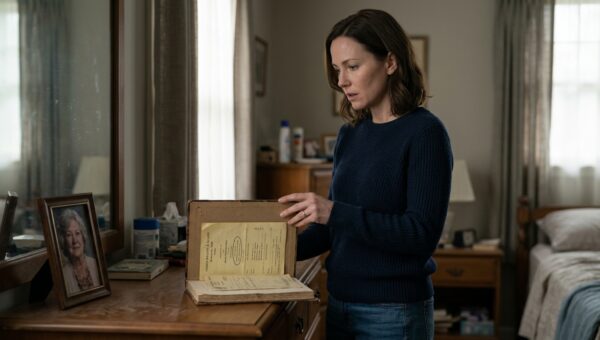
I stood there staring at the printed pages on the counter, remembering how desperate they looked last year when they first sat at this exact table and begged me to carry their baby.
They had struggled with infertility for close to a decade. They had poured thousands of dollars into failed IVF rounds and even suffered the agony of a previous surrogacy arrangement falling apart at the very last second when that woman backed out. Whenever they came over for Sunday dinner, I could see the heavy, quiet misery sitting behind Simon’s eyes, especially when he watched our four kids running across the backyard. James, my husband, had been my high school sweetheart, and we had our oldest when we were just sixteen, stumbling through early parenthood before we even had our footing. Our family had grown loud and messy and full of life over the years, and Simon and Michelle made no secret of their bitter envy.
When they asked me last year, I hesitated. James had reservations too, whispering to me in bed about how complicated family business could get when you mix biology and legal contracts. But I looked at Simon, who was my husband’s only brother, and my heart just softened into mush. I felt terribly sorry for them. I figured nine months of discomfort was a small price to pay to give someone the family they had wept for so many times.
James supported my choice from day one, rubbing my shoulders and acting just as sweet and caring as he had during my own four pregnancies. Simon and Michelle, however, turned out to be entirely different people once the medical tests confirmed I was expecting.
The control started small with rigid meal plans sent through group text and expensive prenatal supplements I had to photograph and send in like homework. By month five, Michelle was reviewing my daily schedule and questioning my light walking routine.
When I gently reminded her during a weekend visit that I had successfully carried four healthy children to term, Michelle just crossed her arms and offered a tight, patronizing smile.
“Just because you were pregnant four times doesn’t mean you’re an expert,” she had snapped, her voice cutting clean through the kitchen air.
I gave up trying to reason with her then, figuring high anxiety made people act a little crazy. But all of that suppressed tension blew wide open earlier this week when we finally sat down to review the formal birth plan.
Michelle slid the heavy binder across the coffee table with a clinical sort of precision. “We have the hospital protocols sorted out,” she said, tapping a manicured fingernail against the cover.
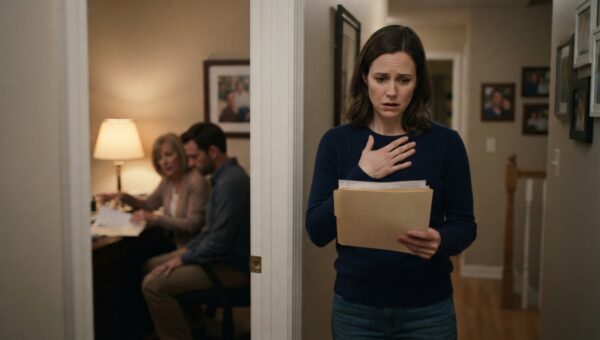
I flipped through the pages, expecting the usual details about epidurals and visitors, and my eyes stalled on a paragraph near the back that made my breath catch in my throat.
I read it once, and then twice, just to make sure my tired brain wasn’t playing tricks on me.
“What is this?” I asked, looking up from the paper.
Simon wouldn’t meet my eyes, staring instead at the wood grain of the coffee table. Michelle cleared her throat, leaning forward with an unnerving intensity. “It’s the containment protocol. For the third trimester and the delivery.”
The document demanded that I relocate during my eighth month to a small rented apartment two blocks from the regional medical center, completely isolated from my daily routine. Worse still, it explicitly banned James and our four children from stepping foot inside the delivery room or even visiting the hospital room afterward. It also granted Michelle immediate, exclusive physical custody the second the baby drew its first breath, barring me from holding or even seeing the infant I had just carried for nine months.
“You want me locked away alone for a month, and you want to ban my husband and kids from the hospital?” My voice rose, the disbelief turning hot and sharp in my chest. “This is my body, and that is my family.”
Michelle didn’t even blink. “We can’t risk you getting sick from your children bringing home school germs, and James can be a distraction. Once you deliver, the baby comes straight to me for bonding. We need absolute emotional purity in that room.”
“Absolute emotional purity?” I stood up so fast my chair scraped loudly against the floor. “I am not an incubator you rented by the hour. This conversation is over.”
That was how the meeting ended, with Simon grabbing his wife’s arm and rushing out the door while I stood shaking in the center of the living room.
The next morning, James sat with me at the kitchen table, reading through the printed clauses line by line. His jaw was clenched so tight a muscle ticked near his ear. He didn’t raise his voice, but his words carried a cold, steady weight.
“They are treating you like a piece of faulty machinery they bought off the internet,” James said, folding the papers in half and sliding them back into their folder. “We are not doing any of this. You call your OB-GYN right now, and I’ll call our lawyer.”
My doctor was furious when she read the surrogate birth protocol over the phone during my lunch break. She made it clear that no hospital in the state would enforce a third-trimester quarantine or ban a husband from a delivery room without a documented medical emergency. Armed with that reassurance, I also spoke briefly with a family law attorney who confirmed that our original surrogacy agreement gave Michelle zero authority to dictate my medical care or separate me from my immediate family.
By Friday evening, Simon and Michelle were back in our living room, invited over at James’s strict insistence. The air in the room was heavy enough to cut with a knife. Michelle looked ready for a boardroom battle, her posture stiff and defensive as she sat on the edge of our sofa.
“I hope you’ve reconsidered,” Michelle began before we even sat down. “We have a schedule to maintain, and the legal team needs, “
I set our own binder down on the coffee table with a dull thud. It wasn’t thick like theirs, but every single page had been stamped and signed by my doctor’s office.
“You aren’t handing down orders here anymore, Michelle,” I said, keeping my voice remarkably even. “This is the revised birth plan. James will be in the delivery room with me. My children will be waiting at the hospital. My doctor handles my medical care, and standard postpartum protocol applies, which includes me holding the baby before anyone else.”
Michelle’s face went rigid. “That violates our agreement! We paid for, “
“You didn’t buy me,” James interrupted, his voice dropping an octave as he leaned forward. “She is giving you a family out of the goodness of her heart, and you treated her like an employee you could lock in a closet. The deal is running on our terms now, or it doesn’t run at all.”
Simon looked at Michelle, then down at the floor, and for the first time in months, the heavy, anxious mask he wore cracked completely. He rubbed his face with both hands, letting out a long, shuddering breath.
“Stop it, Michelle,” Simon whispered, his voice cracking slightly. He looked across the table at me, his eyes rimmed with red. “Just stop. We went too far. I know we did.”
Michelle stared at her husband as if he had just slapped her across the face. “Simon, we can’t just, “
“We are going to sign their plan,” Simon said, his tone leaving no room for argument for the first time since this entire nightmare began. He picked up the pen lying beside our binder and pushed it toward his wife.
The silence that followed stretched out for a very long time, broken only by the faint sound of our kids laughing upstairs as they finished their homework. Michelle’s hands shook slightly as she picked up the pen, her lower lip trembling before she slammed her signature onto the final page without another word. They left fifteen minutes later, driving off into the dusk without looking back.
Now, the house is quiet again, carrying that deep, healing sort of silence that only comes after a storm has finally broken itself against the rocks.
I am sitting comfortably on our porch couch with James, the evening breeze carrying the scent of damp grass and pine from the woods behind our fence. My hands rest calmly on my swollen belly, feeling a gentle kick press outward against my palm. Out in the yard, our four kids are chasing each other through the long shadows of the oak trees, their bright laughter echoing into the dusk. On the small wooden table beside my glass of iced tea sits the signed, standard hospital birth plan, held down safely by a smooth river stone.