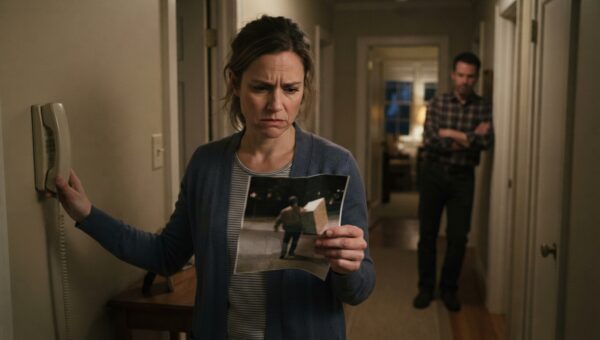
The gravel in our driveway has this way of settling into deep troughs right by the driver side door, and I was standing right there kicking a loose stone back into place when the mail carrier dropped off the small padded envelope containing the little square plastic tab.
David had lost his brass key ring twice in the same month, leaving our front screen door unlatched while he ran out to fetch feed from the co-op or grab parts for the tractor.
I figured twenty-five dollars was a fair price to pay for peace of mind, so I synced the tiny Bluetooth fob to my phone, looped the little silver ring through his house keys, and handed them back to him without another thought.
For four months, those sixteen consecutive Saturdays followed the exact same rhythm. David would pull on his faded canvas work jacket around seven in the morning, toss back his last swallow of lukewarm black coffee, and say he was heading down to the supply yard or Home Depot for lumber and galvanized nails.
“They got that sale on treated cedar posts this week,” he would say, his hand already resting on the deadbolt. “I’ll be back before noon.”
The house would settle into that quiet morning hush where the only sound was the refrigerator compressor kicking on and the distant hum of traffic out on the highway. I would tackle the laundry, mend the girls’ school clothes, and wait for him to roll back up the gravel with the truck bed loaded down with whatever he had picked up.
The change happened on a Tuesday evening when my phone buzzed against the kitchen counter while I was browning pork chops in the cast-iron skillet. I tapped the notification out of sheer idle curiosity, watching the little blue dot on the map app trace a path fourteen miles north of our property line, stopping dead at a neat, single-story ranch house on Birchwood Lane.
The location history showed four months of Saturdays, right there at that exact address, for four solid hours every single week.
I did not sleep that night. I stared at the dark plaster ceiling of our bedroom while David breathed in that steady, deep rhythm beside me, smelling faintly of sawdust and shaving soap. My chest felt tight, like someone had wrapped a baling wire around my ribs and started twisting it with a pair of pliers.
By Saturday morning, the air was sharp and gray, carrying that damp smell of early spring mud that always sticks in my coat whenever things go wrong.
I didn’t say a word when he kissed my cheek at seven and told me he had to run down for those cedar posts.
I let him back his truck out of the drive, waited three full minutes until the red taillights vanished past the stand of cottonwoods, and then I turned my own station wagon north.
The house on Birchwood Lane sat behind a low chain-link fence with a tricycle tipped over on the clipped grass near the front steps. My boots crunched on the paved walk, loud in the quiet cul-de-sac, and when I reached the painted wood door, I raised my hand and knocked twice before I could lose my nerve.
The locks clicked almost immediately, and a woman with soft, tired eyes and hair pulled back in a loose clip pulled the door open about half a foot. She looked right past my face, took in my sensible shoes and my old wool coat, and let out a small, dismissive breath.
“You must be his sister,” she said, her voice entirely casual. “He said you might drop by sometime to pick up those tax forms.”
I stood there for three long seconds, my tongue feeling thick and dry behind my teeth. “I’m his wife.”
Her face went entirely slack, all the color draining right out from under her skin until she looked like she had seen a ghost. Her hand shot out and grabbed the wooden door frame so hard her knuckles turned white, her fingers digging into the paint.
“What?” she whispered, the word barely making it past her lips.
Before I could answer, a little boy with dark, curly hair and David’s exact, unmistakable jawline toddled around the corner of the small hallway behind her, holding a plastic red cup. He looked up at me with those same brown eyes I had kissed across the breakfast table for seven years.
“Mommy?” the toddler asked.
I didn’t scream, and I didn’t cry. I just turned around on the porch step, walked back to my station wagon, and drove straight home without stopping at a single red light.
I sat out in the driveway for forty solid minutes with the engine idling and the heater humming softly against my shins, watching the neighbor’s dog chase a stray cat across the fence line. My mind felt strangely clear, washed clean of all the noise and the questions, leaving only a cold, hard resolve settling right behind my breastbone.
When I finally went inside, the house was empty and quiet, smelling faintly of the coffee David had brewed that morning. I walked straight into his small home office, sat down in his leather desk chair, and lifted the lid of his silver work laptop.
It wasn’t even password-protected. I clicked on the documents folder, and right there on the desktop was a single file with a title that made my stomach drop like a stone in a deep well.
Exit Plan.
I double-clicked the icon, and the PDF opened to a formal legal letterhead that made my breath catch in my throat. It detailed a complete strategy to file for divorce, claim full custody of our two girls, Emma and Ben, and award David sole ownership of our property and its four hundred and ten thousand dollars in equity.
The document was drafted by Richard Vance, the exact same estate attorney who had handled my late father’s probate and trust distribution just three years ago.
Richard Vance was the man I had trusted implicitly, the family lawyer who had sat in our living room drinking coffee while I signed over every last deed and asset from my father’s estate into our joint marital portfolio. David must have gone to him behind my back under the guise of general family estate restructuring, feeding him confidential documents and private bank numbers to build a fabricated paper trail of my financial instability.
“He’s vulnerable, Richard,” I imagined David telling him across that mahogany desk in downtown Wichita. “She’s unstable. We need to protect the children’s interests.”
I sat in that quiet room for a long time, the glow of the monitor lighting up the dust motes dancing in the air around the desk. I didn’t throw anything, and I didn’t smash the screen. I simply plugged my thumb drive into the USB port and transferred every single file, email receipt, and draft document straight onto my own key ring.
On Monday morning, I walked into the offices of Sarah Jennings, an independent family law attorney whose firm had a reputation for tearing through corporate asset hiding like a combine through dry wheat. I dropped the printed “Exit Plan” right onto her polished glass table along with the bank records showing how David had systematically skimmed joint account funds to lease the Birchwood Lane property for over two years.
“He used my father’s trust files to build a knife and handed it to my own husband,” I said, my voice as steady as a surveyor’s level. “I want that license pulled.”
Sarah didn’t even blink; she just ran her finger down the signature line at the bottom of Vance’s legal brief, her eyes narrowing behind her wire-rimmed glasses. “We don’t just amend the custody filing, Claire. We file an immediate ethics grievance with the state bar for gross conflict of interest, and we freeze every single marital asset before he even knows what hit him.”
That same afternoon, I arranged to meet Elena at a quiet, empty diner booth near the edge of town, far away from Birchwood Lane and our neighborhood. She sat across from me stirring a cup of tea she wasn’t drinking, her eyes red-rimmed and hollow, looking like a woman who had just found out the floor she was standing on had been made of balsa wood all along.
“He told me his divorce was already final,” she said, her voice shaking as she pulled out a stack of text messages from her purse. “He said you were just a bitter ex-partner holding up the paperwork for the sake of the kids. He swore he loved me.”
“He loved keeping his options open,” I said softly, sliding a copy of the marriage certificate and our mortgage deed across the Formica tabletop. “He used my inheritance to pay the deposit on that house you’re living in, Elena. And he was planning to throw both of us out on the street with nothing.”
She looked down at the documents, her fingers trembling against the paper before she pulled out her phone and slid it across the table toward me. “Take whatever you need. I have call logs, rent receipts, and every single digital transfer he made from his business account.”
By Friday evening, the trap was fully baited and ready to snap shut.
Saturday morning rolled around with the exact same gray, overcast sky as the week before. I was standing at the kitchen counter pouring fresh coffee into my old enamel pot when I heard the floorboards creak behind me.
David walked into the kitchen wearing his favorite canvas jacket, pulling his leather work gloves over his fingers with that familiar, easygoing smile he used whenever he wanted to smooth over an awkward silence.
“They’re calling for rain later this afternoon,” he said, reaching for his keys off the wall hook. “I better get down to the supply yard early before the cedar posts run out.”
I didn’t turn around right away. I just set the coffee pot down on the hot burner and listened to the low, even hum of the kitchen clock ticking away the seconds.
“You won’t need the truck today, David,” I said, my voice cutting cleanly through the morning quiet.
He froze with his fingers halfway off the brass hook, his head tilting to the side in that practiced look of mild, patient confusion he always put on when he thought I was being difficult. “What are you talking about, Claire? The builders are waiting on those posts.”
I turned around, picked up the thick manila envelope from the counter, and let it drop flat against the laminate wood surface with a sharp, heavy smack.
“I went to Birchwood Lane last week,” I said. “And I had a nice long chat with Elena.”
The color didn’t just leave his face; it felt like the blood had been drained out of him with a pump. His mouth opened slightly, but no sound came out, his fingers twitching against the empty air beneath the key hook.
“And then,” I continued, my voice dropping an octave as I tapped my fingernail against the corner of the manila folder, “I spent some quality time looking through your laptop. Turns out Richard Vance is quite the busy little writer when he’s not busy violating state bar ethics.”
He took one half-step backward toward the mudroom door, his eyes darting toward the side window like a cornered animal looking for a gap in the wire. “Claire, let me explain. It’s not what you think. That whole setup was just, it was just provisional. Protective custody structuring. Vance said, “
“Vance is currently answering a formal disbarment inquiry for sharing my father’s trust files with a third-party debtor,” Sarah Jennings’ voice echoed from the doorway as my attorney stepped out from the hallway with two federal process servers right behind her. “And you, Mr. Henderson, are officially served with an emergency asset freeze, an immediate restraining order barring you from the property, and a custody petition that leaves you with supervised visitation on alternating Tuesdays.”
David stared at the papers spread out across the kitchen counter, his shoulders collapsing inward as the entire elaborate structure he had spent two years building simply dissolved into thin air. He didn’t argue, and he didn’t raise his voice; he just pulled his canvas jacket tighter around his chest, turned around on his heel, and walked out the front door without his keys.
The front screen door banged once in the morning wind, and then the house grew very, very quiet.
I walked over to the entryway, lifted the heavy brass house key off the wall hook where David had left it hanging, and felt the cool, solid metal press against my palm. There was no little blue plastic tracking fob attached to it anymore, no digital app running in the background, and no secret maps to trace.
I stepped out onto the front porch, slipped the key into the brass deadbolt, and turned it until the lock clicked firmly into place. Through the open window behind me, I could hear Emma and Ben laughing together over their cereal at the kitchen table, their voices bright and clear and entirely safe in the sunlight.