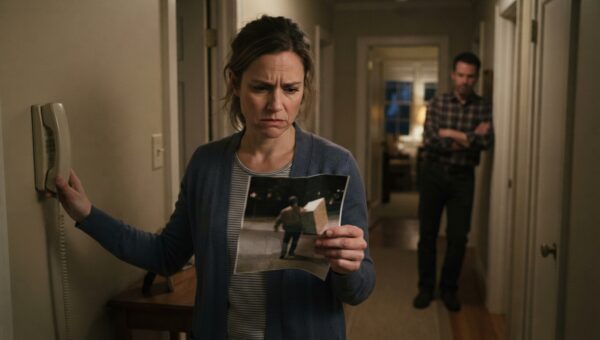
“You would literally fall apart without me, Brenda.”
Arthur said it right there by the passenger door of his sedan, his hand resting on the frame while the brass brass-band music from the college courtyard was still echoing off the brick walls of the gymnasium. He had this little half-smile on his face, the one he always wore when he was explaining something to me that I already knew, like how to load the dishwasher or which grocery store had better beef prices.
Our youngest, Julianna, was up on the riser shaking hands with the dean about thirty yards away, holding her diploma cover like it was made of thin glass. I had spent four years saving the extra grocery money in a coffee tin behind the flour canister just to make sure she could buy her books without taking on those terrible loans. Arthur hadn’t noticed the tin, just like he hadn’t noticed the hundred other small things I had quietly managed while he sat at the head of the dining table every evening and told me how lucky I was to have a roof over my head that he paid for.
“I mean it,” Arthur said, tapping the car roof twice with his signet ring. “It’s a tragedy you play the victim all the time, Brenda, but honestly? It builds character. Now get in the passenger side. We have to beat traffic before the lunch rush at the country club.”
“Go ahead and take the car, Arthur,” I told him, keeping my voice very quiet so the families walking past us wouldn’t turn around. “I have a few things to finish up at the house first. I’ll meet you there later.”
He squinted at me through his aviator glasses, annoyed that I wasn’t moving at his exact speed. Arthur hated being slightly inconvenienced, even by five minutes.
“Don’t dawdle,” he said, sliding into the leather seat and pulling the door shut with a dull, heavy thud. “And make sure my charcoal suit is back from the cleaner by four. You know I have the board dinner tomorrow.”
He drove off without waiting for an answer, kicking up a little loose gravel from the parking lot edge. I stood there on the curb for a long minute watching the tail lights disappear past the brick gate, listening to the chatter of parents taking pictures with their kids.
My shoes were pinching my toes because I had bought them three sizes too small just to look nice for Julianna’s big day, but for the first time in twenty-two years, my feet didn’t hurt nearly as much as my head.
The house on Elm Street was completely silent when I walked through the side door at eleven-fifteen. It smelled like Lemon Pledge and stale coffee, the exact same scent it had carried every Tuesday since the twins were in middle school.
I didn’t turn on the television or put on the kettle. I went straight up the stairs to the master bedroom, carrying my old canvas duffel bag that I had bought second-hand down in Marietta five months ago and hidden behind the winter coats in the guest closet.
On the nightstand, Arthur’s gold-plated pocket watch sat right where it always did. I opened my bottom dresser drawer, pushed past the folded cotton nightgowns, and pulled out the legal-pad binder I had been keeping since the autumn of 2004.
It was twenty pages long, written in my small, neat cursive with the dates and times squeezed neatly into the left-hand margin. Every time Arthur sat at the kitchen island and told me I was thick-headed, every time he mocked my cooking in front of his business partners, every time he told me my opinion at the bank didn’t count because I didn’t bring home a paycheck, I wrote it down. Not to cry over later, but to keep myself from going crazy. When you live with someone who rewrites reality every single day until you start doubting your own name, you need a anchor made of ink and paper.
I sat down on the edge of the mattress and flipped through the pages one last time. There was the entry from November twelfth when he told me I looked like a washerwoman in my church dress. There was the entry from our tenth anniversary when he came home late, threw his coat on the floor, and told me nobody else would ever tolerate my nagging.
“He’s right,” I had written back then in the margins. “Nobody else would.”
It took me two years of quiet planning with Eleanor Vance, a family lawyer whose office smelled like old paper and peppermint tea over on Court Street, to realize I didn’t need his tolerance. I needed my own life. Eleanor had helped me set up a separate credit union account in my maiden name, transfer my inheritance from my mother’s estate out of Arthur’s reach, and secure a small, two-bedroom apartment three towns over with a view of the old brick water tower.
I gathered the twenty pages of the diary, squared the edges against the palm of my hand, and placed them directly on top of the formal divorce papers Eleanor had drawn up three weeks ago. Then I took my heavy-duty desk stapler from the bottom shelf of the secretary desk and drove three silver staples right through the top margin, binding his insults and our separation into one heavy, unarguable packet.
I walked over to his side of the king-sized bed and laid the packet flat on his pillow, right where his head rested every night while he told me how the world worked.
My clothes were already packed in the duffel bag and the two cardboard boxes sitting by the back door. I walked through the walk-in closet one last time, checking the hangers. His charcoal suit hung there in its plastic dry-cleaning bag, waiting for the board dinner. His white dress shirts were lined up by starch level, looking stiff and empty in the dim light.
My phone buzzed against my apron pocket at twelve-forty. It was Arthur calling from his office downtown.
I let it ring three times before I flipped the switch and brought it to my ear.
“Brenda, where are you?” his voice came through the speaker, crisp and slightly irritated, background noise of office printers clacking behind him. “I’m looking at the sideboard. Where are the cuff links I left by the razor?”
“They’re in the second drawer, Arthur,” I said, my voice sounding stranger to my own ears than it had in years. It didn’t shake. There was no tremor in it at all.
“Well, hurry up and get those shirts ironed before you come down to the club,” he said, his tone dropping into that familiar, grating register of authority. “And don’t forget my spare glasses case. You always leave the small things behind. Honestly, what would you do without me?”
“I guess I’m about to find out,” I told him.
“What was that?”
“I said goodbye, Arthur.”
I hung up the phone before he could answer, powered it off completely, and pulled the battery out from under the back cover just to be thorough. Then I carried my bags out to the old station wagon, tossed them into the back, and backed down the gravel drive without looking back at the brick facade we had spent twenty years paying off.
The drive over to the new apartment took twenty-four minutes. The sky was the pale, clear blue of an October afternoon, and the leaves on the maples along Route 9 were just starting to turn that rusty orange color that always made me think of church picnics when I was a girl.
When I unlocked the front door of number four-B, the rooms smelled faintly of fresh paint and floor soap. It was small, just a little kitchen with white laminate counters and a living room big enough for my mother’s old rocker and a small drop-leaf table.
There was no television yet. There was no one telling me I used too much butter in the potatoes or that my voice was too loud when I talked on the phone to my sister. I sat down on the bare mattress in the bedroom and waited for the panic to hit me, the terror Arthur had promised me would come the second I stepped outside his shadow.
It never came. Instead, my shoulders just dropped about three inches, and my breathing felt deep and steady for the first time since Julianna was in kindergarten.
Around six o’clock that evening, there was a sharp knock at my front door.
I didn’t need to look through the peephole to know who it was. Julianna stood on the narrow concrete landing holding a brown grocery bag from the local market with two boxes of macaroni and a carton of milk sticking out of the top, and behind her stood Julian, our oldest, his face set in that tight, worried line he always wore when his father was carrying on.
“Mom,” Julian said the second I pulled the door open. “What is going on? Dad has been calling my cell thirty times. He’s at the house. He’s losing his mind.”
“He found the pillow,” Julianna said softly, her eyes wide as she looked past me into the tidy little living room. “Mom, he was screaming down the phone about some notebook. He said you lost your mind.”
“I didn’t lose it, honey,” I said, stepping aside and motioning them into the warm, bright room. “I just found it.”
They didn’t lecture me. They didn’t ask me how we were going to pay the water bill or tell me I should go back and smooth things over before Arthur made things difficult. Julian just set the groceries down on the small laminate table, walked over, and put his big, heavy arm around my shoulders, pressing his cheek against my hair just like he used to do when he scraped his knee behind the garage.
“We knew, Mom,” Julian murmured into my hair. “We both knew for years. We were just waiting for the day you finally decided you’d had enough.”
The legal conference three weeks later in Eleanor Vance’s office was quieter than I expected it to be.
Arthur sat across the mahogany table in his good navy suit, looking smaller somehow in the daylight that came through the Venetian blinds. His hair was slightly out of place, and he kept running his thumb over the gold signet ring on his finger, glaring at me like I was a clerk who had misfiled his tax returns.
“She has no independent income,” Arthur told Eleanor, his voice dropping into that courtroom-baritone he used when he wanted people to think he was the reasonable one in the room. “She’s emotional, she’s unstable, and she’s walking away from twenty years of stability because of some silly misunderstanding about household chores. If she thinks she’s getting a dime of the retirement portfolio, her lawyer is living in a dream world.”
Eleanor didn’t blink. She just adjusted her glasses, reached into the leather portfolio beside her, and slid a single photocopied page across the polished wood toward Arthur’s side of the table.
It was page fourteen of the diary. Under the date of October 4, 2011, it recorded the exact words Arthur had shouted when I dropped his coffee mug on the linoleum: *You’re a clumsy liability, Brenda, and if you ever leave this house, I’ll make sure you leave with nothing more than the clothes on your back.*
Arthur stopped talking. His thumb froze on his ring. He read the three lines twice, his eyes moving back and forth behind the expensive frames of his glasses, and then he looked up at me with a look that wasn’t anger anymore. It was just cold, hard confusion, the look of a man who realized the game had changed while he wasn’t paying attention.
“Where did you get this?” he muttered.
“I wrote it down, Arthur,” I said, leaning back in my chair and folding my hands neatly in my lap. “Every single day for twenty years. And I have nineteen more pages just like it, complete with dates, times, and witnesses who were sitting right across the table from us when you said them.”
Arthur looked at Eleanor, then back down at the paper, and then he let out a short, dry breath that sounded like air leaking out of an old tire. He knew what those pages meant for his position at the bank. He knew what his church board and his country club buddies would say if twenty pages of his private domestic tyranny were entered into a public court record.
“The house is yours,” he said quietly, not looking at me. “The retirement accounts will be split fifty-fifty per the standard statute. I want this filed by Friday.”
“By Friday,” Eleanor agreed, closing her folder with a crisp snap.
We walked out of the office into the bright midday sun of Main Street. The air had that sharp, clean feel of late autumn, and my old station wagon was parked right across the street by the bakery, its tires lined up straight against the curb.
The next morning, I stood by the open kitchen window of the apartment, holding a warm ceramic mug of black coffee between my palms. Down on the sidewalk below, a mail carrier was whistling an old tune as he dropped a single white envelope into the box by the glass door.
There was no sound of shouting from the hallway. There was no list of demands waiting on the counter. There was just the quiet hum of the refrigerator in the corner and the steam rising off the dark coffee into the cool morning air.