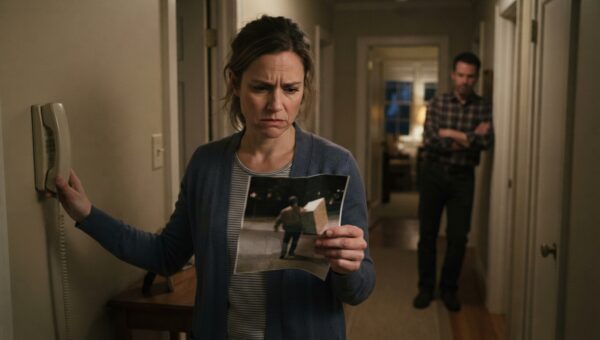
“I won’t waste my life watching him turn into a vegetable,” Brenda said.
Those were the exact words she threw at Marcus on a rainy Tuesday morning right after the oncologist gave us the final word. She didn’t pack two bags. She packed four, loaded them into her silver sedan, and backed out of our gravel drive without even looking toward his bedroom window.
I had already moved into Marcus’s spare room six weeks prior when his legs first gave out on him. A mother knows when her child is slipping through her fingers. I sold my little house down on Pine Street for forty-two thousand dollars, put every penny of it into a separate account for his palliative care, and became his nurse, his cook, and his shadow.
Marcus was only thirty-three years old. He had this way of looking at the ceiling fan when the pain meds wore off, tracking the slow spin of the blades like he was counting down the hours.
Eleven months is a long time to watch a strong boy turn frail. I learned how to change his sheets while he was still in them, how to prop his head up so he could swallow a spoonful of broth, and how to keep my own knees from buckling when he apologized for being a burden.
He never complained about Brenda once she left. Not once. But I saw the way his jaw tightened every time the mail carrier walked by the front porch.
When he finally passed away on a Thursday night with his hand resting in my palm, the house went dead quiet.
I didn’t even have time to catch my breath before Brenda was back. She didn’t come for the viewing. She didn’t send flowers. But she showed up three days after the funeral with a cardboard box of her own and a certified letter from a probate lawyer in town.
“The deed is in both our names technically, but under the marriage laws here, everything reverts to the surviving spouse,” she told me while standing in the middle of Marcus’s living room with her coat still on. “I need you out by Saturday noon. I have an appraiser coming on Monday.”
I was sitting at the kitchen table with a cup of lukewarm tea, my hands shaking so bad I had to hold the ceramic mug with both palms.
“Brenda, I sold my home to pay for his home health aides,” I said, my voice sounding thin even to me. “I have nowhere to go.”
She just shook her head, her gold earrings catching the overhead light. “That was your choice, Eleanor. You should have thought about that before you moved in.”
The next four days were a blur of brown cardboard boxes and packing tape. My back felt like it was snapped in half. I kept finding his old woolen socks in the laundry hamper, his favorite coffee mug on the top shelf, and the small wooden cross he carved when he was twelve sitting on the kitchen windowsill.
By Friday evening, the house looked hollow. The pictures were off the walls. The closets were bare. I went into Marcus’s bedroom to clear out the bottom drawer of his dresser, and that was when my shoe hit something hard tucked far back against the baseboard.
It was an old shoebox wrapped around twice with heavy gray duct tape.
My heart did a strange, heavy thump against my ribs. I sat right down on the bare floorboards, cross-legged, and picked at the sticky tape with my thumbnail until the lid finally gave way with a dry pop.
Inside wasn’t shoes. It was paper. Thick, crisp legal paper clipped together with a heavy metal binder clip, along with a yellow legal pad covered in Marcus’s familiar, hurried handwriting.
I unfolded the top letter first.
Mom, if you are reading this, it means Brenda came back. I knew she would. I knew what she was doing six months before the diagnosis when she started moving money out of my commercial accounts into her brother’s credit union down in Pittsburgh.
My hands went cold. I had to read the lines twice because the letters started blurring together.
I didn’t say anything to you because I didn’t want you worrying while you were nursing me, Marcus had written. But Arthur Vance helped me set up a few things. Brenda thinks she’s getting everything because of our old will from when we first got married. She doesn’t know about the trust. She doesn’t know we filed it three months ago.
I stared at the second document. It was a recorded irrevocable transfer-on-death deed, stamped by the county courthouse on a Thursday back in October. It didn’t list Brenda at all. It listed my name, Eleanor Vance, as the sole and rightful owner of the property and all remaining accounts.
Beneath the deed was Arthur Vance’s business card with a handwritten note on the back: Call me at 8:00 AM sharp. Don’t let her move anything.
The next morning at 8:01 AM, I was on the kitchen phone.
“Eleanor?” Arthur’s voice came through steady and sharp. “I was wondering when you’d find that box. Marcus made me swear I wouldn’t file the final notice of occupancy until he passed. He wanted to make sure Brenda showed her true colors first.”
“Is this real, Arthur?” I asked, looking out the window at the empty driveway. “Can she really just throw me out?”
“She can’t throw out the legal owner of this house,” Arthur said, and I heard the sound of papers shuffling on his end. “The trust is ironclad. Brenda’s probate petition is based on a superseded document that was legally revoked six months ago. Sit tight. I’m coming over with the sheriff’s deputy.”
An hour later, a gray sedan pulled into the driveway. Brenda was right behind it in her silver car, her new boyfriend sitting in the passenger seat with a clipboard.
Brenda hopped out before her car even stopped moving, marching up the wooden steps with a ring of heavy brass keys dangling from her finger. She didn’t bother knocking. She just pushed the front door open and walked right into the living room where I was standing by my last taped box.
“What are you still doing here?” Brenda snapped, tossing her keys onto the side table. “The clock strikes twelve tomorrow, and I’ve already called the county sheriff to handle trespassers if you aren’t gone.”
Before I could answer, the front door swung open wider, and Arthur Vance stepped into the hallway, holding a thick manila folder under his arm, followed by Deputy Miller from the county station.
Brenda’s face lost its color instantly. “What is this? Who invited you here?”
Arthur didn’t even look at her. He walked right past her and handed me a copy of the recorded deed before turning to face Brenda with a very calm, flat expression.
“Brenda, my name is Arthur Vance. I’m Marcus’s estate attorney,” Arthur said, his voice carrying clearly through the empty rooms. “Under an irrevocable trust executed and recorded three months prior to his passing, this property, along with all remaining residual assets, belongs solely to Eleanor Vance.”
“That’s a lie,” Brenda screamed, taking a step forward. “We were married! I am his wife! I have the original marriage certificate right here!”
“You were his wife until you abandoned him on May twelfth,” Arthur replied quietly, pulling a certified medical waiver and a signed deposition from Marcus’s palliative care nurse out of his folder. “And under state probate code section four, desertion during terminal care constitutes complete forfeiture of spousal inheritance rights, supported by a fully executed deed of transfer.”
Brenda turned on her heel, looking at the deputy like he was supposed to haul me away in handcuffs. “Are you just going to stand there? She’s squatting in my house!”
Deputy Miller adjusted his belt, looking down at the official county stamp on the papers Arthur handed him. “Ma’am, I’ve got a certified copy of the county deed right here showing Eleanor Vance is the deeded owner. I’m going to have to ask you and your friend to step off the property.”
“This is fraud!” Brenda shrieked, her voice cracking as her boyfriend in the driveway started backing toward his car. “Marcus wasn’t in his right mind! He didn’t know what he was doing!”
“He knew every single thing he was doing,” I said.
I walked to the front door, holding Marcus’s handwritten letter against my chest like a shield. I didn’t yell. I didn’t shake. I just looked at the woman who had walked away from my son when he needed her most.
“He knew you were stealing from his accounts, Brenda,” I told her, my voice steady in the cool morning air. “He knew you were waiting for him to die so you could sell our family home. And he made damn sure you left here with nothing.”
Brenda stood on the porch for ten seconds longer, her mouth opening and closing like a fish out of water, before she spun around and stormed down the steps, slamming her car door so hard the side mirror rattled.
The red taillights of her sedan disappeared down the gravel road five minutes later.
The house stayed quiet after that. Not a dead, heavy quiet like the night after the funeral, but a soft, breathing kind of quiet.
I walked back into the living room, sat down in the armchair by the front window, and unfolded Marcus’s letter one last time. The morning sun was just starting to warm the glass pane, throwing long, golden streaks across the wooden floorboards where he used to sit and play with his toy cars when he was six.
I folded the letter carefully, tucked it into my pocket, and watched the light settle over the garden he loved.