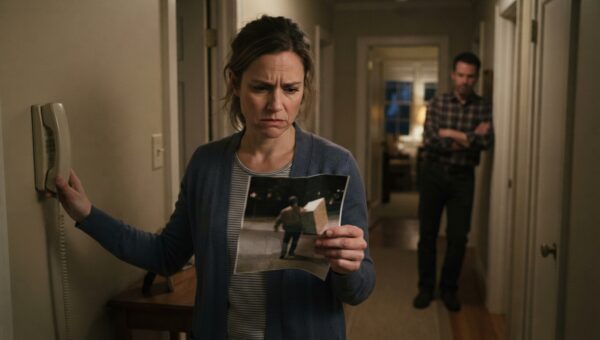
“You can’t be here, they’ll hurt you.”
Those were the exact words Daniel whispered before I could cross that rotting floorboard. Eleven months. Three hundred and forty-two days of waking up at three in the morning to stare at an empty hallway and wonder if my son was even breathing. I had handed out flyers at every gas station between here and the county line.
I had called the local precinct every Tuesday morning until the desk sergeant stopped using my first name. The police told me what they tell every parent of a seventeen-year-old who packs a light bag and walks out the front door. They said he probably wanted a fresh start. They said kids get tired of small towns and decide to vanish. But Daniel wasn’t that kind of boy. He still asked about my day when I got home from the clinic. He still left his shoes by the coat rack instead of kicking them into the middle of the kitchen floor like the other boys his age.
The morning he disappeared, the kitchen smelled like stale coffee and toasted rye bread. It was a regular Thursday. He wore his favorite denim jacket, the faded blue one with the little guitar patch I stayed up until midnight stitching onto the left sleeve because his guitar teacher said he had real natural talent.
He kissed my cheek right by the pantry door and said he would see me at five. Five o’clock came and went. The sun went down behind the ridge, turning the sky the color of a bruised plum. By midnight, my hands wouldn’t stop shaking as I dialed his phone, listening to it ring out into a dead, empty void.
Yesterday, I was three hours away on a routine supply run for the clinic, stopping at a corner cafe with cracked linoleum to buy a black coffee I barely touched. That was when I saw it through the greasy front window. A man shuffling down the sidewalk in a heavy coat that looked three sizes too big. I wouldn’t have looked twice except for the frayed cuff and the unmistakable square of yellow stitching catching the midday glare. The guitar patch. My clumsy stitches, slightly crooked on the bottom corner.
“Excuse me,” I had said, my voice cracking as I rushed out the screen door.
The man stopped, blinking against the harsh light. He had a gray beard that looked like steel wool and eyes that had seen too many winter nights sleeping under park benches. I bought him a hot tea and a turkey sandwich at the counter inside, my palms slick with cold sweat while he chewed in silence. When I asked him where he got the jacket, he gave me a sad, toothless smile and the words that started it all.
“A boy gave it to me.”
Before I could ask anything else, he stood up so fast his chair screeched against the floor and hurried out the side exit. I didn’t think. I just dropped a twenty-dollar bill on the counter and ran after him. For nearly an hour, he led me through a maze of deserted streets on the outskirts of town until the paved roads turned to gravel and the houses gave way to wild blackberry brambles and rusted car frames.
We reached an abandoned two-story farmhouse with broken windows and a sagging porch choked with dead ivy.
The old man knocked twice on the warped wood of the front door. It creaked open on rusted hinges. And that was when Daniel appeared in the dark gap of the doorway.
My knees hit the porch boards before my brain could catch up. I wanted to scream his name, to pull him into my arms and never let go, but the sheer terror in his eyes locked my jaw shut. He was thinner than I remembered, his cheekbones sharp beneath pale skin, his shoulders curled inward as if he were trying to make himself invisible.
“Mom, you shouldn’t have followed Arthur,” Daniel whispered, his voice trembling so hard the words barely made it across the porch. “You don’t understand. You have to go back right now.”
“I am not leaving you,” I said, my voice shaking as I scrambled back to my feet and pushed past him into the gloom of the hallway. “You are coming home with me right this second.”
The inside of the house smelled of damp earth, old plaster, and woodsmoke. Dust motes danced lazily in the thin shafts of sunlight cutting through the cracked windowpanes. Arthur stood quietly by the kitchen door, holding his paper cup of tea with both hands.
“He’s a good kid,” Arthur said softly, his voice gravelly and worn down by years of weather. “He came here eleven months ago, freezing and half-starved. Wouldn’t tell me his real name at first. Just sat in that corner shaking. When the hard freeze hit back in January, he gave me his coat because he said old men feel the cold worse than boys do. I told him he shouldn’t give it up, but he wouldn’t listen.”
I looked at Arthur, then back at my son, who was pressing his back against the peeling wallpaper as if he wanted the house to swallow him whole.
“Daniel, look at me,” I pleaded, taking a slow step forward with my hands raised. “The police told me you ran away. They said you didn’t want to be found.”
Daniel shook his head frantically, a tear finally breaking loose and cutting a clean path through the dirt on his cheek. “I didn’t run away, Mom. I had to leave. If I stayed, Wayne Miller would have killed you.”
The name hit me like a physical blow. Wayne Miller owned the salvage yard down by the river, a rough-edged man with a heavy criminal record and friends in places no honest person wanted to know about.
“What does Wayne have to do with this?” I asked, my chest tightening into a hard knot.
“I stayed late after school to grab my biology book,” Daniel said, his words tumbling out in a rush as he slid down to sit on the floor, pulling his knees up to his chest. “I cut through the alley behind the old auto body shop. Wayne and two other men were there. They were beating someone, trying to get him to sign papers. When they saw me watching from the dumpster, Wayne looked right at me. He told me that if I said a single word to the cops, or if I ever went home to you, he’d break into our house while you were sleeping and make sure neither of us woke up.”
The room seemed to tilt sideways. All those months of blaming myself, wondering what I had done wrong as a parent, dissolving into tears over empty bedrooms and untouched plates of food, and my boy had been living in a waking nightmare just to keep me alive.
“You should have told me,” I whispered, dropping to my knees in front of him and grabbing his cold hands. “We could have gone to the authorities together.”
“They own the local cops, Mom,” Daniel said, his eyes wide and desperate. “I heard Wayne talking about the sheriff. I didn’t know who to trust. I grabbed my bike, rode until the chain snapped, and then hid in the back of a freight truck. I’ve been living here ever since, terrified that if I walked back onto our street, someone would hurt you.”
I reached into my canvas bag and pulled out my phone, but the screen remained stubbornly black. No service out here in the dead zone between counties. For a second, panic threatened to choke me out completely. But then something shifted deep inside my chest. The fear gave way to a cold, steady fury. No greasy local criminal was going to hold my family hostage in the dark.
“Arthur,” I said, looking up at the old man by the door. “Do you have a working landline anywhere near here, or a car that runs?”
Arthur nodded slowly, reaching into his coat pocket and pulling out a heavy brass key. “My old truck is out back behind the barn. Takes a bit of coaxing, but she runs. And there’s a diner three miles down the ridge with a payphone and a signal.”
“Get your jacket, Daniel,” I said, pulling my son up from the floor and wrapping my arms around his thin shoulders. He felt lighter than he should have, frail and worn down by nearly a year of hiding in the shadows, but he was right here, solid and breathing in my arms. “We are going to make a phone call. Not to the local precinct. We are calling the State Police.”
Ten minutes later, we were bouncing down the overgrown dirt track in the back of Arthur’s rattling Ford pickup. Daniel sat between us in the cab, clutching a battered spiral notebook wrapped in a plastic grocery bag.
“What’s in the book, honey?” I asked, keeping my eyes on the winding road ahead.
“Everything,” Daniel whispered, tracing the edge of the plastic with trembling fingers. “Every date, every time I saw Wayne at the warehouse, license plate numbers of the trucks he used, and the names of the men helping him. I wrote it all down so I wouldn’t forget.”
We drove straight to the state highway patrol detachment twenty miles north. Investigator Miller, a tall man with crisp silver hair and eyes that missed nothing, listened to our story in a quiet back office with a window overlooking the pine ridge. He didn’t interrupt once while Daniel laid out the dates, the locations, and the names of the men operating the extortion ring behind the salvage yard. When Daniel slid the spiral notebook across the metal desk, Miller opened it carefully, turning the pages one by one as he read through the meticulous, dated logs my seventeen-year-old son had kept while living in an abandoned house.
“This is thorough,” Investigator Miller said, looking up from the pages with a sharp, respectful gaze fixed on Daniel. “More than enough to bring federal and state warrants down on Wayne and his associates. You did the right thing bringing this in, son.”
Within three hours, the wheels were in motion. State troopers executed a coordinated raid on the salvage yard back in our hometown, arresting Wayne Miller and two of his associates before they even realized the net was closing. By evening, Investigator Miller confirmed that the local precinct had been bypassed entirely to avoid any compromised leaks, and the primary suspect was locked securely behind bars awaiting arraignment.
The drive home was quiet, save for the hum of the engine and the steady rhythm of the tires against the asphalt. We stopped at a roadside clinic first, where a gentle nurse checked Daniel over, gave him a warm meal, and confirmed he was healthy despite the months of poor nutrition. Afterward, we arranged for Arthur to be moved into a clean, heated room at the transitional veterans’ center in town, backed by a permanent housing grant our family set up to honor the man who kept our boy safe through the winter.
When we finally pulled into our driveway, the gravel crunched under the tires just like it always did. The porch light was on, casting a warm yellow glow across the wooden boards.
The next morning, the sun broke through the tall oaks outside the kitchen window, splashing bright gold across the wooden table. Daniel sat there in a clean wool sweater, eating a plate of scrambled eggs and buttered toast without looking over his shoulder every two minutes. His faded denim jacket hung safely on the heavy brass coat hook right by the front door, the clumsy little guitar patch I had sewn onto the sleeve catching the morning light just right. He stood up, grabbed his canvas school bag, and paused at the threshold with a small, genuine smile that reached all the way to his eyes.
“See you at five, Mom,” he said softly.
“See you at five, sweetheart,” I replied, watching him walk out into the bright morning air to catch the bus for school.