The highway patrol officer had a voice that sounded like gravel sliding down a galvanized pipe. He told me the semi-truck crossed the median at mile marker 114 just before dawn, and that Dale didn’t feel a thing. Dale was fifty-one years old. We had been married twenty-three years, sharing a brick ranch house with a leaking gutter and a terrier that barked at the mailman.
I spent the first three days after the accident sitting on our living room sofa with a cold damp washcloth pressed against the back of my neck, waiting for the neighbors to stop bringing casserole dishes and Tupperware we’d eventually have to return.
By the fourth day, the impound yard called about Dale’s rig. They said I needed to clear out his personal effects from the cab before they could release the tractor to the transport company. The smell of diesel fuel and stale cigarette smoke hit me the second I pulled open the heavy passenger door. I climbed up into the high cab and started tossing his old road maps, empty styrofoam coffee cups, and stale wrappers into a black plastic trash bag.
In the glove compartment, wedged behind a crumpled registration card and a greasy pack of napkins, I found a little breath mint tin. I flipped the lid open expecting loose change, but instead a small brass key fell out and landed on the rubber floor mat.
It had a little metal tag stamped with three characters. Unit 14-C. Coleman Road Self-Storage. Climate-controlled. The receipt folded right behind it showed a monthly charge of one hundred and eighty-nine dollars, and the renewal date proved Dale had paid nine years in advance. In cash.
I didn’t know anything about a storage unit on Coleman Road. Dale hauled freight out of the depot down by the river, and his routes usually kept him away for three or four days at a stretch, running loads up through Buffalo and Syracuse. He always kept his receipts in a brown leather accordion folder in his home desk, but this one never made it back to the house.
Two hours later, my car was idling in the gravel lot behind the Coleman Road facility. The manager took my marriage certificate and the death notice without asking many questions, handed me a master clipboard, and buzzed me through the security gate.
Unit 14-C sat halfway down the second concrete-block aisle, tucked away in the deep shade of the roof overhang.
The key turned in the padlock with a dry, stiff snap, and the corrugated metal door rolled upward with a loud rattle that echoed off the empty asphalt.
I stepped inside out of the bright afternoon glare and flipped the wall switch. A row of yellow fluorescent tubes flickered overhead. The air smelled faintly of cedar chips and fresh cardboard boxes, completely unlike the open highway smells I had just left behind in the truck cab.
My boots clicked against the concrete floor as I walked past a stack of heavy moving blankets. Right in the center of the unit sat a queen-size mattress wrapped in thick plastic. Beside it were two bedside lamps with pleated shades, a mahogany dresser, and a white wooden crib fully assembled with a mobile of little painted stars dangling over the slats.
Next to the crib was a complete pink toddler bedroom set, complete with a tiny dresser and a bookshelf filled with board books. A wardrobe box stood open near the back wall, stuffed full of women’s clothes. I reached out and pulled the sleeve of a soft wool sweater. Size six. I haven’t been a size six since before the first Bush administration. I’m a solid twelve, and Dale knew that better than anyone.
I walked over to the mahogany dresser and pulled the top drawer open. Inside sat a thick stack of manila folders and utility bills. I didn’t even care about being polite anymore. My hands were shaking so hard I dropped the first two envelopes on the floor before I managed to pry open a gas bill from six months ago.
The service address was 1614 Sycamore, Apartment 4B. The name on the account was Dale Whitaker. And right beneath his name, written in a neat, looping cursive hand, was a second name. Brenda Vance.
I sat down right there on the dusty concrete floor of the storage unit, with my back against a stack of rolled-up area rugs. I stayed there for a long time, watching the dust motes drift through the yellow fluorescent glare overhead. The numbers on the utility bills didn’t make any sense until I added up the dates in my head. Nine years. The exact length of time Dale had been running those extended regional routes through western New York, claiming he had to sleep over in motel rooms near the distribution centers because the union logbooks demanded strict rest periods.
Then my brain snagged on something else. The funeral. Just four days ago, standing out by the open grass of the cemetery under the gray canvas tent while the minister read from a small black Bible.
I had looked out over the folding chairs during the final prayer and noticed a woman standing completely alone near the back row. She wore a plain black dress that looked a little too thin for the November wind, and she had two small children clinging to the hem of her skirt. A boy who looked about four, and a little girl around eight with braids tied in blue ribbons. When I turned around after the service to speak with her, she was already walking fast toward a silver sedan parked down by the cemetery gates. She got in and drove away before anyone could ask her name.
Except she had signed the guest book on the oak table inside the church vestibule. I remember seeing the ink still wet when I handed the pen back to the deacon.
I scrambled back to my car, tossing the storage key onto the passenger seat, and drove straight home with my knuckles clamped white around the steering wheel. I walked into the front hallway, dropped my purse on the entryway bench, and went straight to the small cherrywood desk where I kept the church records.
The funeral guest book was still sitting right where the deacon had left it in a cardboard box of condolences. I flipped the heavy pages back to the end of the line, running my finger down the names of old neighbors, trucking buddies from the depot, and distant cousins from Ohio.
And right there near the bottom was a signature written in that same looping cursive hand I had just seen on the utility bills in Unit 14-C.
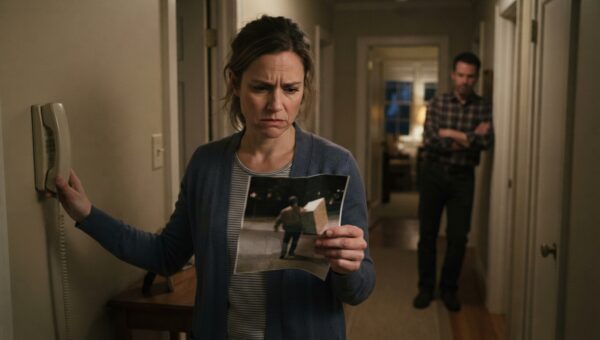
The name on these utility bills matches the signature in the guest book, and it says Brenda Vance.
I didn’t cry. I think I had run completely out of water by that point. I just stood in my quiet kitchen for twenty minutes, listening to the refrigerator hum, realizing that every single story Dale had told me about double shifts, holiday freight overloads, and bad weather delays on the Thruway was nothing more than an elaborate schedule for a second family he had built three towns over.
The next morning, I didn’t wait for the sun to clear the backyard fence. I pulled my sedan out of the drive and pointed the hood toward Sycamore Street, on the south side of the city past the old textile mills where the brick tenements had been converted into small apartments in the eighties.
1614 Sycamore was a yellow-brick courtyard building with overgrown boxwood hedges and rusted mailboxes hanging crooked by the front door. Apartment 4B was up on the second floor. The stairwell smelled of boiled cabbage and floor wax.
I knocked twice on the painted wood door.
A bolt turned from the inside, and the door swung open about four inches, held back by a brass security chain. A woman looked out at me. She had pale skin, dark circles under her eyes, and hair pulled back in a loose clip. She was wearing a faded gray sweatshirt that looked like it had seen ten years of Saturday mornings.
“Can I help you?” she asked. Her voice was tired, flat, and instantly defensive.
I reached into my canvas tote bag, pulled out the brass key stamped Unit 14-C, and laid it right on the wooden door ledge where she could see the numbers glinting in the harsh hallway light.
“I’m Martha Whitaker,” I said. My voice didn’t shake nearly as much as I expected it to. “Dale’s wife. We were married twenty-three years.”
The woman inside the doorway didn’t scream or slam the door in my face. She just closed her eyes for one long second, and when she opened them, her expression had collapsed into something much heavier than fear.
“I figured you’d find out eventually,” she whispered, her fingers tightening around the edge of the door frame. “Especially after the funeral. I shouldn’t have gone. I told myself I wouldn’t go. But the kids needed to see where he went.”
“Open the chain, Brenda,” I said quietly. “We need to talk about what’s in that storage unit, and we need to talk about what Dale left behind.”
She unhooked the chain and pulled the door open wide enough for me to step into the tiny living room. The space looked half-empty, like someone had come through with a crew and stripped out every comfortable piece of furniture, leaving only bare walls and the faint rectangular shadows where dressers and lamps used to stand.
“He took everything out eighteen months ago,” Brenda said, standing by the small laminate kitchen counter with her arms crossed tight over her chest. “We had an argument. I told him he had to choose between this apartment and his house across town. I told him I was done living out of a suitcase schedule while he drove back and forth to you every weekend.”
“And what did he do?” I asked, looking at the bare floorboards where a rug used to be.
“He didn’t choose,” she said, and her voice finally broke just a little bit, though she didn’t cry. “He just went out and rented that storage locker on Coleman Road. He brought a truck over here while I was at work with the kids, cleared out the living room set, the beds, the crib, even the little girl’s dresser. He said he was keeping it safe until I came to my senses. But he kept paying the rent on the locker so I couldn’t touch any of it without his say-so.”
“He liked having things where he could lock them up,” I said. “He did the same thing with the household bills. He kept every single record hidden in his truck.”
We sat at the small formica kitchen table across from each other. Brenda told me how she had met Dale nine years ago when she was working as a dispatcher at the long-haul terminal off Route 9. He had told her he was separated, that the divorce papers were already drawn up, and that he was just waiting for the right time to tell his wife so things wouldn’t get messy. She believed him for the first three years, right up until the day she brought their daughter Chloe home from the hospital and realized Dale was still spending every Sunday evening driving back to a house with a neatly mowed lawn and a terrier on the porch.
“I was stupid,” Brenda said, staring down at her fingernails. “I believed him because I wanted to believe him. When you’re working two shifts and raising a baby alone in a town where you don’t know anybody, you take whatever lifeline a man throws you. And then Leo came along, and by then I was trapped by the rent and the grocery bills he dropped off in cash every Thursday.”
“He gave me cash too,” I said, a bitter little laugh escaping my throat before I could stop it. “Always told me the freight rates were fluctuating, that the company was cutting back on overtime bonuses. Turns out he was just dividing the payroll between two different houses.”
I looked at Brenda across that bare table, and I realized something that surprised me. I didn’t hate her. I felt a cold, sharp anger toward the man who had managed to lie to both of us for nearly a decade, but looking at Brenda sitting there in her faded sweatshirt with two small children depending on her, the anger shifted into something practical.
“The storage unit is paid up for another seven years,” I told her. “Coleman Road. The mattress, the crib, the pink bedroom set, and your clothes. It’s all sitting in Unit 14-C.”
She looked up, her eyes wide with sudden disbelief. “You’re not going to throw it out?”
“Why would I want your clothes or your children’s furniture?” I asked. “It was never mine to begin with. It was just Dale’s way of playing king of the mountain with two different lives.”
I reached into my bag again and pulled out a notepad and pen. “More importantly, Dale had a union pension and federal survivor benefits attached to his commercial driving record. Those children are eight and four, aren’t they?”
Brenda nodded slowly, her lips parting.
“He died on the job while hauling an interstate load,” I said. “That means Chloe and Leo are legally entitled to monthly dependent benefits through Social Security and the trucking association’s family fund. Dale never filed the paperwork, of course, because that would have required putting your names on his official records where I might see them.”
“I don’t even know where to start with that,” Brenda whispered. “I don’t have his employment serial numbers or his tax forms.”
“I have them,” I said. “They’re sitting in his home desk right next to the mortgage papers. And I’m going to help you file every single claim by Monday morning.”
Brenda stared at me across the table for a long moment, her mouth working silently as she tried to process what I was offering. “Why are you doing this, Martha? You could take everything from the estate. You have the legal right.”
“I have my own house,” I said, standing up and smoothing down the front of my coat. “I have my own pension from the county office where I worked for twenty years. I don’t need Dale’s secret stash, and I certainly don’t want to spend the rest of my life fighting over furniture that belongs in your kids’ bedrooms.”
I walked over to the door, then turned back one last time.
“I’ll have the storage facility office sign over the lease for Unit 14-C to your name tomorrow afternoon,” I told her. “You can call a moving van whenever you’re ready to bring the furniture back over here.”
She stood up from the table, her hands trembling slightly as she walked me to the threshold. She didn’t try to hug me, and I wouldn’t have known what to do with it if she had. We were just two women who had survived the same shipwreck, standing on opposite sides of a splintered door frame.
“Thank you, Martha,” she said softly.
“Just make sure those kids get through school,” I answered.
The next morning, I drove back out to Coleman Road Self-Storage. The manager met me at the counter with a yellow transfer form and a pen. I signed my name at the bottom, releasing all rights to Unit 14-C and handing full control over to Brenda Vance.
When the paperwork was finished, I reached down to my key ring. Dale’s heavy brass truck key, the one I had pulled out of the impound glove compartment just a week ago, caught the light from the office window. I unhooked the brass ring with my thumbnail, letting the little metal tag slide off the split ring.
I walked over to the tall metal scrap bin sitting by the front counter, dropped Dale’s key inside, and listened to the small, dull clink it made against the bottom.
Then I walked out the glass front door and stepped right out into the crisp, open morning air alone.