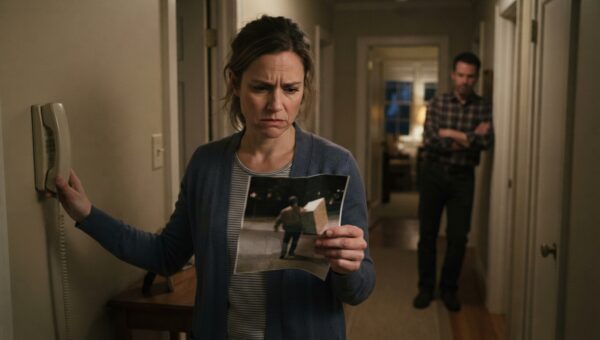
Why do we always trust the people who are slowly breaking us apart? That is the question I have been turning over in my mind every single day for the past six months, sitting right here at my old wooden kitchen table while the rain taps against the windowpane. I didn’t see the trap when I walked into it twelve years ago.
I thought I was just marrying into a quiet, respectable family in Nebraska, people who went to church every Sunday and kept their lawn trimmed down to the dirt. But respectability can be a very clever disguise for something rotten underneath.
Back when I first met Dennis, he was everything my mother always said a good husband should be. He wore clean button-down shirts, worked steady at the grain elevator, and spoke in that low, steady voice that makes you feel like nothing in the world can ever touch you. My mother always told me to look for a man who didn’t raise his voice, and Dennis never did. Not once during our first three years of marriage did he ever yell or lose his temper. When we moved into the old split-level house on Maple Street, the one with the sagging porch swing and the big maple tree out front, I thought we had built a fortress.
The first small crack appeared about four years in, though I didn’t have the sense to call it that back then. It was just a strange habit Dennis had of checking my phone when he thought I was asleep. I would wake up at 2:00 in the morning and see the blue light of the screen reflecting off his glasses, but when I asked him about it the next day, he just laughed and told me I was dreaming. I believed him because I wanted to believe him. It is a terrible thing, how easily your own mind will help someone gaslight you just to keep the peace.
Then came the accident in the kitchen, if you can even call it an accident. My mother-in-law, Martha, had come over unannounced, carrying one of her heavy ceramic casserole dishes, the blue one with the chipped handle. She had this way of criticizing everything I did without ever raising her voice above a pleasant church-social hum.
She looked at my freshly scrubbed linoleum floor and sighed, shaking her head.
“You really ought to use the lemon oil on this, Brenda,” she said, her tone dripping with that false sweetness that makes your teeth ache. “Dennis was raised with proper floors. It’s a shame to let them look like this.”
I was tired. I had just finished pulling a twelve-hour shift down at the clinic where I worked as a receptionist, my feet felt like lead, and something inside me just snapped. I told her, quite politely, that she was welcome to clean the floors herself if she didn’t like how I did it. Martha didn’t yell. She didn’t drop the dish. She just looked at Dennis, who had walked into the kitchen right at that second, and her lower lip quivered with theatrical perfection.
Dennis didn’t look at his mother. He looked at me, and his eyes went cold in a way I had never seen before. “Go to your room, Brenda,” he said, and his voice wasn’t gentle anymore. It was hard, flat iron.
When I didn’t move fast enough, Martha stepped forward, her face twisting into a sudden, vicious sneer that she hid the second Dennis glanced back at her. She shoved me hard against the edge of the kitchen counter, right where the sharp wooden corner of the spice rack jutted out. I heard a sickening pop in my chest, and the breath left my lungs in a violent rush. I hit the linoleum floor hard, curling into a tight ball as white-hot pain radiated through my ribs.
“She didn’t mean it,” Dennis whispered as I lay curled up in pain on the laminate floor of our front hallway. “Please… let’s keep this inside the family.”
He didn’t ask if I could breathe. He didn’t ask if I needed help. He just crouched down beside me, his hands hovering nervously over my shoulders, worrying about what the neighbors might hear if I made too much noise. Martha had already slipped out the back door, leaving her blue casserole dish sitting right on the counter like an offering.
By the time Dennis finally agreed to drive me to the county hospital, twenty-five minutes later, the pain had settled deep into my chest like a hot poker. Every movement of the car sent a fresh wave of agony through my ribs, and I had to grip the passenger door handle so hard my knuckles turned translucent. In the waiting room, I could barely stay upright in the plastic chair, gasping for air while Dennis sat beside me, tapping his foot against the linoleum and muttering under his breath.
“Just tell them you fell off the step stool while you were cleaning,” he whispered for the fourth time, leaning in close so his breath brushed my ear. “It’s easier for everyone, Brenda. You don’t want to make a mess of things.”
When the triage nurse finally called my name, I could barely walk through the double doors. The doctor on duty, a tall man with tired eyes and silvering hair named Dr. Vance, took one look at my bruised side and ordered scans without a single moment of hesitation. They wheeled me down the cold, white-walled corridor to the radiology unit, and for ten minutes, lying there under the hum of the machine, I felt a strange, detached peace. For the first time in years, Dennis wasn’t allowed in the room with me.
Minutes later, Dr. Vance returned to the examination room with the digital scans pulled up on his tablet. He studied the images for a long, silent moment, his jaw working slowly as he chewed the inside of his cheek. Then he quietly stepped out into the hallway, murmuring something to a nurse about contacting the local authorities.
Dennis went entirely pale. I watched the color drain right out of his face until his skin looked like old parchment paper.
Dr. Vance walked back in, shut the heavy door behind him, and looked right down at me. “These injuries don’t match an accident,” he said, his voice entirely steady. Then he turned his gaze directly toward Dennis and added, “Someone in this room isn’t telling the truth.”
In that moment, standing under the harsh fluorescent lights of the hospital room, I realized the clinic wasn’t just treating my broken ribs. It had cracked open a door to something much darker, a history of bruises and silence that Dennis and his mother had spent years burying beneath polite smiles and church pews.
Dennis started stammering, his hands flying up in frantic denial. “Now hold on just a minute, Doc, she’s clumsy, she falls all the time, “
“Shut up, Dennis,” I said.
The words came out of my mouth before I even had time to think about them, quiet and level, but they carried the weight of twelve years of swallowed breath. Dennis stopped talking instantly, his mouth hanging open in pure shock. He looked at me like he was seeing a stranger for the very first time.
Dr. Vance didn’t blink. He just reached out and placed his hand on the chart holder at the foot of my bed, waiting for the county deputy he had already summoned to walk through the door. The hallway outside was quiet, but for the first time since I walked down the aisle into that family, the silence didn’t feel like a trap anymore.