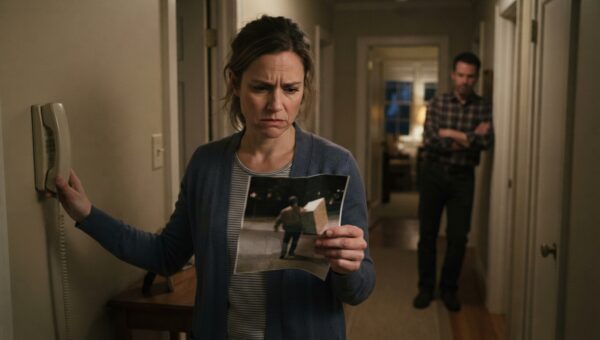
The telephone receiver felt heavy in my hand, the plastic slightly warm from being held against my ear during the long drive out past the county line.
When my son Ryan was a senior in college, his girlfriend of only three weeks suddenly announced she was pregnant. Everything happened so fast that my instincts told me to be careful, so I gently suggested a DNA test before any life-changing decisions were made.
Ryan agreed without hesitation because he wanted everything out in the open before talking about a future. But his girlfriend, Shelley, never forgave me for asking the test. She called me cruel, spread lies about our family to anyone who would listen, and before long, the damage was done. I wasn’t invited to my own son’s wedding. Family and friends looked at me like I was the villain, whispering behind my back at the grocery store and crossing the street when they saw me coming. I stayed silent and tried to accept it because I thought pushing back would only drive Ryan further away into her arms.
Then, two weeks before the ceremony, my phone rang unexpectedly. It was Shelley’s mother. Her voice sounded panicked. “Get in the car and drive over. IT’S URGENT!” she said. Confused, I asked, “Jen… what’s going on?” There was a long pause. Then she dropped words that made my heart stop: “We need to CANCEL THE WEDDING… NOW.”
The drive to Jen’s house took twenty-two minutes, and every red light felt like a personal insult. My hands kept slipping on the steering wheel because my palms wouldn’t stay dry. I parked right behind Jen’s station wagon in the gravel driveway, not even bothering to straighten my wheels. When I walked up the two wooden steps to the front porch, the screen door swung open before I could even raise my hand to knock. Jen stood there in the doorway, looking ten years older than she had at Thanksgiving, her fingers wrapped tight around a thick manila folder. She didn’t say hello or offer me coffee like she usually did. She just turned around and walked straight back toward the kitchen table, leaving the door wide open for me to follow.
The kitchen smelled faintly of lemon polish and old paper, the exact same scent it had when the girls were little and doing homework at that very table.
Jen sat down hard in her usual chair and pushed the manila folder across the laminate surface toward me. “I was packing up her old books from the back closet,” Jen said, her voice shaking so badly she could barely get the words out. “She left a cardboard shipping box behind the winter coats. I thought it was just old college papers. It wasn’t.”
I opened the flap of the folder with fingers that felt like wood. Inside were two different lab receipts, several pages torn from a spiral notebook, and an official-looking document with a red stamp across the top. I recognized the letterhead of the first clinic immediately. It was the accredited facility Ryan and Shelley had used for the official test months ago. But the paper in my hand wasn’t the clean, straightforward result Ryan had shown me on the kitchen island. It was a formal rejection notice.
“She never sent the real sample back through them,” Jen whispered, staring down at her own empty hands. “The first one came back invalid because the chain of custody got messed up or something. The clinic told her she needed to submit a proper supervised swab. But she didn’t want to wait. Or she didn’t want Ryan asking questions about why it was taking so long.”
I pulled out the second receipt, dated four days after the first rejection. It was from a cheap mail-order genetic kit you could buy online without showing an ID. Glancing down at the handwritten journal pages beside it, I saw Shelley’s neat, looping handwriting detailing a completely different timeline. She had written down dates, weeks, and calculations that didn’t add up to Ryan’s timeframe at all. According to her own private notes, the conception date fell squarely during her spring break trip to Florida, three weeks before she had even met my son, when she was still seeing an ex-boyfriend named Marcus who had skipped town the moment she mentioned a positive test.
“She used Ryan’s old electric toothbrush head,” Jen said, her voice cracking as the tears finally spilled over her cheeks. “She took it from the bathroom when she visited our house over Easter weekend. She swapped the cotton swabs in the mail kit so it would match his DNA profile. She lied to everybody. She lied to Ryan, she lied to me, and she used your caution as a weapon to make everyone think you were just being a bitter mother.”
The room felt very quiet then, save for the hum of the refrigerator in the corner. For months, I had carried the weight of being the bad guy, the cold mother who wouldn’t support her boy’s happiness. Every time I ran into an aunt or a neighbor at the post office, I had to endure the sympathetic head tilts and the pointed silence. I had swallowed every harsh word because I loved Ryan too much to fight dirty. But holding those papers in my hands, the anger didn’t feel hot or sharp anymore. It just felt heavy, like wet clay.
“Does Ryan know?” I asked, my voice barely louder than a whisper.
“Not yet,” Jen shook her head. “I found this an hour before I called you. I confronted her on the phone ten minutes ago, and she didn’t even deny it. She just yelled at me for going through her things and told me that Ryan was already attached to the idea of the baby so it didn’t even matter whose it was. That was when I hung up and dialed your number.”
We sat there for a long time, two mothers looking at the wreckage of a lie built by a girl we had both tried to trust. Jen looked exhausted, drained of all the defensive pride she had shown when Shelley first started screaming about my interference months ago. She looked across the table at me, her eyes red-rimmed and pleading. “I’m sorry,” she said softly. “I believed her over you. I let her run you out of his life.”
“We don’t have time for apologies right now,” I said, standing up and buttoning my cardigan. “We need to go get my son.”
We didn’t call Ryan ahead of time. We just drove straight to the apartment he rented near the campus, both of us piling into my car because Jen couldn’t drive herself in the state she was in. The sun was dipping low behind the maple trees by the time we pulled into his gravel parking lot, throwing long, cold shadows across the hood of his truck. Ryan’s truck was parked right where it always was, next to the overflowing recycling bin. When we walked up the metal exterior stairs to his second-floor door, I could hear music playing softly inside, some acoustic guitar track he liked to listen to while studying for his finals.
I knocked twice, a short, familiar rhythm I had used since he was ten years old. The music stopped instantly. When Ryan pulled the door open, he looked tired, the dark circles under his eyes telling the story of late-night cramming and the stress of a wedding coming together too fast. He had a stack of seating charts in one hand and a red pen behind his ear.
“Mom?” he said, his voice dropping an octave in sheer surprise. He looked past my shoulder and saw Jen standing behind me, her face blotchy from crying. The red pen slipped from behind his ear and hit the linoleum floor with a sharp plastic click. “What is going on? Did something happen to Grandma?”
“Nobody is hurt, Ryan,” I said gently, stepping past him into the small, cluttered living room without waiting for an invitation. “But we need you to sit down at the kitchen table right now. Both of us need you to look at something.”
He backed away slowly, his eyes darting between Jen and me as if he expected us to start arguing the way we used to. He walked over to the small round table where half-eaten takeout containers sat next to wedding invitation proofs. He didn’t sit down at first; he just gripped the back of the wooden chair with both hands, his knuckles turning white under the cheap overhead light. “What is this about? Shelley’s out picking up the bakery samples. She’ll be back in twenty minutes.”
“Good,” Jen said, her voice hard as she laid the manila folder flat on the table right on top of the wedding proofs. “Because she needs to be here when you read this, but you need to see it first so you can think clearly.”
Ryan didn’t touch the papers for a long moment. He looked down at the clinic letterhead, then at the receipt for the mail-order kit, and finally at the pages torn from Shelley’s spiral notebook. I stayed quiet, standing near the small kitchen counter, watching my son’s face transition from defensive confusion to utter, uncomprehending stillness. He didn’t yell. He didn’t slam his fist on the table. He just slowly pulled out the chair and sat down, dragging the pages closer to his face as if he couldn’t quite read the ink in the dim light.
“Is this a joke?” he whispered, looking up at Jen first, then at me. His voice sounded small, almost like the boy he had been when he scraped his knee on our back patio years ago. “Did you guys make this up?”
“Read the dates, Ryan,” I said quietly, walking over and placing my hand gently on his shoulder. “Look at the receipt from the mail-order company. Look at where she wrote down about the toothbrush.”
He turned the pages over, reading her precise, familiar handwriting line by line. I watched the realization hit him in slow motion, the terrible weight of seeing the person you trusted entirely revealed as a stranger. He didn’t make excuses for her. He didn’t try to find a loophole. He just sat there staring at the ink until his breath hitched in his throat.
“She used my toothbrush,” he said, the words coming out flat and dead. “She took it from your house over Easter.”
“She did,” Jen nodded, her own voice breaking again. “And I am so sorry, Ryan. I raised her better than this, but she did this.”
Before any of us could say another word, the front door downstairs clicked open and heavy footsteps sounded on the metal stairs. A cheerful voice called out from the entryway before the door even swung wide. “Ryan, you are not going to believe how much the mini cheesecakes cost, I swear they are trying to rob us blind, “
Shelley stopped dead in her tracks just inside the doorway, holding a white bakery box in both arms. Her eyes darted from Jen sitting at the table to Ryan staring blankly at the papers, and finally to me standing by the counter. The smile vanished from her face so fast it was like someone had pulled a curtain down. The heavy silence in the room felt heavier than any shout could ever be.
“What are you doing here?” Shelley asked, her voice instantly turning sharp and defensive as she shifted the bakery box to one arm. “Who invited her into our apartment?”
Ryan didn’t stand up. He didn’t raise his voice. He just pointed one finger at the manila folder lying open among the wedding proofs on the table.
“Sit down, Shelley,” Ryan said. His voice didn’t shake at all. It sounded older, colder, and completely finished. “We need to talk about your trip to Florida, and we need to talk about why you used my toothbrush to fake a DNA test.”
She didn’t run. She didn’t drop the box. She just stood there in the doorway for three long seconds, her jaw tightening as she realized the game was over. Then she turned around, let the front door click shut behind her without another word, and walked back down the stairs into the evening air.
We didn’t go after her. None of us moved for a long time. Ryan just sat at the table with his head in his hands, his shoulders shaking slightly as the adrenaline finally wore off and left him empty. Jen sat beside him, patting his arm with a quiet, broken tenderness that asked for nothing in return.
The wedding was called off before midnight. The venue coordinator was notified, the catering deposits were written off as a hard lesson, and the extended family members who had spent months looking at me like a criminal received a very short, very blunt group message from Ryan explaining exactly why the ceremony wasn’t happening. My phone rang three times that night with startled aunties trying to apologize, but I didn’t answer any of them. Some apologies don’t need to be spoken out loud to matter.
Two weeks later, on what should have been the morning of the wedding, the sky over our town was clear and bright. Ryan sat with me on my front porch, both of us wrapped in old sweaters against the morning chill, holding heavy mugs of black coffee that had gone half cold while we sat in silence. We didn’t talk about Shelley, and we didn’t talk about the months of isolation that had nearly torn us apart. We just watched the neighborhood mail truck roll slowly down the gravel road, stopping at each box with a familiar metallic clink.
On the mantel inside the screen door, right behind my chair, the old family photograph from Ryan’s high school graduation sat in its simple wooden frame, clear of dust and standing straight where it belonged. Ryan reached out, set his coffee mug down on the porch railing with a soft wooden thud, and leaned back against the peeling white paint of the chair. He didn’t have to explain anything, and neither did I. We were just two people who had come back from a very long distance away, sitting together in the quiet morning light where no defense was needed anymore.