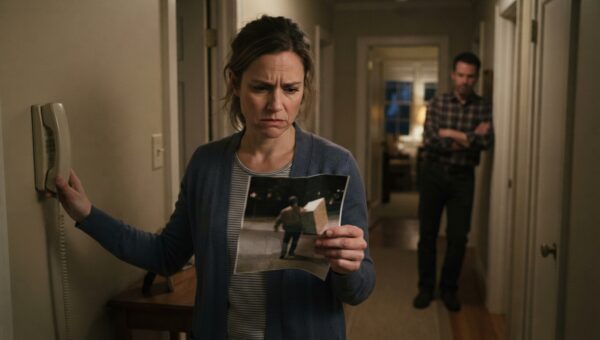
The linoleum in the south wing of Maple Creek Care Center always smelled faintly of lemon bleach and old paper, a scent that had started to turn my stomach by the seventh afternoon.
Dad was sitting by the window in Room 14, staring out at the gravel parking lot where delivery trucks backed up against the loading dock. His fingers were working the hem of his gray cardigan over and over again, rubbing the wool until the fibers stood up like fuzz on a peach.
I had dropped him off seven days ago with a trunk full of labeled pajamas and a check for three thousand dollars made out to administration.
My brother Greg had called me dramatic when I cried in the Buick on the way home, telling me over the speakerphone that old men got confused and I just didn’t want to handle the inconvenience.
Valerie had chimed in from her kitchen in Topeka, her voice sharp over the static, saying she had three kids in soccer and couldn’t be driving forty minutes every time Dad forgot where he put his teeth.
They both told me to figure it out, so I figured it out alone, signing the papers with a ballpoint pen that leaked blue ink onto my thumb.
Then the phone rang while I was standing in the kitchen staring at half a pot of cold coffee, and Nurse Evelyn sounded like she had just run up three flights of stairs.
“You need to come here immediately,” she said, and the line stayed open so long I could hear the background hum of the nurse station call lights pinging down the hallway.
I drove out past the grain elevators on County Road 4 with my hands locked onto the steering wheel so tight my knuckles turned the color of lard.
The radiator in my sedan had been ticking for twenty miles, but I didn’t care about the engine because my head was full of the worst kinds of pictures.
I thought he had fallen out of bed, or wandered down the corridor in his socks, or worse, forgotten who I was entirely when I walked through that heavy swinging door.
When I pushed into Room 14, Dr. Mercer was standing by the foot of the bed with a thin manila folder tucked under his arm like he was carrying a Bible into church.
Dad wasn’t looking out the window anymore, and he wasn’t picking at his sweater.
He was sitting up straight against the pillows, his chin up, looking at me with the sharp, gray-eyed stare I hadn’t seen since the summer we put a new shingle roof on the tool shed.
“Close that door behind you, Clara,” Dad said, and his voice didn’t have that wet, rattling tremble it had carried all through the winter.
Nurse Evelyn stepped back toward the sink, holding a small plastic tray with two empty pill cups and a crumpled paper towel.
“We ran a full blood panel on Tuesday morning per our intake protocol,” Dr. Mercer said, tapping the corner of the manila folder against his palm. “And then we pulled his pharmacy records from the two different clinics your family mentioned on the admission forms.”
I didn’t say anything because my tongue felt heavy, like an old piece of salted beef stuck to the roof of my mouth.
“Your father doesn’t have late-stage dementia, Mrs. Hayes,” the doctor continued, his voice steady and low in the small room. “He had severe toxic delirium brought on by a double dose of anti-anxiety medication and a blood pressure stabilizer that were fighting each other in his system for six months.”
The silence in the room didn’t feel heavy anymore; it felt sharp, like a piece of tin cut on the bias.
I looked down at Dad’s hands resting on the yellow cotton blanket, and I remembered the morning he wandered out onto Route 33 in his slippers, swearing up and down that he was late for the 7:00 AM shift at the grain elevator.
He hadn’t worked at that elevator since the Reagan administration, but he had been walking toward the credit union office right across the alley from the old loading scales.
That was the same morning Greg had called me from his office to complain that I was making too much fuss over an old man who needed a proper keeper.
“They had Dr. Halloway writing the green pills,” Dad said, his thumb hooking into the pocket of his shirt where he kept his spare wooden toothpicks. “And Dr. Vance over on Main Street was giving me the blue ones for my hip.
Greg brought the papers for me to sign down at the kitchen table while Valerie held the pen steady.”
Dad reached into the lining of his old wool coat hanging on the metal hook by the bathroom door and pulled out a small black ledger with oilcloth covers.
It was the same ledger he had used back in the seventies when he ran the independent trucking hauling out of Newton, every line ruled in purple ink with a fine steel nib.
He laid it on the bedside table and pushed it toward me with one crooked finger.
“They weren’t looking after my memory, Clara,” Dad said, and the sound of his voice made the hair on my arms stand up like wire. “They were clearing the road so they could sell the timber lot behind the barn and move the savings over to that brick house Greg bought in Overland Park.”
I opened the ledger because my hands were moving without my permission, and the first page had three names written in Valerie’s looping handwriting with little plus signs beside them.
There were dates from last October right through the week before I put him in the home, showing transfers of twelve thousand dollars, then eight thousand, then twenty-two thousand out of the joint account Dad didn’t even remember opening with them.
Dr. Mercer didn’t look at us; he just stared out the window at the gravel trucks while the diesel engines started up one by one down in the yard.
“We contacted the state elder protection liaison this morning,” Dr. Mercer said quietly. “And we called the credit union branch manager who remembered your father coming in three separate times trying to ask about his passbooks before the medication got too thick in his blood.”
Dad looked at me then, his eyes clear and hard as river stones, the way he looked at me when I wrecked the old Ford pickup in the ditch behind the south pasture and came home crying before I even turned off the ignition.
“I wasn’t lost on the road, Clara,” he said, and he tapped the black cover of the ledger twice with his knuckle. “I was just trying to get to a telephone they couldn’t listen to.”
The drive back to the house took twenty minutes, but I felt like I was moving underwater through thick, yellow silt that didn’t want to let my tires turn.
I didn’t call Greg, and I didn’t call Valerie, because my stomach was burning with something hotter than anger, the kind of cold, level fury you get when you realize you’ve been carrying someone else’s dirty water in your own bucket for three years.
By the time I pulled into our gravel driveway, the sun was sitting right behind the top of the water tower, throwing long, crooked shadows across the lawn where the dandelions were going to seed.
My phone started vibrating against the passenger seat around 5:15 PM, the little screen lighting up with Valerie’s face and a tiny heart icon she had picked out back when we still spoke on holidays.
I let it ring through to voicemail twice, watching the digital numbers climb until the little red dot showed a new message waiting in the cloud.
“Clara, what is going on?” Valerie’s voice came out of the speaker when I finally tapped the button, sounding thin and scared the way she used to sound when we broke Dad’s hunting decoy in the basement. “The nursing home called us about some legal investigator, and they said Dad is being discharged back to your place on Friday.
You can’t just take him out without talking to us about the property assessments.”
I didn’t save the message, and I didn’t call her back to explain about the ledger or the green pills or the way the doctor looked at us in Room 14.
I walked straight through the back screen door, letting the galvanized spring give its dry, familiar squeak against the doorframe, and dropped my keys on the counter by the bread box.
The kitchen smelled faintly of old coffee grounds and the bayberry candle I had lit the morning I left for Maple Creek, but the air felt different now, lighter somehow, like the way the house used to smell after a hard spring rain washed out the cellar drains.
On Friday morning, I didn’t hire an ambulance or use the facility transport van.
I drove my own Buick back around to the south wing entrance, and Dad walked out the glass doors under his own power with his old wool coat over his arm and his hat pulled down low against the wind.
He didn’t use his cane, and he didn’t look back at the brick building once while I helped him settle into the passenger seat and clicked his seatbelt into the metal receiver.
“You got any coffee in that thermos, Clara?” he asked as I turned the ignition and the old engine caught with a low, familiar shudder.
“It’s probably cold by now, Dad,” I said, pulling out onto the county road where the blacktop ran straight toward home between the rows of budding maples.
“That’s all right,” he said, looking out the side window at the fields where the winter wheat was just starting to show a pale, bright green against the dark dirt. “Cold coffee is better than no coffee at all.”
Greg and Valerie didn’t show up at the house that weekend, and they didn’t call back on Monday either, though the local sheriff’s deputy stopped by on Tuesday afternoon with a manila envelope from the state bank auditor about the joint accounts.
Dad was sitting at the kitchen table with a pencil and a fresh pad of yellow ledger paper, working out the figures for the spring fertilizer bill while the radio played an old country station from Wichita.
The stove was off, and the house was quiet, and for the first time in three years, the sunlight coming through the kitchen window didn’t look like it was about to go out.