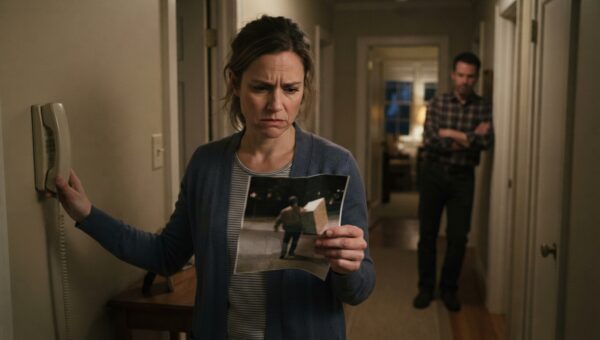
The kettle was whistling on the old iron burner, a thin, sharp shriek that usually made Arthur yell from the front room to cut the heat before the bottom burned out. Only Arthur wasn’t going to yell today, because Arthur had been under six feet of dry Texas clay for fourteen years, and the only sound in the house was the dull drone of the ceiling fan spinning a lazy circle in the July heat.
I was standing in the middle of our upstairs attic with a gray cardboard storage box balanced on my knee, sneezing from the dry cedar dust that had settled into the floorboards since the Clinton administration.
My mother died bringing me into the world, leaving Arthur and me alone in a four-room house out past the county line where the blacktop gave up and turned to caliche. For four years, it was just the two of us against the wind, sharing a box of saltines on the front porch at dusk and watching the freight trains crawl toward Amarillo. He used to set me on his shoulders while he checked the fence line, calling me his whole world every single time the sun dropped behind the cottonwoods. Then Meredith walked into our kitchen with a covered dish of peach cobbler and a pair of worn-out work boots, and everything shifted on its axis.
Six months after that afternoon, they stood before a justice of the peace in the county seat, and before the corn was even knee-high in the south acreage, Meredith had my adoption papers signed, sealed, and filed in the courthouse. I called her Mum before I even started first grade, and when the younger kids came along later, I never once felt the draft of being an outsider in my own home. Meredith had a way of looking right through you when you were lying, but she also had a way of resting her hand on the back of your neck that made the whole world feel anchored. By the time I turned twenty, I figured I knew the shape of my own life down to the last fence post.
Then I went up to the south gable to look for an old brass tackle box Arthur used to keep behind the winter blankets.
The attic was thick with the smell of old wool and dry pine, and when I pulled a heavy wooden frame out from behind a stack of seed catalogs, a small square of cream-colored cardstock slipped out of its backing. It was a photograph of Arthur holding me on the front steps, both of us squinting into a glaring August sun. When I lifted the picture to slide it back into the frame, something heavier than cardboard caught on the seam and fell right into my lap.
It was a folded envelope. My name was written across the front in Arthur’s steady, heavy-handed printing, the kind of writing he used for logging cattle weights. Dated fourteen years ago, precisely the day before the state police knocked on our front door to tell us about the truck out on Route 60. My fingers started to shake against the dry paper, and as I unfolded the crisp sheet, the quiet of the attic felt like it was pressing down on my chest.
Arthur didn’t write about a car crash, and he didn’t write about a sudden parting. He wrote that his heart had started giving out on him during the wheat harvest, and the town doctor had given him less than a month before things stopped working entirely. He said he had asked Meredith to marry him not out of some sudden romantic notion, but because he needed someone strong enough to take a motherless boy and keep him safe from the state when he was gone. He wrote down the date of his diagnosis right there in black ink, ending with a line that made my throat tighten until I couldn’t swallow.
“Take care of her,” he wrote, “and don’t ever let him think he was left alone in the world by choice.”
I sat down hard on a cedar chest, the dust puffing up around my boots in a tiny gray cloud, and my brain just refused to move forward for a solid minute. The story I had been told since I was six years old was that Arthur had swerved to miss a deer on the highway late at night and never woke up from the impact. I had repeated that story to school counselors, to my baseball coaches, to my friends when they asked about my dad. It was a clean story, a tragic story, the kind of thing you could file away in a drawer with a black ribbon tied around it. But the paper in my hand was heavy, smelling faintly of old pipe tobacco and shaving soap, and it completely dismantled every single memory I had of the morning he didn’t come home.
I didn’t know what to do with my hands, so I folded the letter back along its original creases and shoved it deep into the pocket of my jeans. Downstairs, the screen door banged shut with its familiar tinny rattle, followed by the sound of Meredith setting grocery bags down on the yellow formica counter. Her voice drifted up the stairwell, calling out my name to ask if I wanted iced tea before the sun went all the way down.
“I’m coming,” I yelled, my voice sounding thin and cracked in the small space of the hallway.
I walked down those wooden stairs with my boots making a heavy, hollow thud on every single step, feeling like I was carrying an unexploded shell in my pocket. Meredith was standing by the stove with her sleeves rolled up to her elbows, scraping potatoes into a battered aluminum pot with a small paring knife. She looked older now, silver running through her dark hair like woodsmoke, but she still had that exact same quick way of turning her head when she heard someone walk into the room.
“You look like you just saw a ghost up there,” she said, not even looking up as she tossed a peeled potato into the water. “Did you find that old tackle box or just a bunch of mouse nests?”
I didn’t answer right away. I pulled the heavy steel lockbox out from the bottom shelf of the pine pantry where she kept the old tax receipts and family records, setting it down on the table between us with a dull clank. She stopped cutting, the knife hovering half an inch above the potato, and the kitchen went so quiet I could hear the refrigerator compressor humming down in the corner.
“Arthur didn’t miss a deer on Route 60, did he?” I said, my voice barely carrying over the hum of the fridge.
Meredith didn’t flinch, but the knife slipped from her fingers and clattered against the bottom of the sink, splashing a few drops of water across the stainless steel rim. She slowly wiped her hands on the dish towel tucked into her waistband, turning around to lean her hips against the edge of the counter. Her eyes went straight to my pocket where the edge of the cream-colored envelope was sticking out like a white flag.
“Where did you find that?” she asked, and her voice didn’t sound angry or surprised, just terribly tired, like someone who had been walking against a headwind for twenty miles and finally got to put their pack down.
“Behind the picture in the south gable,” I said, pulling the letter out and laying it flat on the oilcloth table runner between us. “You told me he died in a wreck. You told me it was fast.”
“It was fast at the end,” she said softly, walking over to pull a wooden chair out from the table and sitting down with a long, slow exhale. “The truck hit the embankment because his heart stopped before he even crossed the county line. The doctor told him it could happen any second, day or night. He wouldn’t stay in the hospital, though. He said he had too much corn to get in and too many things to settle before he left.”
“Why didn’t you tell me?” My voice was rising now, the heat of the attic still trapped under my collar, but my hands were shaking so bad I had to grip the edge of the table to keep them still. “Why let me walk around thinking it was just some stupid accident for fourteen years? Why make me think he just… drove off?”
“Because you were six years old,” Meredith said, leaning across the table and looking right into my face with those gray eyes that didn’t let anything go. “What was I supposed to tell a six-year-old child? That your daddy knew he was dying every time he tied your shoes? That every morning he woke up waiting for his chest to give out? If I told you he had a sick heart, you wouldn’t have remembered the good years. You would have spent every day of your childhood watching him breathe, terrified that every cough meant he was gone. He wouldn’t have that for you. And neither would I.”
“You married him knowing?” I asked, the weight of it finally settling into my ribs like cold iron. “You knew before you even moved into this house?”
“I knew the day we had coffee at the diner in town,” she said quietly, reaching out to touch the corner of the folded letter with one calloused finger. “He didn’t try to hide it. He looked me right in the eye and told me he had maybe a year left in him, and asked if I was willing to help him make sure you had a home that wouldn’t get chopped up by the court after he was gone. He asked me to be your mother, legally and truly, so nobody could ever take you away from this land.”
She looked up at me then, and I saw something in her face that I had been too blind to notice all those years growing up, running through the pastures and fighting with my younger siblings over who got the last biscuit. It wasn’t just duty. It was a promise she had made to a dying man in a quiet room, kept without one single complaint through every single harvest and winter freeze that followed.
“He loved you more than his own breath,” Meredith whispered, her voice dropping down until it was almost lost in the hum of the refrigerator. “And I loved him enough to take his place when he couldn’t stay.”
I didn’t say anything back for a long time. The kitchen smelled of peeled potatoes and dry pine, the same smell it had every evening since I was a little boy sitting on a stool too tall for my legs. I reached across the table and pushed the letter back toward her, but she shook her head and slid it right back to my side of the oilcloth.
“Keep it,” she said, standing up to turn the burner on under the potatoes. “It belongs to you now. Just like everything else he left behind.”
That evening, we sat on the back porch while the sun went down behind the ridge, the sky turning that deep, bruised purple that usually meant a storm was coming in from the panhandle. We didn’t talk much about the past or the letter, just watched the cattle move down toward the tank for their evening water. When the screen door clicked and my younger brother came out to ask what was for supper, I didn’t feel like an outsider or a secret anymore. I just felt the solid weight of the floorboards under my boots, knowing that every single wall in this house had been built out of nothing more than love and stubborn protection.
The next morning, I took the old photograph of Arthur and me down from the wall in the hallway, carefully tucked the folded letter right behind the cardboard backing where it had stayed for fourteen years, and carried it into the living room. I set the frame right in the center of the mantelpiece, right between a picture of Meredith holding my youngest sister at her high school graduation and a snapshot of the whole family standing by the red barn. It didn’t look like a secret anymore. It looked like the foundation of everything I was.