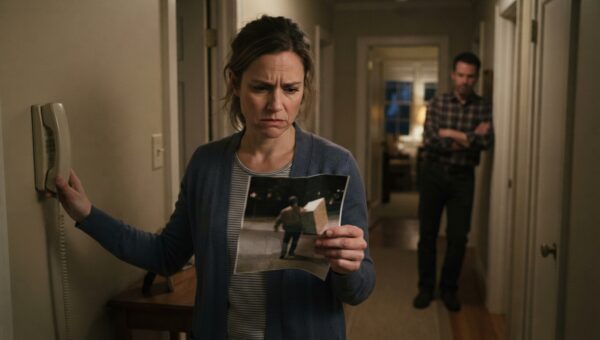
The linoleum in our kitchen always felt like cold glass at five in the morning, long before the sun had even tried to burn off the river fog rolling across the fields outside of town. Back then, ten years ago, I was standing right on that cold floor with a newborn baby sleeping in a wooden bassinet in the corner, holding a court check for $20,000 that tasted like ash in my mouth.
I had just come home from the hospital ten days earlier to a house that didn’t smell like mine anymore. My mother-in-law, Bernice, had decided while I was in labor that my home was a hazard. She brought in a commercial cleaning crew, locked my bedroom door, and hauled away three black contractor bags of my personal things. She called it clearing out the clutter. I called it stealing.
Among those bags were every single handwritten letter my grandmother had left me before she passed away. Those letters were the only piece of her I had left after losing her to pneumonia three years prior. When I walked through my front door and saw the empty bookshelves where her old recipe boxes and leather-bound notebooks used to sit, something inside me simply snapped.
Bernice was sitting right on my living room sofa when I dropped my hospital bag on the floor.
She looked at me like I was an ungrateful guest in her son’s house. “I did you a favor, Loretta,” she said, her voice sharp as broken glass. “You have a baby now. You need to live in the real world, not among old paper scraps.”
I didn’t yell. Yelling felt too small for what was burning in my chest. I just walked straight across the room, grabbed her by the heavy wool sleeve of her cardigan, and hauled her feet off my rug. “Get out,” I told her, my voice shaking so hard my teeth clicked together. “And if Arthur takes your side on this, he can pack his bags right behind you.”
Arthur, my husband, just stood by the kitchen island with his hands in his pockets, looking down at the floor like he always did when things got loud. He mumbled something about keeping the peace, but he didn’t stop her from leaving.
I didn’t wait for him to pick a side. I drove straight down to the county courthouse the very next morning, sat across from a sharp-eyed lawyer named Miller, and sued Bernice for the full intentional destruction of irreplaceable sentimental property and emotional distress.
The lawsuit dragged on for four months. Bernice fought me every inch of the way, snarling about legal fees and wasting the court’s time, until the judge finally hammered his gavel and ordered her to pay me twenty thousand dollars. She wrote the check with a hand so stiff she could barely hold the pen, sliding it across the clerk’s desk like she was handing over a piece of her own soul. From that day on, she never laid eyes on my son. She never stepped foot on our property again.
I thought that was the end of it. I thought the money was just a bitter consolation prize for the letters I would never read again.
But ten years of marriage do not heal when they are built on a foundation of quiet resentment. Arthur spent a decade sidelining himself, acting like a visitor in his own home, never forgiving me for locking his mother out of our lives.
By the time our son turned ten, the marriage finally collapsed under its own weight. There was no grand explosion at the end, just a cold, methodical division of bank accounts, furniture schedules, and custody briefs in a mediator’s stale conference room on the second floor of the municipal building. Arthur brought his new attorney, a young man with slicked-back hair and a sharp gray suit who looked like he practiced smiling in front of a mirror every morning.
We were three hours into hashing out the equity on the house when Arthur slid a small, heavy brass key across the scuffed laminate table. It didn’t belong to any lock in our house. It had a greasy notch cut into the shoulder that looked like it had been punched at a regional bank branch forty miles north.
“You want the house?” Arthur asked, leaning back in his chair with a cold little smile that didn’t reach his eyes. “You want full custody and the savings account? Fine. Take it all. But you’re going to sign this release first.”
He reached into his leather briefcase and pulled out a faded manila envelope, sliding it across the table until it bumped against my coffee mug. The paper was yellowed at the edges, thick and textured, tied neatly with a piece of faded yellow kitchen twine. My breath caught in my throat. I knew that handwriting before I even touched the page. It was my grandmother Clara’s sharp, elegant cursive, the one she used to write out grocery lists and poetry in the margins of old library books.
“What is this?” I asked, and my voice sounded thin even to my own ears.
“My mother never threw those letters away,” Arthur said, and there was a strange, desperate triumph in his voice now. “She found them in your nursery closet the day you went into labor. She read the first three pages, put them right into a safety deposit box at the First National branch up in O’Neill, and there they’ve sat for ten years. She paid that twenty-thousand-dollar judgment out of her own savings just to keep them quiet.”
I stared at him, the conference room walls seeming to tilt slightly on their hinges. “Why?”
“Open the top envelope,” Arthur said, nodding toward the stack. “Read what your sweet little grandmother was doing back in the autumn of 1974.”
My fingers felt clumsy and cold as I untied the bit of twine. I pulled out a folded sheet of lined paper covered in my grandmother Clara’s precise, deliberate ink. It wasn’t a grocery list. It wasn’t a recipe for peach preserves. It was a hand-drawn architectural schematic of the second-floor vault of the Western Nebraska Trust and Savings building, complete with shift change schedules, security guard patrol routes marked in red pen, and an itemized breakdown of seventy-two thousand dollars in unmarked bearer bonds.
I turned the page. There were letters written to an alias I had never heard of, discussing getaway vehicles, safehouses in Wyoming, and the precise timing of a freight train that always blocked the south intersection at 2:14 in the morning. My grandmother, the quiet, church-going widow who baked sugar cookies for the county fair every August, hadn’t just lived a quiet life. She had masterminded an unsolved regional vault heist that the state police had given up on forty years before I was born.
“If I take these to the county prosecutor or hand them to the local paper,” Arthur whispered across the table, leaning forward so his slick lawyer tried to pull him back by the sleeve, “your family name gets dragged through every mud puddle from here to Omaha. Your son grows up knowing his great-grandmother was a wanted federal fugitive. So you sign away your claim to my pension, you give me primary custody rights on weekends, and we walk out of here clean. Otherwise, I drop the whole box right on the DA’s desk.”
He sat back, folding his arms across his chest, waiting for me to break. He waited for the tears, the panic, the familiar terror of public humiliation that he assumed would bring me to my knees.
For about ten seconds, I didn’t say anything at all. I just sat there looking at the neat, sharp numbers my grandmother had written down with a ballpoint pen half a century ago. I thought about the twenty thousand dollars Bernice had paid out of pocket ten years ago. Now I finally understood why she hadn’t called the police back then. If Bernice had turned the letters over to the authorities during our lawsuit, the police would have searched the house, investigated the provenance of the documents, and discovered that Arthur and his mother had been sitting on stolen historical evidence and concealing it for years. They were just as dirty as the secret itself.
I looked up at Arthur across the table, and the trembling in my hands suddenly stopped completely.
“You’re an idiot, Arthur,” I said, and my voice was so quiet the mediator stopped shuffling his papers.
“Excuse me?” Arthur snapped, his smile slipping.
“Statute of limitations,” I said, looking right into his pale, sweating face. “Federal bank robbery from 1974? The statute ran out before I was even in high school, Arthur. Grandma Clara passed away twelve years ago. You can’t prosecute a ghost, and you sure as hell can’t send a corpse to federal prison.”
Arthur’s mouth opened just a fraction. He looked over at his lawyer, whose expression had gone entirely blank.
“And furthermore,” I continued, leaning forward and resting both palms flat on the table, “you rented that safety deposit box at First National on October 14th, 2014. That was three days after I went into the hospital. Which means you knew Bernice took those letters. You helped her conceal stolen marital property, you perjured yourself during our civil suit by swearing under oath that you knew nothing about the discarded items, and you just now used concealed assets and extortion to try and bully me in a court-ordered mediation.”
Arthur’s lawyer slammed his folder shut with a sharp crack that echoed off the acoustic ceiling tiles. “We are taking a five-minute recess,” the lawyer muttered, grabbing Arthur by the elbow and hauling him toward the hallway door.
They didn’t come back for twenty minutes. When they did, Arthur looked like he had aged five years in the span of a cigarette break. His lawyer wouldn’t even look me in the eye when he slid the revised settlement agreement across the table. Every single demand I had made, full custody, the house clear of liens, his retirement accounts signed over, and the physical surrender of every remaining document in that safety deposit box, was already initialed in black ink at the bottom of the page.
I didn’t smile as I signed my name. I just picked up the manila envelope, tucked it securely under my arm, and walked out of the municipal building into the crisp afternoon air without looking back once.
An hour later, I was sitting alone at my kitchen table in the quiet of my own home, the late afternoon sun cutting long golden slants across the wood. My son was still at soccer practice down at the park, and the house was entirely silent except for the steady hum of the refrigerator in the corner.
I pulled the worn blue-ink pages from the envelope one last time, smoothing the creases with my thumbs. My grandmother’s handwriting was so steady, so utterly fearless, completely unbothered by the chaos she had left behind for the rest of us to clean up. I didn’t feel shame, and I didn’t feel horror. I just felt a strange, cold wave of respect for an old woman who had kept her secrets locked away so tightly the whole world had never even guessed what lived beneath the surface.
I slid the letters gently into my bottom desk drawer, turned the brass key until it clicked shut, and locked the in-laws out of my life for good.