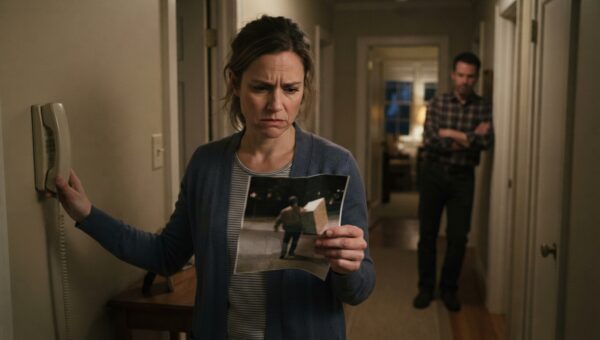
The legal notice arrived on a Tuesday morning in a standard manila envelope that smelled faintly of stale coffee and printer toner. My brother Marcus and I sat across the mahogany conference table from Robert Hayes, our family attorney, while the overhead fluorescent light hummed with a low, irritating frequency. Arthur Vance, our mother’s husband of three years, had filed a formal claim against the estate.
He was seventy-five, a man who always wore pressed blazers and smiled with too many teeth, and he wanted his statutory elective share. He wanted half of everything Mom had spent thirty years building after our father passed away.
“Under state law, a surviving spouse is entitled to a significant portion of the primary estate regardless of what the written will specifies,” Robert said, adjusting his wire-rimmed glasses. He didn’t look up from the stapled paperwork. “We can fight it, but it’s going to be an uphill battle. Arthur has legal standing.”
Marcus slammed his hand down against the polished wood. “She left her house and her savings to us. That was her dying wish, Robert. Arthur was only in her life for three years.”
“Three years and four months,” I corrected him quietly, staring at the grain of the conference table. The numbers felt heavy in my chest.
Our mother, Evelyn, had been seventy-two when she married Arthur at the local Methodist fellowship hall.
She was sharp-minded, fiercely independent, and had spent four decades running the administrative office for the county probate court. She knew the law better than most attorneys, which made her late-in-life marriage to Arthur feel out of character for anyone who knew her practical nature. But she had been lonely after years of widowhood, and Arthur had played the part of the devoted, gentle widower with practiced ease. He brought her potted hydrangeas on Tuesdays and walked her home from choir practice.
We had all tried to be happy for her, though Marcus kept his distance from the start. Something about Arthur’s smooth, rehearsed manner always set my teeth on edge. When Mom passed away peacefully in her sleep at seventy-five, Marcus and I were devastated, but our grief was immediately crowded out by the logistics of clearing out the family home. We spent our weekends sorting through decades of clipped newspaper articles, jars of buttons, and old tax returns.
It was during our second weekend of sorting through Mom’s home office that Marcus found the anomaly. He was clearing out the bottom drawer of her walnut writing desk, the one where she kept spare fountain pens and rolls of stamps, when he pulled out an old wooden dried flower press she had owned since the seventies. Inside the cardboard sleeve, tucked beneath pressed autumn leaves that had turned the color of old leather, sat a small, notched brass key with a stamped tag from a regional bank in Augusta, a town forty miles north.
“What is this?” Marcus asked, holding the key up to the gray afternoon light coming through the window. “Mom never went to Augusta unless it was to see the state fair.”
“Only one way to find out,” I said, wiping dust from my hands onto my jeans.
We drove north the following morning through a steady drizzle that turned the county roads into ribbons of gray slate.
The bank in Augusta was an older brick building wedged between a hardware store and a diner that smelled of fried onions. The loan officer, a tired-looking woman with silver hair pinned back in a neat bun, looked over Mom’s death certificate and our letters of administration before nodding slowly. She retrieved a heavy steel box from the vault and placed it on the small laminate table in the corner of the room.
Inside the box, resting beneath a bundle of old savings bonds, was a single legal document bound with a heavy blue backer sheet. It was a prenuptial agreement, dated precisely two weeks before Mom and Arthur walked down the aisle. The signature at the bottom was notarized by retired Judge Alan Vance, an old colleague of Mom’s from the courthouse who had passed away the previous winter.
Marcus flipped through the pages, his eyes widening as he read the clauses. “She protected everything. The house, the savings, the retirement funds. It’s all here, airtight.”
I pointed a finger at the final schedule attached to the back of the document. “Look at what she agreed to give him.”
According to the terms of the ironclad prenuptial agreement, Arthur Vance would receive exactly what Evelyn had agreed to give him upon her passing: a set of vintage Spalding golf clubs and the contents of the guest bedroom closet.
That afternoon, we returned to Mom’s house with the document tucked safely inside my glove compartment. Arthur was already there, standing in the front hallway with a cardboard box in his arms, loading it with silver picture frames from the side table. He looked up when the front door clicked open, his expression shifting instantly from mild annoyance to a practiced, sorrowful smile.
“Boys,” Arthur said, his voice dropping into that smooth, gravelly register he used whenever he wanted to sound reasonable. “I was just gathering a few small keepsakes. Robert called me about the probate filing. I’m sorry it has to be handled this way, but a man has to look out for his security. Evelyn would have understood.”
Marcus didn’t move from the doorway. “She understood a lot more than you think, Arthur.”
I pulled the prenuptial agreement from my jacket pocket and laid it flat on the entryway table. “You might want to read this before you pack any more picture frames. Especially page four.”
Arthur walked over slowly, his movements deliberate and unhurried. He set his box down on the floor, picked up the document, and skimmed the first few paragraphs. His color didn’t change immediately. He simply smiled a thin, tight smile and shook his head.
“This is old paperwork,” Arthur said, his voice dropping an octave. “Preliminary drafts don’t override state elective share laws after three years of marriage. Your lawyer should have told you that.”
“It’s not a draft, Arthur,” I said, stepping closer. “Judge Alan Vance notarized it thirty-six hours before the wedding. It was filed properly and kept in a secure location where you couldn’t reach it.”
Arthur stared at the signature for a long moment, his jaw tightening beneath his neatly trimmed gray beard. The air in the hallway felt suddenly thin and cold. “Even so,” he muttered, trying to regain his footing. “Even if this scrap of paper exists, it lists specific provisions. I have rights to whatever is designated for me under these terms.”
Marcus let out a short, humorless breath. “Oh, you definitely have rights to your designated items. Mom made sure of that.”
Arthur frowned, looking between the two of us. “What are you talking about?”
“According to the terms of the agreement,” I said, quoting the exact line we had read in the bank vault, “you receive a set of golf clubs and the contents of the guest bedroom closet.”
For a second, Arthur looked confused. Then a flash of profound relief crossed his features, quickly masked by a theatrical sigh of disappointment. He clearly figured he could live with losing the house if he could still contest the broader estate through other legal channels, or perhaps he simply dismissed the closet as a harmless quirk.
“Well,” Arthur said, adjusting his blazer cuffs with an air of wounded dignity. “If that is what Evelyn wanted, I suppose I should collect my things and let you boys finish your grieving.”
He walked past us down the short hallway toward the back of the house, his leather-soled shoes clicking rhythmically against the hardwood floor. Marcus and I followed a few paces behind, keeping our distance. Arthur stopped in front of the closed wooden door of the guest bedroom, the small brass knob catching the pale afternoon light.
“The golf clubs are in the hall closet,” Marcus said quietly. “The guest room closet is something else.”
Arthur reached out and twisted the brass knob. The latch clicked open with a dry, sharp sound, and he pulled the heavy door toward him.
He didn’t step inside immediately. He just stood there in the doorway, his hand still resting on the knob, his fingers going completely rigid. The color drained out of his face so fast it looked like someone had turned off a light beneath his skin. His mouth opened slightly, but no words came out.
Inside the closet, there were no old winter coats, no spare wool blankets, and no boxes of childhood toys.
Instead, Mom had arranged a row of six heavy bankers boxes, each one labeled with neat, precise handwriting in black permanent marker. Piled on top of the first box were photocopies of cancelled checks, bank statements from out-of-state accounts, and signed promissory notes bearing Arthur’s signature from before they were married. There were official documents detailing three separate failed business ventures, along with fraudulent credit applications that listed Mom’s home equity as collateral without her initial consent, all carefully investigated, documented, and cross-referenced with bank stamps from the exact months Arthur had first moved into the house.
Mom had known. She had discovered his massive pre-marital debts and his secret attempts to leverage her property two years into their marriage. Instead of creating a public scandal that would humiliate her in front of the bridge club and the church congregation, she had quietly called her old friend Judge Vance, locked the evidence away where Arthur could never destroy it, and set a trap that waited quietly for the day he finally overplayed his hand.
Arthur stared at the stacks of paper for a long, silent minute. His breathing became shallow and uneven. He looked back at us, his eyes wide and darting, all the smooth charm entirely stripped away, leaving only an old man cornered by his own handwriting.
“She… she didn’t file these,” Arthur whispered, his voice cracking. “She told me she let it go.”
“She didn’t file them with the police,” I said, my voice steady. “She filed them with her estate executor as the sole condition of your inheritance. You can take your golf clubs and walk out that front door right now, Arthur, or we can hand these boxes to the state prosecutor tomorrow morning.”
Arthur didn’t answer. He slowly closed the guest bedroom door, the latch clicking shut with a finality that echoed through the quiet house. He turned around, his shoulders visibly sagging beneath his pressed tweed jacket, and walked back down the hall without looking at either of us again.
Ten minutes later, the front door opened and closed. Through the front window, we watched him carry his old canvas golf bag out to his sedan, toss it into the trunk, and drive away down the gravel drive without ever looking back.
Marcus and I stood in the quiet hallway for a long time after he left. The house smelled faintly of lemon polish and old paper, exactly the way it always had. Marcus walked over to the guest bedroom door, touched the wooden frame with two fingers, and let out a long breath.
Mom had kept her home, her savings, and her dignity intact, right down to the very last detail.