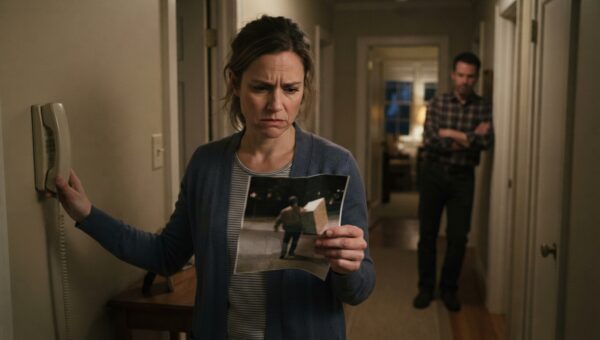
The coffee was still warm in the ceramic pot on my stove when the front window rattled in its frame. It was 7:14 in the morning, barely twelve hours after we lowered Mrs. Whitmore into the red clay behind the Baptist church, and the sound of heavy boots on my wooden porch boards made my stomach turn over.
I didn’t even have time to tie my apron before the front door shuddered under three violent thumps.
When I pulled the deadbolt and swung the door open, the morning light hit the shiny brass badges of two county sheriff deputies standing right on my welcome mat. Pushing past them with her face mottled red from crying and screaming was Brenda, Mrs. Whitmore’s forty-five-year-old daughter, pointing a shaking finger straight at my chest.
“It’s her!” Brenda shrieked, her voice cracking with a ugly kind of panic that didn’t sound anything like grief. “She’s responsible for everything!”
I just stood there in the doorway because my brain kind of stopped working for a second. The deputies looked tired, the kind of tired that comes from working a county road accident before the sun’s even up. The taller one, a middle-aged man with graying temples named Deputy Miller, held up a hand to keep Brenda from lunging further into my front hall.
He looked down at his clipboard and then back at me. “Were you Mrs. Whitmore’s primary caregiver?”
I nodded slowly, my throat feeling dry as sandpaper. “I lived next door for six years.
I took her to every single doctor’s appointment she had after her hip went out. I’m the one who cooked her meals.”
“Then we need you to come with us down to the probate office,” Deputy Miller said, his tone entirely flat and professional. “There’s been a formal complaint filed regarding undue influence and estate tampering.”
Brenda let out a sharp, ugly bark of a laugh right over his shoulder. “You’re going to jail for what you stole from my mother, you old busybody.”
My knees felt like water, but I didn’t back up. I thought about the three years I spent sitting on the hard plastic chairs at the regional cancer center while Brenda was off vacationing in Gulf Shores. I thought about the four separate times Mrs. Whitmore called me crying at midnight because her refrigerator was empty and none of her three children would answer her calls.
Three years ago, when Mrs. Whitmore first lost the use of her left hand from a mild stroke, Brenda didn’t come to help clean up the kitchen or set up her medications. She came to ask if the house was paid off yet and whether the antique dining set would fit in her townhome over in Mobile.
“Let me grab my purse and my car keys,” I told Deputy Miller, keeping my voice steady even though my hands were shaking so hard I could barely feel my fingers.
“You won’t be needing your car,” Brenda snapped, her eyes wide and frantic. “They’re arresting you today. The house is mine. Everything is mine.”
The ride down to the county courthouse in the back of the cruiser was the longest twenty minutes of my life. The vinyl seat was cold, and the smell of stale coffee and disinfectant made my stomach roll.
I kept staring out the small side window at the oak trees lining the highway, trying to remember every single afternoon I spent sitting on Mrs. Whitmore’s floral print sofa, listening to her talk about how much she regretted raising children who only saw dollar signs when they looked at her face.
When we walked into the county annex building, the fluorescent lights buzzed with that high, whining sound that gives you an instant headache. Brenda marched ahead like she owned the entire county, her black mourning dress swishing against the linoleum floor.
Deputy Miller led us down the second-floor hallway to a glass-walled conference room at the very end. Sitting at the long mahogany table was Arthur Vance, the crusty old estate attorney who had handled legal matters for half the families in our county for forty years. He was wearing his usual gray tweed jacket with the leather patches on the elbows, and he had a thick manila folder sitting right in front of him.
“Ah, Deputy. And Ms. Whitmore,” Mr. Vance said without looking up from his papers. His voice was dry as autumn leaves. “Shut the door behind you, please. We have a lot to get through before ten o’clock.”
Brenda dropped into a chair across from him, crossing her arms and letting out a loud, dramatic sigh. “Mr. Vance, I told these officers downstairs. This neighbor woman manipulated my mother during her final months when her mind was failing. We want an immediate freeze on the deed transfer and a full audit of every bank account my mother had.”
Mr. Vance finally looked up. He took off his wire-rimmed glasses, folded them carefully, and laid them right on top of the manila folder. He didn’t look mad, which somehow made Brenda look even more nervous.
“Mrs. Evelyn Whitmore’s mind,” Mr. Vance said slowly, “was sharper at seventy-two than yours or mine is today, Brenda. I met with her privately in this very room exactly nineteen days before she passed away.”
Brenda scoffed, leaning forward across the table. “She didn’t know what she was doing. She was on heavy pain medication. Everyone knows that.”
“She was on Tylenol and blood pressure pills,” Mr. Vance replied smoothly. He opened the folder and pulled out a fresh, stiff sheet of paper with a raised county seal stamped right into the corner. “And she was entirely competent. More importantly, she was deeply exhausted by the way her children treated her like an ATM with a heartbeat.”
My chest felt tight. I hadn’t known about any new paperwork. I only knew that Evelyn had asked me to help her organize her desk drawers the week before she went into hospice, and we had spent two whole afternoons sorting through old utility bills and grocery receipts while she talked about her childhood in Montgomery.
Mr. Vance slid a single typed letter across the table toward Brenda. The paper was crisp, and at the bottom was Evelyn’s shaky but entirely legible cursive signature, witnessed and notarized by two nurses from the clinic.
“What is this?” Brenda muttered, grabbing the paper. Her eyes scanned the first few lines, and the color drained right out of her face so fast she looked like she’d seen a ghost.
“That,” Mr. Vance said, his voice dropping an octave, “is your mother’s final deposition and personal letter to the probate court. She wanted to make absolutely certain that when her children showed up for the funeral, they understood why they weren’t getting a single dime of the property she worked thirty years to pay for.”
Brenda pushed herself up out of her chair so hard the metal legs scraped a loud, screeching sound against the floor. “You can’t do this! That house belongs to the family by blood!”
“Blood doesn’t buy groceries when someone’s bedridden, Brenda,” Mr. Vance said, and there was a cold finality in his words that stopped her dead in her tracks. “Your mother amended her will on October fourteenth. The house, the savings account, and every piece of personal property she owned are legally deeded to her neighbor, who visited her two hundred and fourteen times last year while neither you nor your brothers called once.”
Deputy Miller cleared his throat, shifting his weight from one foot to the other near the door. He looked down at Brenda with a gaze that had seen this exact family greed play out a hundred times before on these county roads.
“Well, Ms. Whitmore,” the deputy said quietly. “It looks like there’s no criminal complaint here. This is a civil estate matter, and Mr. Vance has all the valid paperwork right in front of him.”
Brenda turned on the officers, her voice rising to a frantic scream. “Are you just going to let her steal my inheritance? Arrest her!”
“Nobody is arresting anyone today except for filing a false police report if you keep screaming in a county building,” Mr. Vance said, picking up his glasses again. “The paperwork is filed. The transfer is complete. The locks were changed by my office this morning at eight o’clock.”
Brenda stood there for three seconds, her mouth opening and closing like a fish out of water, before she burst into real, ugly tears of pure rage and stormed out of the conference room, slamming the glass door hard enough to make the windowpanes rattle.
Nobody said anything for a second after she left, and honestly that felt louder than her screaming.
Mr. Vance looked across the table at me, a tiny hint of a smile touching the corners of his mouth. He slid a heavy set of brass keys across the mahogany wood toward my hands.
“Eyn told me you’d probably drop your coffee this morning when you saw the police,” Mr. Vance said softly. “She said you’re too soft-hearted for your own good, but you’re the only person who treated her like a human being at the end.”
I reached out and picked up the keys. They were heavy, cold against my palm, and the brass ring had a small blue plastic tag on it that Evelyn always used for her front door.
Twenty minutes later, Deputy Miller drove me back down our quiet residential street, dropping me off right at the foot of Evelyn’s driveway. The morning sun was climbing over the oak trees, hitting the white siding of the old house just the way it did every single day when I used to walk over with a fresh pot of coffee.
I walked up the wooden porch steps, the boards solid beneath my shoes, and slipped the heavy brass key into the front door lock for the very first time as its rightful owner. As the deadbolt clicked open with a smooth, clean snap, I looked out across the quiet street where our friendship had quietly taken root, knowing she was finally at peace.