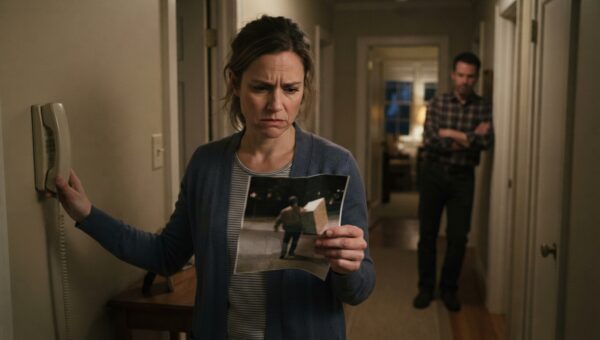
Seven years is a long time to look at an empty kitchen table and wonder where the blame really belongs. I kept asking myself what kind of man packs two duffel bags on a rainy Tuesday morning and leaves his dying child behind without so much as a backward glance. David didn’t leave a note. He just left a set of keys on the counter next to the unpaid hospital notices, walked out to his old truck, and drove away while our youngest daughter was upstairs throwing up from chemo.
For years, my answer to that question was simple, bitter, and absolute. I figured he just broke under the weight of it all.
Back when we still had some semblance of a normal life, before the medical bills turned our pantry into a revolving door of collection letters, our house was always loud. It was loud the day Chloe showed up on our front porch. I remember opening the door to find a sixteen-year-old girl standing there in two completely different shoes, one red canvas slip-on and one black sneaker with duct tape holding the toe together. She looked like she had walked through a hurricane and lost half her luggage on the way. I thought to myself, this girl is going to burn my house down before the week is out.
“I need somewhere to stay for just a couple of days,” she had whispered, her chin trembling so hard she could barely get the words out.
I took her in because my oldest daughter took one look at those mismatched shoes and instantly decided Chloe was her new best friend.
She stayed in the spare room with the floral wallpaper, and within a month she wasn’t just a guest anymore. She became part of the furniture, helping with homework, folding laundry, and eating half our groceries. She was pregnant, terrified, and entirely on her own until we gave her a patch of floor to stand on. When she finally had her baby and moved into her own place down in town, she never stopped coming back on Sundays with casseroles and hand-me-down clothes.
Then the diagnosis for our youngest came down like an iron skillet to the back of the head. Leukemia doesn’t care if you have savings or a mortgage with a fixed rate. It just strips you down until there is nothing left. We sold the station wagon first, then my mother’s silver candlesticks, and finally the house itself just to keep the experimental drug treatments going for another three months.
We became ghosts in a cramped rental apartment with yellowing wallpaper and a heater that rattled like a tin can full of bolts.
That was when David packed his bags. I remember screaming at his back while he zipped his green nylon duffel. “You are walking away from your own flesh and blood,” I yelled, my voice cracking until it hurt to breathe.
He didn’t turn around. He just hoisted the bag over his shoulder and muttered, “I can’t do this anymore.”
Those were the last words I heard from him for seven long years. The divorce papers arrived by mail six months later, signed in neat, cold black ink without a single word of explanation attached. I built a fortress out of my own resentment, raising my girls alone, working two shifts at the local laundry, and telling myself that some men are simply made of glass when the heat gets turned up.
The afternoon Chloe came back into my life started out quiet. I was sitting at the scarred laminate table of our rental, trying to figure out how to stretch twenty-two dollars for the next four days, when someone knocked on the front door. It wasn’t a normal knock. It was that sharp, double-tap rhythm I used to hear when Chloe came home late from her evening classes.
When I pulled the door open, she wasn’t sixteen anymore. She was a poised, sharp-eyed young woman wearing a tailored blazer and carrying a thick leather briefcase. But the second our eyes met, all those years melted away, and she looked right back at me with the same fierce expression she used to wear when she defended my daughters from the neighborhood bullies.
She didn’t say hello. She just reached into her briefcase, pulled out a heavy manila envelope, and laid it flat on the hall table. “You need to open this,” she said, her voice dropping to a low, steady whisper.
“What is this, Chloe?” I asked, looking down at the heavy paper.
“Someone helped me buy it back,” she whispered, her eyes shining with unsheeted tears. “The house, I mean. It’s yours again. All of it.”
My hands were shaking so badly I could barely tear the metal clasp through the reinforced paper. Inside was a thick stack of certified documents bearing the county seal, stamped with the deed transfer for the very house we lost. The property description matched our old address down to the square foot, but the buyer’s name listed at the bottom wasn’t mine, and it wasn’t Chloe’s either. It was a private trust managed by a corporate firm out of Philadelphia, executed under a power of attorney signed by a man whose signature I hadn’t laid eyes on in nearly a decade.
I looked up from the papers, my breath catching in my throat. “Chloe, what is this? Who helped you? This costs a small fortune.”
She reached out and steadied my wrist, her fingers warm and firm. “You took me in when I had nothing except two different shoes and a baby I didn’t know how to raise. You didn’t ask questions. You just gave me a home. I spent the last five years working in commercial real estate, building my own firm, but I never forgot whose roof kept the rain off my head. And neither did he.”
Before I could ask what she meant, the landline on the kitchen wall let out a sharp, piercing ring that made both of us jump. It was an old-fashioned ring, the kind we hadn’t used since we gave up the house.
Chloe stepped back, nodding toward the receiver. “Answer it.”
I walked over to the wall on legs that felt like dry twigs, picked up the beige handset, and pressed it to my ear. “Hello?” I said, my voice barely audible above the hum of the refrigerator.
“I told you I wouldn’t let them take it all, Martha,” a familiar, gravelly voice said from the other end of the line.
The kitchen seemed to tilt on its axis. Seven years of cold fury, of sleeping alone in the dark, of telling my daughters that their father was a coward who abandoned them when the ledger went red, evaporated in the space of a single heartbeat.
“David?” I breathed, the name feeling clumsy and foreign on my tongue. “Where are you? What is this?”
“I’m still offshore,” he said, and for the first time in years I heard the heavy, ragged exhaustion in his tone that no amount of distance could hide. “In the North Sea rigs. It was the only contract that paid enough to clear the federal medical liens without triggering the asset seizure clauses. If I stayed on the title, the state would have vacuumed every trust fund dry before the experimental trials even started. The lawyers said the only way to shield the family assets and keep our daughter’s medical portfolio active was for me to walk away legally, take the blame as the bad guy, and funnel every cent back through a blind trust.”
I couldn’t speak. My mouth opened, but no sound came out. The bitter narrative I had built like a fortress around my heart for nearly a decade simply crumbled into dust.
“I didn’t leave because I stopped loving you,” David whispered, and his voice finally cracked on the edge of a sob. “I left because I had to be the villain so the hospital wouldn’t lock the doors on her treatment. Chloe found me three years ago when her real estate firm expanded out east. She figured out what I was doing, and she helped me coordinate the buyout from this end once the medical debt finally cleared last month.”
“You let me hate you,” I whispered, tears finally breaking free and running hot down my cheeks. “You let me tell the girls you didn’t care.”
“It was the only way it would look real to the courts,” he said softly. “Martha, is she home? Is our girl okay?”
“She’s in the living room,” I choked out, looking past the doorway where my youngest daughter was sitting on the sofa, her hair grown back thick and dark, laughing at something on her phone while Chloe stood beside her with her arm wrapped around her shoulder. “She’s doing great, David. She’s completely in remission.”
“Thank God,” he murmured. “I’m catching the red-eye flight out of Aberdeen tonight. I’ll be home tomorrow morning.”
The line went dead with a quiet click, leaving me standing in the center of the kitchen with the receiver still pressed against my ear.
Chloe walked back into the room, her eyes questioning, her expression soft. She didn’t ask what he said. She just walked over to the counter, picked up the gleaming brass house keys resting on top of the deed, and dropped them gently into my open palm. The afternoon sunlight streamed straight through the window, catching the old wooden table where we had survived the worst years of our lives, waiting for the front door to finally open again.