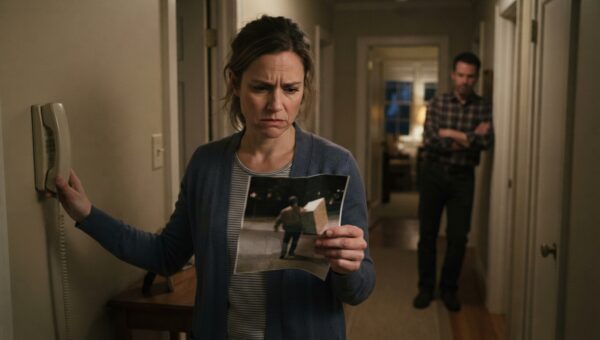
I got the math wrong by about twelve years, and I only figured it out when the heavy iron key dropped against the porch floorboards and rolled right into the gap by the screen door.
The parish down here in southern Louisiana has a way of staying damp even when August is burning the marsh grass down to grey stubble.
My eldest, Clara, was nineteen then, and our youngest, Maeve, was just starting to cough that dry, rasping cough that never seemed to clear out no matter how much honey and lemon I boiled on the stove. We had seven hundred dollars left in the joint account and a mortgage that was sixty days past due when Chloe showed up on a Tuesday morning wearing two different sneakers. One was a blue canvas Keds with a hole by the big toe and the other was a black leather loafer that didn’t even have a matching mate in the box.
“I missed the bus,” she said right off, not even waiting for me to ask why she was standing on my steps at eight in the morning with a canvas tote bag slung over one shoulder. “And the man at the gas station told me you needed somebody to watch kids while you worked the laundry shift.”
I remember thinking, this girl is going to burn my house down before the week is out.
She looked sixteen, smelled faintly of pipe tobacco and damp river mud, and had a nervous twitch in her left eyelid that made her look like she was sizing up the room for what she could carry out the back door. But Clara and Maeve were standing right behind me in the screen door, their little hands clutching my apron strings, and both of them stared at those mismatched shoes with wide, fascinated eyes.
“Can she stay, Mama?” Clara asked, her voice small and sharp in the humid air. “Can she?”
That was how Chloe moved into the little room off the back pantry where we used to keep the canning jars. She didn’t burn the house down. Instead, she spent three solid weeks scrubbing the baseboards with a toothbrush and teaching Maeve how to braid hemp string into friendship bracelets that smelled like salt marsh. Two months after she moved in, I found her sitting on the kitchen floor with her knees pulled up to her chest, sobbing so hard she couldn’t catch her breath between the gasps.
“I’m homeless,” she whispered into her knees when I knelt down beside her on the linoleum. “And I’m carrying someone else’s trouble.”
I didn’t ask questions. I just made a pot of black coffee and cleared out the second drawer in the dresser. We were barely keeping the lights on ourselves, what with Marshall working double shifts down at the shrimping docks and me cleaning rooms at the bayou motel until my knees gave out, but there was always room for another stray in a house that was already falling apart at the seams. Chloe stayed three years. She finished her GED at the community center down on 4th Street, helped Maeve through her multiplication tables, and finally left us when she turned nineteen with a steady job at the parish courthouse and a battered red Civic that backfired every time she turned the ignition.
We thought we had survived the worst of it. Then Maeve turned fourteen, and the cough came back.
Only this time it wasn’t the damp or the mold from the floorboards.
The medical bills didn’t arrive all at once like a sudden squall; they drifted in like a slow tide, small at first, then climbing until they were washing right over our heads. Marshall changed. You could see it happening in the way he stopped sitting at the kitchen table with his coffee in the morning and started staying down at the docks until past midnight, his boots caked in grey mud and salt. He looked older, his shoulders caving inward as if he were carrying sacks of wet feed that kept getting heavier.
“We have to let it go, Wanda,” he said to me one night in October when the wind was rattling the loose tin on the roof. He wasn’t looking at me; he was staring straight at the water-stained wallpaper over the sink.
“Let what go, Marshall?” I asked, though my stomach had already dropped six inches.
“The house,” he said. “The bank called today. They’re moving the foreclosure up.”
We sold everything we had that wasn’t nailed down. I sold my mother’s garnet ring to the pawnshop behind the hardware store for eighty-five dollars. We sold the truck, the spare freezer, and every piece of furniture that wasn’t a bed. And then Marshall walked out. He didn’t pack a bag or leave a note on the counter. He just didn’t come home from his shift on a Wednesday, and when I called the docks, his boss said he hadn’t punched in since Tuesday noon. I spent two years believing he was just a coward who couldn’t bear to watch his youngest daughter waste away in a rented double-wide while her hair fell out in clumps on the pillow.
Maeve beat the cancer, thank God. Her hair grew back in soft, dark curls that felt like sheep’s wool, and Clara managed to get a scholarship down at Baton Rouge, but the house was gone. We lived in that cramped, damp double-wide off the highway for five years, listening to the trucks roar past our bedroom window at all hours of the night, while I worked sixty hours a week folding hospital linens just to keep the electric bill paid.
The knock on the door came on a Tuesday afternoon.
I was standing at the small laminate counter trying to scrape enough grease off a skillet to fry up some salt pork when someone hammered twice on the aluminum door. I wiped my hands on my apron and pulled it open, expecting the landlord about the late water bill.
Instead, it was Chloe.
She wasn’t wearing mismatched shoes anymore. She had on a sharp grey linen blazer, her blonde hair pinned back in a clean twist, and she was holding a thick manila envelope against her chest like it was something fragile that might break if the wind caught it wrong. She looked older, harder around the eyes, but the moment she saw my face, that sharp look melted right off her.
“Chloe?” I said, my voice catching in my throat. “What in the world are you doing out here?”
She didn’t answer right away. She just stepped past me into the narrow little kitchen, her heels clicking hard against the linoleum, and laid the thick envelope right in the center of the grease-spotted table.
“Open it,” she said. Her voice was too steady, too quiet.
I pulled the metal clasp open with trembling fingers and slid the papers out. The top page was heavy, cream-colored parchment with the parish seal embossed in gold at the top. My eyes tracked down past the legal jargon, past the property description of the old oak tree by the cistern, right down to the name listed as the current legal owner.
Wanda Jean Landry.
“This is…” I couldn’t finish the sentence. My brain felt like it was stuck in thick mud. “This is our old house. The bank took this five years ago, Chloe. How did you get this?”
Chloe reached across the table and laid her hand right over mine. Her fingers were ice cold, even in the heavy August heat.
“Someone helped me buy it back,” she whispered.
Before I could ask who, before the words could even form in my mouth, the cell phone in my apron pocket let out that short, sharp buzz that always makes your ribs tighten up. I pulled it out with my left hand while my right stayed pinned under Chloe’s cold fingers.
The screen flashed a name I hadn’t seen in five years.
Marshall.
I didn’t want to answer it. I wanted to drop the phone into the skillet of grease and watch it melt down to black plastic. But my thumb hit the green button all on its own, sliding it across the glass with a dry, metallic click.
“Wanda?” his voice sounded thin, like it was coming from the bottom of an empty cistern.
“Where are you, Marshall?” I said, and the anger came up so fast and hot it tasted like copper in the back of my mouth. “Where have you been while we were living in this tin box for five years? You left us with nothing.”
There was a long, terrible silence on the other end of the line, just the sound of heavy static and someone breathing slow and shallow in a quiet room.
“I didn’t leave because of the bills,” he said, and every drop of blood seemed to drain right out of my face.
“Then why?” I shouted, and Clara came running out from the back bedroom, her eyes wide with alarm. “Why did you walk out and never look back?”
“Because the only way the bank would let the deed go without triggering the medical liens was if I took the full fraud charge myself,” Marshall said, his voice dropping to a dry, rattling whisper. “I signed the papers down at the county clerk’s office the day Maeve started her second round of chemo. Chloe was the only one I could trust to hold the title until the statute of limitations cleared this morning.”
I looked down at the heavy cream-colored paper on the table, then up at Chloe standing beside me with her eyes cast down toward the floorboards. The house was back. The oak tree was still standing by the cistern. But as I stood there in the narrow, grey kitchen of the double-wide, holding a phone that had gone completely silent on the other end, I realized the bricks and the mortar had come home at a price I hadn’t even known we were bidding on.