The front porch steps of that small brick house remembered my grandmother’s weight long after the dirt had settled over her coffin. I moved in four days after the funeral because I told myself I needed time to sort her things before selling the place. It was a clean lie I told my mother over the phone, smoothing it over with talk of practicalities and market value.
The truth was simpler and heavier. Grief sat in my chest like a lead weight, and the silence of my city apartment was suddenly too loud to bear. I wanted the floorboards that still smelled faintly of peppermint oil and lemon polish. I wanted the walls that had sheltered forty-two years of a life that felt real.
The neighborhood welcomed me back with a stillness that felt rehearsed. When I carried my first box up the walk on Tuesday afternoon, the curtains across the street twitched twice before snapping shut. Mrs. Keller was standing by her hydrangea bushes, trimming dead heads with silver shears that flashed in the late sun. She did not wave. She just watched me with those pale, watery eyes that seemed to measure the square footage of my grief. I nodded at her, setting the cardboard box on the porch, but she did not drop the shears.
Her gaze stayed fixed on my hands as if she were waiting for me to drop something.
By Thursday, the unease had settled into my marrow. Every time I stepped out to check the mail or take out the trash, a door clicked shut somewhere down the block. Nobody walked their dogs past the property line. Nobody offered a casserole, which was odd for a Nebraska town where casseroles usually arrived before the death certificate was dry. Mrs. Keller finally crossed the street on Friday morning while I was sweeping the front porch. She walked slow, her sensible walking shoes scraping against the concrete, carrying a yellowed plastic container of stale shortbread she probably baked a month ago.
She stopped at the foot of the steps and looked up at me with that tight, practiced smile that never reached her eyes. She set the container on the porch floor without asking if I wanted it.
I stood there with the broom in my hands, waiting for her to say something about my grandmother, something about how she missed her garden or the way she kept her porch so neat. Instead, she tilted her head and her voice dropped an octave into something thin and sharp. Your grandmother had habits, she said, and her fingers twitched against the plastic lid. She liked to think she was smarter than the rest of us, but people get confused when they get old. They start imagining things that never happened.
She didn’t wait for me to answer. She just turned around and walked back down the walk, her shoulders rigid under her pastel cardigan, leaving me alone with the broom and the stale cookies. That was the moment the grief curdled into something cold and sharp. I went back inside, locked the heavy wooden door, and stood in the dim hallway for a long time listening to the hum of the refrigerator.
My grandmother had been sharp as a tack until the day her heart stopped in her sleep. She remembered every birthday, every tax code, every recipe she ever baked. She did not get confused. The neighbors wanted everyone to think she was losing her mind, and Mrs. Keller had just told me the quiet part out loud.
I started looking through the house that afternoon, room by room, drawer by drawer, looking for whatever my grandmother might have left behind to explain the sudden, cold wall the neighborhood had built around her. I went through the linen closet first, then the bottom shelves of the bookcase where she kept old seed catalogs and church bulletins. I found nothing until I moved the heavy oak roll-top desk in the spare bedroom to sweep behind it. One of the floorboards near the baseboard had a small gap that didn’t match the rest of the tongue-and-groove pine. I knelt down, pressing my fingertips into the grain, and realized the board was hinged with small brass screws.
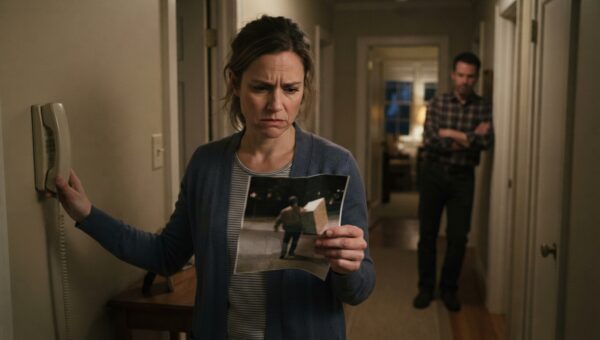
My fingers were shaking as I unscrewed the tiny plates with a flathead driver from the kitchen junk drawer. Beneath the board was a shallow cavity lined with black felt. Inside sat three thick manila envelopes, bound tight with rubber bands that had rotted and snapped into orange dust. I pulled the first one out, sitting flat on the dusty floorboards, and slid the flap open. A stack of 4x 6 photographs spilled onto my lap. They were date-stamped in bright digital orange across the bottom corners, showing the side of the house at 2:14 in the morning, at 4:30 in the morning, at noon on a Tuesday. There were pictures of my grandmother’s back through the kitchen window. There were pictures of her mail being pulled from the box by a gloved hand that belonged to someone wearing a blue windbreaker just like the one Mr. Henderson wore when he walked his golden retriever.
The second envelope held a timeline written in my grandmother’s precise, cramped cursive on lined yellow legal paper. October 14. Someone threw gravel against the west bedroom window at midnight again. November 3. The garden hose was cut clean through in three places. December 19. Keller came by to ask if I had signed the deed transfer yet. She smiled while she asked. The notes went on for four years, month after grueling month, detailing a systematic campaign of petty vandalism, sleep deprivation, and psychological wear-down designed to make an old woman believe she was slipping into senility so she would sell her historic brick home for pennies to the neighborhood redevelopment committee.
At the bottom of the cavity was a small black flash drive, no bigger than my thumb, resting on a folded piece of paper with my name written on it in ink that had faded slightly at the edges. I didn’t plug it into the computer right away. I just sat there on the floor with the photographs scattered around my knees, listening to the old floorboards settle as the afternoon light shifted across the wall. The silence in the house didn’t feel lonely anymore. It felt crowded with ghosts who had been waiting for someone to finally open the door and look at the ledger.
I spent Saturday night watching the footage on the flash drive. It was worse than the photographs. There were dozens of audio recordings captured from a small device my grandmother must have kept near the front window, recording conversations held on the sidewalk by Mrs. Keller, Mr. Henderson, and two other neighbors whose names I recognized from the block association meetings. They talked about her stamina like she was a stubborn horse they needed to break. They laughed about cutting her phone line during a winter storm. They discussed which real estate developer was funding their legal fees to harass her out of the zoning district.
By Sunday morning, my hands were steady again, but my stomach felt like it was full of cold iron. I didn’t want to call the police from a cell phone and wait for some patrol officer to take a report about a neighborhood dispute that sounded crazy on paper. I wanted to hand the bill directly to the person who ordered it. I spent an hour drafting a single sheet of paper, typing out three sentences that listed the dates of the trespasses, the names of the participants, and a simple note stating that the complete digital archive was now in my possession and heading to the county prosecutor’s office on Monday morning.
I walked down the pavement at 10:00 AM, holding the white envelope in my hand. The sun was bright and cold, reflecting off the frost that still clung to the shaded side of the street. Mrs. Keller was on her front porch again, as if she spent her entire retirement anchored to those wooden boards waiting for something to happen. She was holding a watering can, though her potted geraniums were already dead from the first hard freeze of November. I didn’t stop at the curb. I walked straight up her steps, my boots making a hard, flat sound on her clean boards, and held out the envelope.
She looked down at the paper, then up at my face, and her pale eyes narrowed into hard little slits. Her hand tightened around the handle of the watering can until her knuckles went gray. What is this nonsense? she asked, and her voice didn’t sound like a sweet old grandmother anymore. It sounded thin and desperate.
It is your invoice, I said, and I dropped the envelope onto her porch table right beside her silver shears. You can read it now or you can read it when the sheriff gets here with the search warrant for your computer.
She didn’t reach for the envelope. Instead, she backed up against her front door, her chest rising fast under her sweater, and screamed at the top of her lungs for help before I had even taken two steps back down her stairs. Help! Someone help me! She is threatening me on my own porch! She’s deranged just like her grandmother!
Front doors along the block clicked open within seconds. Heads poked out from behind curtains and screen doors, watching the drama unfold with practiced choreography. By the time I reached the sidewalk, Mrs. Keller was standing in her doorway with her hand over her mouth, looking like a victim of a violent crime. It took less than five minutes for a patrol car to turn the corner with its blue lights flashing against the pale brick facades, summoned by a panic button or a pre-arranged phone call she must have kept right by her kitchen wall.
The young officer who stepped out of the cruiser looked like he was barely twenty-five, his hand resting on his belt as he strode up the walk toward Mrs. Keller. She was pointing a shaking finger straight at me, her voice trembling with performance grief. She came onto my property, Officer. She threatened me. She said she was going to ruin my life and take my house. Look at her. She’s not right in the head, just like the old lady before her.
I didn’t raise my voice. I didn’t try to talk over her. I just reached into my coat pocket, pulled out a heavy manila folder that contained duplicates of the photographs and the flash drive, and held it out toward the officer as he turned his attention to me. Before you take any statements about threats, Officer, you might want to look at what was hidden beneath the floorboards of 414 Elm Street, I said. Ask her about the digital logs from the winter of 2021. Ask her about the audio files on that flash drive.
The officer stopped halfway up the steps, looking from Mrs. Keller’s pale, rigid face down to the thick folder in my hand. He looked back at Keller, whose rehearsed terror was suddenly starting to fray around the edges as she realized I wasn’t backing down and I wasn’t alone. That was when Detective Rios stepped out of the second cruiser that had pulled up silently behind the first one, sliding his sunglasses into his breast pocket with a slow, deliberate motion. Rios looked at the envelope in my hand, then at Mrs. Keller, and walked over with the heavy, unhurried stride of a man who had seen every flavor of small-town malice the county had to offer.
Let’s see what you’ve got, son, Rios said, taking the folder from my fingers and sliding out the first date-stamped photograph of the house at 2:14 in the morning.
He didn’t look at Mrs. Keller while he flipped through the pages. He just stood there on the pavement in the cold morning air, turning the papers over one by one, reading the timelines and the names of the committee members written in my grandmother’s hand. When he finally pulled the small black flash drive from the pocket of the folder and held it up between his thumb and forefinger, the street was so quiet you could hear the dry oak leaves scraping against the curb in the wind.
Mrs. Keller opened her mouth to say something, but no sound came out this time. Her hands dropped to her sides, and the terrible, rehearsed performance of the sweet neighborhood elder simply collapsed under the weight of the hard digital proof sitting in the detective’s palm. Rios looked up from the evidence, glanced once at the open front door of Keller’s house, and then turned his head toward the patrolman standing beside him.
Call for a tow truck for her car, Rios said, his voice flat and steady. And let’s get the rest of these names on the warrant list before noon.
I didn’t wait for them to lead her down the steps. I turned my back on the open door across the street, walked back up my own walk, and let myself into the quiet, cool hallway of my grandmother’s house. I walked through the living room to the front window, reached up with both hands, and pushed the heavy wooden sash all the way up until it clicked into place against the frame. A sharp, clean draft of November air rushed inside, smelling of damp earth and dry grass, chasing out the last stale ghost of the years they tried to steal from her. I left that window wide open to the morning light, listening to the steady, familiar hum of a house that finally belonged only to the memory of its true owner.