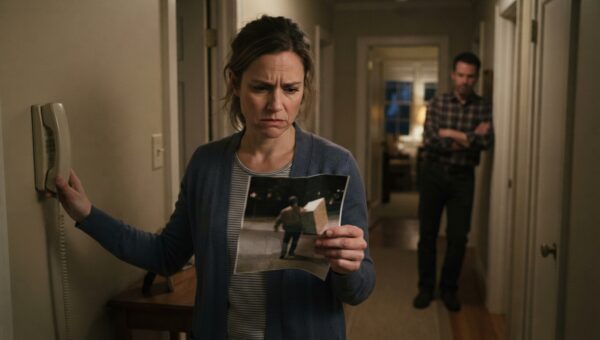
You get used to the sound of an old phone vibrating against a bare wooden tabletop at three in the morning. It is a dry, rattling sort of noise, like a beetle trapped in a tin can, and it has a way of cutting right through thirty years of quiet habits. My wife, Nora, stayed asleep beside me, her breathing steady and deep, while I sat up in the dark and reached for the glowing screen.
The notification banner wasn’t from a client or one of the kids checking in from college. It was from a number I hadn’t seen in two decades, though I would have known those digits if they were carved into stone. Elena. Julian’s wife. The woman who had stood beside him at the altar while I stood out in the gravel lot wondering where I was going to sleep that night.
The message was a long, ragged block of digital text that broke apart into three separate bubbles before I even had my glasses on. Please. I know how this sounds after all this time, but everything is gone. Julian is facing federal investigators, the house is being seized by Friday, and we have nowhere to go. He needs you. He remembers you. Please call me back. The screen went dark again, leaving only the faint reflection of my own face in the glass, older now, lined around the eyes from too many years under warehouse fluorescent lights, but steady.
I didn’t feel the old hollow ache in my chest that used to come whenever I thought about my brother. I just felt tired, the way you feel when a heavy door finally swings shut on a room you haven’t used since you were a boy.
Thirty years is a long time to spend unlearning someone. When our parents’ sedan wrapped around a telephone pole on Route 9 outside Bakersfield, I was fourteen years old and convinced the world had ended right there in the county morgue. Julian was twenty-four, already wearing tailored wool suits that smelled of dry cleaner’s plastic, already talking about junior partnerships and high-society galas. He didn’t even wait for the grass to settle over the headstones before he packed my few duffel bags and drove me out to the edge of the desert. The group home was a cinder-block building with yellowed linoleum floors and screen doors that banged in the wind until three in the morning.
Julian dropped my bags by the intake desk, signed three forms without looking me in the eye, and told me he had a life to build. His new fiancée, Elena, didn’t want a troubled teen ruining the aesthetic of their new, high-society lifestyle. That was the exact phrase he used. Aesthetic. Like I was a scuffed armchair they were trying to return to the thrift store.
For ten years, I lived on surplus powdered milk, government cheese, and whatever I could earn working weekend shifts at an auto body shop down the highway. I put myself through night school one credit at a time while Julian climbed the corporate ladder on the back of our parents’ substantial estate. I didn’t hate him, not at first. I just thought that if I worked hard enough, if I managed to buy a decent suit and show up looking like someone worth knowing, he might remember we shared the same blood.
That was my mistake. On a blisteringly hot Saturday in July, ten years after the funeral, I hitchhiked into the city and stood in the back of the Oakridge Country Club ballroom. I was wearing a cheap polyester suit I bought off the clearance rack at JCPenney, my shoes tight and pinching at the heels.
When Julian saw me standing by the ice sculpture, holding a paper cup of tap water, his face didn’t soften with surprise. It went hard and gray, the way it did whenever someone tracked mud across a freshly waxed floor. He walked over with that smooth, measured stride of a man who practiced his posture in mirrors, grabbed my elbow hard enough to bruise, and hissed right into my ear. You’re a stain on my reputation. Get out before my new in-laws see you. Those ten words didn’t break me; they cured me. I walked out of that country club and into the blinding parking lot, took off the clip-on tie, threw it straight into a green dumpster, and swore I would never say his name again as long as I lived.
The next twenty years were about building something real out of nothing. I met Nora at a hardware supply counter where we were both arguing with the manager over a mislabeled crate of copper pipes. We bought a small, drafty ranch house with a postage-stamp yard, raised two kids who knew how to fix their own bicycles, and built a life where nobody cared about country club memberships or high-society galas. I spent thirty years working fifty-hour weeks at the plant, my hands permanently stained with machine grease and gray primer, and every single dollar we earned was honest. I didn’t need Julian’s permission to exist anymore. I had a mortgage I paid on time, a wife who laughed at my terrible jokes, and a front porch where we watched the desert sun go down without checking who was watching.
The phone buzzed again against the wood, a short, sharp vibration that brought me back to the dark bedroom. Another message from Elena. He’s talking about bankruptcy, she typed, her punctuation breaking down into wild dashes and incomplete thoughts. He kept everything hidden, even from me. The house, the cars, the accounts. It was all built on the trust fund from your parents. He cleaned out your share when you were fourteen, and now the auditors are tracing every cent back to the probate files. You’re the only one who can sign the affidavit to help us restructure. Please, I am begging you.
I laid the phone back down and got out of bed, walking quietly down the hall to the kitchen so I wouldn’t wake Nora. The house was cold the way desert houses get around four in the morning, the floorboards clicking softly under my bare feet. I poured a glass of tap water from the pitcher in the fridge and stood by the window, looking out over the gravel driveway where my old Ford truck sat parked beside Nora’s sedan. The sky over the valley was just starting to turn that thin, bruised purple that comes right before dawn. I didn’t feel any urge to reply. I didn’t feel the need to call her back and ask how it felt to watch an empire crumble from the inside out. Some things don’t need an explanation because the math has already been done for you.
Later that morning, around nine o’clock, my phone rang with an actual voice call. I watched the screen light up with Julian’s name, the first time he had called me in twenty-two years. I let it ring through once, twice, three times, listening to the small digital chime echo against the kitchen walls. On the fourth ring, I swiped the screen and held it to my ear without saying a word.
For a second, there was just dead air, the kind of heavy, suffocating silence that used to fill the hallway outside the headmaster’s office at the group home. Then my brother cleared his throat, and the sound was so small, so thin and defeated, that I almost didn’t recognize the man who had once thrown me out of a ballroom. Brother, he said, and the word sounded like something dragged out of a drain. Did Elena reach out to you? You know how she gets when things get tight. We just need a signature. Just a few minutes of your time to sort out these old estate papers. We can fix this, the two of us. Family is family, after all.
I leaned back against the counter, looking out the kitchen window at the small peach tree Nora had planted by the back fence. It was bearing fruit this year, heavy and sweet despite the dry soil.
You called me a stain on your reputation, Julian, I said, my voice sounding entirely normal, just like it did when I was talking to the guys down at the shipping dock.
There was a sharp intake of breath on the other end of the line, followed by a long, trembling pause where he tried to find his footing in a world that had finally stopped listening to him. Look, I was under a lot of pressure back then, he stammered, the old arrogance cracking away to reveal a frightened, small-minded man who had spent his whole life pretending to be someone else. You know how those people were. The in-laws, the society board. I didn’t mean it that way. We’re brothers.
You haven’t been my brother since the day you dropped my bags off on that linoleum floor, I told him, and my hand didn’t even shake. You built your whole life on someone else’s money and a pile of lies, and now the bill came due. That’s between you and the federal judges. Don’t ever call this number again.
Before he could get another word out, before he could start crying or bargaining or trying to use our dead parents’ names to buy himself another month of grace, I pressed the red button and ended the call. The screen went black, returning to the simple digital clock displaying 9:14 in the morning. I didn’t block his number, and I didn’t delete the messages from Elena. I just laid the phone face-down on the wooden table, right beside the handle of the water pitcher. Nora walked into the kitchen then, wrapped in her old blue flannel robe, smelling of coffee and morning toast, and she gave me a quiet, questioning look over the rim of her mug.
Everything alright? she asked softly.
Everything is fine, I told her, and for the first time in thirty years, I meant it down to the bone.
I walked over to the front door, turned the deadbolt, and pulled it open to let the warm desert air roll into the hallway. Outside in the front yard, our youngest boy was trying to fix the chain on his bicycle, his hands greasy and black with oil just like mine used to be, laughing as the pedal slipped and spun against his shin. I stood on the threshold for a long moment, watching the dust motes dance in the bright sunlight, and then I stepped out onto the porch to give him a hand.