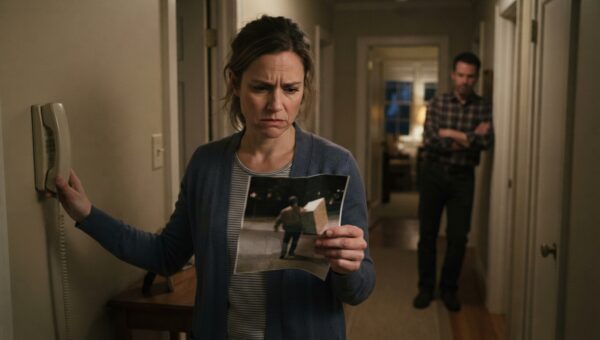
I got the math wrong by about ten years, and I only figured it out when the pediatrician handed me a carbon-copy lab slip with a red notation that didn’t match our family tree.
Leo was eight years old at the time. He had my nose, or so I had always told myself, and he laughed with that same little snort my grandfather used to do when he drank his coffee too fast.
When the truth came out in a quiet, sterile office with drop-ceiling tiles, the ground didn’t open up beneath me. My wife cried until her eyes were swollen shut, begging for forgiveness I didn’t know how to give, but my mind stayed oddly steady on one simple fact. Leo was upstairs in the waiting room coloring a dinosaur with green crayon. He didn’t know anything about blood types or DNA markers.
To him, I was just the guy who fixed his bicycle chain and checked under the bed for monsters every single night.
So I stayed. I packed my clothes back into the dresser, told my wife we would figure it out later, and I kept right on being his dad. I went to every parent-teacher conference, every Little League game where he spent most of the time picking dandelions in right field, and every emergency room visit for stitches after he tried to jump our backyard fence on a rusty Schwinn.
Years passed, and the secret faded into the background like old wallpaper. We didn’t talk about it because we didn’t need to.
Then came his eighteenth birthday. It arrived on a crisp Tuesday in October with a certified letter from a high-priced law firm in St. Louis.
The biological father, a man named Arthur Sterling who had vanished before Leo was even born, had apparently spent the last decade building a tidy fortune in commercial real estate before a sudden heart attack took him out at fifty-four. Sterling had left a trust behind. Not a modest sum, either. It was an estate valued at roughly $1.2 million, tied directly to Leo’s name by virtue of a late-filed paternity acknowledgment that Sterling had signed weeks before his lungs filled with fluid.
I remember handing Leo the sealed envelope across our worn laminate kitchen table.
“What is this?” he asked, his voice cracking slightly with that awkward blend of teenage defiance and sudden, heavy responsibility.
“It means your real father left you set up for college, and then some,” I told him, trying to keep my voice even.
Leo didn’t ask what that made me. He didn’t need to ask.
The look in his eyes told me everything I needed to know about how fragile eighteen years of bedtime stories really were when stacked against a seven-figure bank draft.
Two days later, he packed his duffel bag into the trunk of a sleek black sedan that smelled like new leather and expensive cologne. A lawyer’s assistant had come to pick him up. Leo stood by the passenger door for a long, terrible second, looking like he wanted to say something, but he just shook his head, muttered a quick goodbye, and slid inside.
He didn’t look back once as the car crunched down our gravel driveway.
Days turned into weeks. Twenty-five days of absolute, deafening silence. I went to work at the hardware store, measured out galvanized nails by the pound, helped contractors load drywall into the beds of their trucks, and pretended my chest didn’t feel hollowed out by a shovel.
I convinced myself I had lost him forever. You don’t compete with a ghost who leaves behind a million dollars when you’re just a man who makes forty-eight thousand a year selling hinges and lawnmowers.
The twenty-sixth day started like any other, gray and damp with the kind of autumn fog that clings to the bottom of the Ozark hills.
I was wiping down the counter in the kitchen around 4:15 in the afternoon when my landline started shrilling. It was an old cordless phone with a battery that beeped whenever it was low on charge.
“Hello?” I said.
“Get over here right now,” Mrs. Gable blurted out. She lived three houses down, right on the corner where the school bus stopped. Her voice was shaking so hard she could barely get the words out. “I’m looking out my front window. Someone’s standing at your front door, Paul. And I don’t think you were expecting this.”
“Who is it?” I asked, my grip tightening on the plastic handset until my knuckles turned white.
“Just come home,” she said, and the line went dead with a sharp click.
My heart hammered against my ribs like a trapped bird the entire drive back. I didn’t bother locking the shop door behind me; I just dropped the ledger, grabbed my keys, and ran to my old Ford Ranger. The engine coughed twice before catching, and I backed out so fast I nearly clipped the wooden post by the lumber rack.
The truck tires kicked up gravel all the way down County Road K. My brain raced through a dozen terrible possibilities. Was it Leo? Had he spent the million dollars already? Was he in trouble with the law? Or had the lawyers found some legal loophole that stripped the trust away, leaving him stranded and humiliated?
When I swung my truck into our gravel driveway, I cut the ignition before the engine had even finished ticking.
The front porch looked quiet, bathed in the fading amber light of late afternoon. But standing near the screen door, wearing a wrinkled gray hoodie and holding a worn leather backpack by one strap, was a figure that made my breath catch in my throat.
It wasn’t a lawyer in a sharp suit.
It was Leo.
He looked smaller than he had twenty-five days ago. The expensive jacket was gone, replaced by clothes that looked like he’d slept in them for three days straight. His hair was messy, and his eyes were red around the edges, fixed entirely on the splintered wood of the porch floorboards.
I got out of the truck slowly, my boots crunching on the loose stones. I didn’t say anything. I just stood by the driver’s side door, waiting for him to make the first move.
Leo looked up, and the defiance I had seen on his eighteenth birthday was entirely gone, burned away by something much colder and heavier.
“Hey,” he whispered.
“You left your bicycle pump in the garage,” I said, my voice sounding harsher than I meant it to. “It’s still right where you left it.”
Leo let out a ragged breath that sounded like a sob trying to force its way out. He took two steps down the porch stairs, his shoulders shaking slightly under the weight of the old backpack.
“I messed up, Dad,” he said. The word slipped out naturally, the way it always had before the lawyers and the bank accounts entered our lives. “I went down to Clayton. I got the hotel room, the car, the credit cards. Everything I thought I ever wanted.”
“And?” I asked, keeping my distance.
“And it was empty,” he said, his voice breaking entirely. He reached into his hoodie pocket and pulled out a folded piece of heavy cream-colored stationery with embossed letterhead. “About a week ago, I found this at the bottom of the estate box. The lawyers didn’t give it to me at first. They said it was a personal note from Sterling. From my biological father.”
I didn’t move. “What did it say?”
Leo unfolded the paper with trembling fingers, holding it out toward me like an offering.
“He wrote it three days before he died,” Leo said, reading the words aloud through a tight throat. “‘If you’re reading this, it means the money cleared and you’re wondering who I was. I’m the man who walked away. The man who was too selfish to stay for the fevered nights, the scraped knees, and the mornings when Paul sat by your bed with a cold washcloth. You can have my money, son. But if you trade the man who actually raised you for a pile of cash, you’ll find out too late that you just bought yourself a very expensive tomb.'”
Leo dropped his hand, letting the paper hang loosely by his side. A stray gust of wind caught the edge of the cream paper, rustling it against his jeans.
“I spent twenty-five days sitting in a hotel suite waiting for someone to care about me the way you did when I had strep throat in the fourth grade,” Leo whispered, tears finally spilling over his eyelashes and cutting clean paths down his dusty cheeks. “Nobody called. Nobody checked if I ate. Everyone just wanted a piece of the estate. And I realized… I traded my real dad for a dead man’s bank account.”
He dropped his backpack onto the bottom step with a dull thud and sank down onto his knees right there on the cedar boards, burying his face in his hands.
“I’m sorry,” he sobbed. “I’m so sorry, Dad. Please. If you don’t want me here, I’ll go. But I couldn’t stay there another minute.”
I stood by the truck for another long second, feeling every one of my forty-eight years settle into my joints. The anger I had carried for nearly a month didn’t vanish all at once, but beneath it, there was something else. A quiet, heavy realization that raising a boy never really stops, even when he tries to run away with a fortune.
I walked across the gravel, my boots crunching softly, and climbed the two porch steps.
I didn’t say a grand speech. I didn’t quote the letter back to him. I just reached down, grabbed him by the scruff of his heavy gray hoodie, and hauled him up onto his feet until I could pull him against my chest in a tight, awkward hug that smelled of stale coffee and road dust.
Leo clutched at the back of my flannel shirt, his fingers bunching the fabric the way he used to do when he was six years old and scared of a thunderstorm.
“Come on inside,” I muttered against his hair, my own voice thick and stubborn. “The porch light’s burning out anyway, and we need to talk about what you’re doing with that money, because you sure as hell aren’t spending it on more hotel rooms.”
Leo let out a wet, shaky laugh against my shoulder, nodding rapidly as we walked up the steps together.
Inside, the house smelled of old wood and the stale air of twenty-five empty days, but as I pushed the heavy front door wide open to let the evening breeze sweep through the hallway, it finally felt like home again.