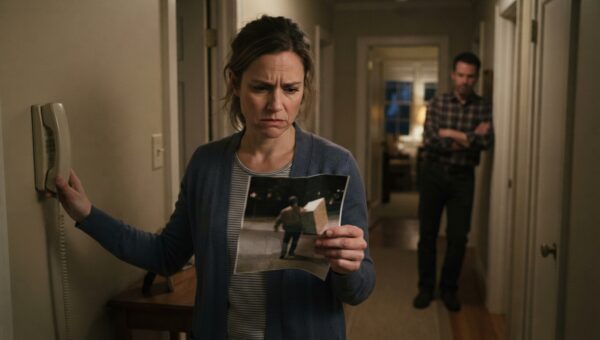
Arthur Pendelton told me not to make this about one family. He stood right on our front porch with that polished civic smile he used for ribbon cuttings, smelling faintly of peppermint and cheap aftershave, and he patted my shoulder like I was a confused child who needed her head straightened out.
Thomas had been in the ground for exactly two months when the official bronze list came out in the town paper, and his name wasn’t on it anywhere.
I stared at the newsprint until the ink blurred together into grey smudges. Men who had lived two towns over and never spent a Saturday morning volunteering were cast in heavy metal, while the man who spent nine years hauling folding tables out of the American Legion basement was nowhere to be found.
When I sat across from Arthur in his carpeted office down at the municipal building, he didn’t even look me in the eye. He just shuffled some papers around his desk and cleared his throat.
“Nobody is questioning his service, ma’am,” Arthur said, and gave me that patronizing little smile that made my teeth ache. “Let’s not make this about one family. The final list was approved months ago, and reopening it now would just complicate things for everyone.”
I thanked him for his time. I didn’t raise my voice, and I didn’t argue with him because arguing with a man like Arthur is like shouting into a well.
Instead, I walked home, went straight down the hall to the spare bedroom, and closed the door behind me. Thomas had kept every single scrap of paper from those nine years in three heavy cardboard bankers boxes stacked neatly against the closet wall. I had never opened them while he was alive because he said the paperwork gave him a headache just looking at it.
The first box smelled like dry cardboard and old rubber bands. I sat down on the braided rug with my glasses on and pulled out a stack of spiral-bound notebooks filled with Thomas’s cramped, steady handwriting.
He had tracked every single dollar down to the last coin. Every pancake breakfast at the Legion hall where the batter got lumpy because the ancient griddle had a dead heating element on the left side. Every fifty-cent raffle ticket sold out of a cigar box at the county fair when the August heat was so thick you could practically chew it.
I spent the next four weeks in that spare room from dawn until well past midnight. I didn’t answer the phone when the neighbors called, and I didn’t turn on the television.
By the third week, the floor around me was covered in yellowed bank deposit slips and receipt stubs held together with rusted paperclips. I found the meeting minutes from the early days, back when the town council wouldn’t even return Thomas’s phone calls about zoning permits for the park. Arthur Pendelton had tried to shut the project down twice, claiming a stone memorial would take up too much parking space for the farmers market.
Then I found the carbon copies of the original foundry orders from eighteen months prior, back when Thomas was still strong enough to drive down to the county seat himself. Thomas’s name was typed right at the very top of the foundational donor panel, clear as day.
Beneath that paper was something even better. It was a typed memo on municipal letterhead, dated six months after Thomas got sick, signed by Arthur and two other committee members. They had quietly voted to swap out the foundational names to make room for three new corporate donors who had each dropped ten thousand dollars into the new landscaping fund.
They didn’t just forget Thomas. They traded him off like a used part to clear space for people with deeper pockets.
The dedication ceremony was scheduled for a bright Sunday afternoon in late October. The high school band was out on the grass by the municipal flagpole, tuning their brass instruments with a discordant screech that carried all the way down Main Street. The local paper had a photographer standing near the podium with a bulky camera hung around his neck.
I wore my good navy wool coat, the one Thomas always said made me look like I was ready to run for mayor, and tucked the manila folder under my arm.
The ceremony dragged on for nearly an hour. People fanned themselves with programs that had glossy pictures of the memorial stone on the front. Arthur Pendelton took the microphone and gave a long speech about community spirit and the sacrifices of our boys, his voice booming out of the rented speakers with that smooth, practiced cadence that always sounded a little too rehearsed.
“We built this stone together,” Arthur told the crowd, gesturing broadly toward the grey granite monument draped in a crisp canvas tarp. “As a town, as a family, through the tireless efforts of everyone here today.”
When he finally finished, the applause rolled over the lawn like dry thunder. The committee members smiled and nodded at each other, basking in the sunshine and the handshakes from the front-row dignitaries.
Then the chairman stepped back up to the microphone with a sheet of paper in his hand. “At this time, we’d like to invite the families of our founding contributors and committee leaders to come forward for a special recognition.”
That was the moment.
I didn’t wait for anyone to wave me up. I stepped right out of the third row of folding chairs, my heels clicking sharply against the concrete walkway.
A few people turned around to look, whispering behind cupped hands when they saw who it was. Arthur stopped mid-sentence, his smile freezing in place as he watched me walk past the first two rows of dignitaries straight toward the wooden steps of the temporary stage.
I didn’t wait for him to invite me up. I climbed the three wooden steps, walked right past the town mayor, and stopped two feet from the podium.
Arthur tried to block the microphone with his hand, his face flushing a mottled shade of pink that contrasted sharply with his stiff white collar. “Ma’am, this portion of the program is strictly for, “
I pulled the manila folder out from under my arm and laid it flat right on top of his speech notes.
“You told me not to make this about one family, Arthur,” I said, and because I spoke right into the microphone, my voice bounced off the brick walls of the town hall across the street and echoed over the entire lawn.
The high school trumpet player dropped his horn down to his side. Total silence fell over the crowd so fast you could hear the autumn leaves scraping across the pavement.
“You said it was an honest oversight,” I continued, opening the folder to reveal the yellowed carbon copies and the signed committee memos. “You said nobody was questioning his service. But here is the foundry order Thomas signed eighteen months ago before his hands started shaking too much to hold a pen.”
I picked up the signed exclusion memo and held it out so the local reporter with the camera could see the signatures at the bottom.
“And here is where you and two of your buddies voted to take his name off the top panel to make room for the lumber yard owner who paid for your new parking lot blacktop.”
Arthur opened his mouth, but nothing came out except a dry, choking sound. His hand hovered over the folder like he wanted to swat it away, but with the photographer’s flash suddenly going off right in front of the stage, he pulled his hand back as if the paper were burning hot.
“Is that true, Arthur?” someone shouted from the third row. It was old man Miller, who had served with Thomas in the Pacific and walked with a heavy wooden cane. “Did you take Thomas’s name off that stone?”
Arthur looked out over the crowd, his eyes darting from face to face, but nobody was smiling at him anymore. The committee members sitting behind him on folding chairs suddenly found the grass very interesting to look at.
“It was a clerical adjustment,” Arthur finally choked out, his voice cracking on the last word. “We had space constraints, “
“You had donations to fish for,” I said softly, looking right at him until he dropped his gaze to the wooden floorboards.
The emergency town council review took place the following Tuesday night in the municipal basement under the harsh glare of fluorescent tubes. Arthur Pendelton didn’t even show up to defend himself, having resigned his chairmanship before the gavel even hit the table. The council voted unanimously to strip him of his remaining board seats and issue a formal public apology to our family.
By Thursday morning, the town masonry crew was back out on the memorial lawn with their heavy electric engraving tools. The whining buzz of the diamond-tipped cutter started up at 7:30 in the morning and didn’t stop until every single letter of Thomas’s name was bitten deep into the grey granite right at the head of the foundational panel where it belonged.
Neighbors I hadn’t spoken to in years started stopping by the house with foil-wrapped casseroles and folded cards tucked into envelopes, muttering apologies about how they just hadn’t known. I thanked them, set the dishes on the counter, and let them talk while I watched the oak leaves turn brown through the kitchen window.
The town council finally passed a transparent public archive rule for all community monuments, ensuring no future committee could ever trade away a dead man’s history to please a wealthy donor.
On Friday evening, after the last of the trucks had packed up and left the square, I walked down to the park alone as the sun was dipping below the tree line. The park was quiet, save for the wind rustling through the dry grass and the distant hum of traffic on the bypass.
I stood before the grey stone in the growing twilight, my fingers tracing the freshly chiseled letters of Thomas’s name until I could feel the sharp, clean edges of the granite under my skin.
I reached into my coat pocket and pulled out his old silver pocket watch, the one with the scratched crystal and the stuck second hand that he had carried through two tours and nine years of pancake breakfasts. I set it gently on the concrete base right beneath his name, where it caught the last gray light of the day before going still in the cold.