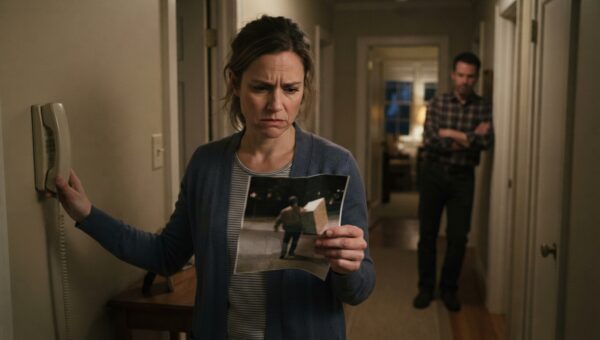
The doorbell rang at 8:42 in the morning. That is a very specific time, but when your life gets sliced right down the middle like an overripe peach, you tend to remember the exact minute the juice starts hitting the floorboards. I was in the middle of wiping down the large walnut dining table I finished the night before, making sure the beeswax was buffed out to a soft, dull satin sheen.
Martin was already halfway over Europe by then, headed to Dubai for a week of luxury hotels and sightseeing that he claimed he saved up for out of his high school history teacher salary.
I opened the front door expecting a delayed package or the local courier with the brass hardware hinges I ordered from up north. Instead, I got a twenty-five-year-old stranger holding a carrier bag in one hand and a baby in the other, standing on my gray slate porch as if she owned the county registrar office. She had red-rimmed eyes, a diaper bag slung crooked over one shoulder, and an expression that mixed pure exhaustion with a stubborn, righteous kind of irritation.
“You’re not who I expected,” she said before I could even draw a breath. Her voice was thin, rattling right at the edge of cracking. “Martin said you were away at the workshop all weekend.”
“Martin is three thousand miles away over the Persian Gulf,” I told her, and my voice sounded completely level, which surprised even me. “And this is my house. Who are you?”
She blinked once, very hard, and shifted the baby higher on her hip. The little thing was maybe four months old, sleeping right through the noise with its mouth slightly open. “I’m Maya. And this is Leo. And Martin told me I could stay in the guest suite until the lease paperwork on the downtown flat cleared.”
The house was quiet around us, save for the hum of the refrigerator in the kitchen and the distant caw of a crow out in the cedar trees. I stood there with my polishing rag still balled up in my left hand, feeling the grain of the rough walnut dust trapped in my fingerprints. Ten years of building custom furniture, ten years of waking up at five in the morning to plane down hardwoods, ten years of believing we were just two quiet minimalists sharing a peaceful life in the woods.
“You better come inside,” I said, stepping back from the threshold. “Before the baby wakes up.”
Maya stepped past me into the wide-open foyer, her sneakers clicking against the concrete floor. She looked around the living room with an expression of intense confusion, taking in the tall ceilings, the white plaster walls, and the large abstract canvases hanging near the library nook. Her jaw tightened up.
“He said we were renovating,” she murmured, almost to herself. “He said you two had an agreement. That you ran the workshop and he handled the property portfolio.”
We walked back toward the kitchen, which opens up into the garden through a wall of glass. I pulled out a walnut stool for her at the long island, the very same island I designed and built out of a single slab of reclaimed maple five years ago back when Martin was still just a quiet guy who liked grading papers with a red pen and drinking black coffee.
“Sit down, Maya,” I said, sliding a glass of cold water across the counter toward her. “Tell me what Martin told you.”
She set the diaper bag on the floor with a heavy thud and sank onto the stool, her shoulders dropping about six inches. “He said you were legally married on paper only for tax purposes because of your business. He said he owned half of everything. Half of the company, half of this house, half of the cars in the garage.” She pulled a crumpled sheaf of papers out of her coat pocket and dropped them right beside my water glass. “He signed a lease for me over on Maple Street three months ago. When the baby came early, the landlord wouldn’t renew without a six-month guarantor. Martin said he would sort it out before he left for Dubai. Then his phone went straight to voicemail last night.”
I looked down at the papers. They were standard rental application forms, but right there in the guarantor section was Martin’s signature, scribbled in his neat, teacher-style cursive, alongside an income statement listing a monthly salary of nine thousand euros, sourced from executive dividends at my own custom furniture studio.
“He doesn’t get dividends from my studio,” I said softly. “He gets a teacher’s salary. And we aren’t business partners. We aren’t even legally registered as anything other than spouses with separate bank accounts and a shared roof.”
Maya stared at me, her fingers curling tightly around the rim of the glass. “That’s a lie. He showed me the corporate registry printout. He had your signature on it.”
“He had a scanner and forty minutes alone in my office,” I replied. I didn’t yell. I didn’t throw the glass. There is a strange kind of cold clarity that happens when the foundation of a decade drops out from under you. You don’t scream; you just start measuring the room. “Let me show you what I own, Maya.”
I walked over to the built-in oak desk in the corner, unlocked the lower drawer with a small brass key, and pulled out the thick leather binder containing the original sole proprietorship filings, the real estate deeds registered exclusively in my maiden name, and the tax returns from the last ten years that listed Martin’s employment strictly as a high school public educator making fifty-four thousand a year.
I laid the heavy binder flat on the kitchen island right next to her rental papers. I opened it to the page where my name was stamped in red ink by the state commercial registry. Sole owner. Founder. 100 percent equity.
“Look at the date,” I told her, pointing a finger at the bottom corner. “That was filed three years before I even met Martin at that community pottery sale in Portland. He didn’t build this. He didn’t buy the art on these walls. He didn’t even pay for the gravel in the driveway.”
Maya leaned over the binder, her eyes scanning the lines of text. Her face went tight, the color draining out of her cheeks until she looked almost translucent in the morning light. “He told me he was an investor. He said he funded your whole operation.”
“He was a guest,” I said. “A very comfortable guest who didn’t have to worry about rent or groceries while he spent his own paychecks elsewhere.”
“On us,” she whispered, her voice shaking now as she looked down at the sleeping infant. “He bought the crib. He paid for the formula. He told me you knew all about us, that you were fine with an open arrangement because you only cared about your woodshop.”
“He lied to you,” I said. “Just like he lied to me about where he was going every Tuesday and Thursday evening when he said he was staying late to grade midterm exams.”
“I thought I had a home,” she said, and that was when the first tear slipped down her cheek, hitting the polished maple counter with a tiny, soft splash. “I gave up my job in advertising when he said we were starting a family together in the suburbs. He promised me stability.”
“Stability built on someone else’s floorboards is just rented space,” I told her, though I wasn’t trying to be cruel. I was just tired of the fairy tale.
I reached for my phone on the counter. It was 9:15 now. Dubai is four hours ahead of us, which meant it was pushing past dinner time over there, right about when a man sitting in an air-conditioned hotel lobby might be checking his phone to see if his mistress had successfully occupied his wife’s house while he was away.
“What are you doing?” Maya asked, wiping her face with the back of her hand.
“Calling him,” I said.
I tapped the screen three times and switched it to video call. I propped the phone up against the heavy brass napkin holder in the middle of the kitchen island, right between the corporate binder and her fraudulent lease agreement.
The screen rang four times. Then the background noise of a busy hotel lounge flickered into view, complete with the muted clinking of glassware and the low murmur of lounge music. Martin’s face appeared on the screen, framed by expensive mahogany paneling and soft recessed lighting. He was wearing a crisp linen button-down shirt that I had never seen before in my life, probably bought with the money he saved by not paying his share of our grocery bill for the last six months.
“Hey,” Martin said, his voice dropping into that smooth, practiced register he used when he was trying to smooth things over with the school principal. “I was just about to call you. Flight was long, but the hotel is incredible. You should see the harbor from the balcony.”
He stopped talking because his eyes finally registered the background behind my face. Instead of the plain white plaster of my workshop office, he saw the kitchen island. He saw the maple grain. And then he saw Maya sitting right beside my elbow, holding a baby.
Martin’s mouth stayed half-open for three seconds. The color in his face didn’t just drain; it vanished entirely, leaving him looking gray and pinched under the hotel lights.
“What…” he started, his voice stuttering on the first syllable. “What is going on there?”
“Maya’s lease ran out,” I told him, keeping my tone completely flat and conversational. “And she showed up at the front door with your son, looking for the half-ownership stake in my company that you promised her.”
Martin stared through the small camera lens as if he could physically push us back through the glass. “You shouldn’t have let her in. That’s… that’s a private matter, we can talk about this when I get back, “
“There is nothing to talk about when you get back, Martin,” I said. I reached down and picked up his passport renewal notice that had arrived in our mail pile three days ago, holding it up to the camera so he could see his own name printed in bold black letters. “Your car is parked in the driveway with a magnetic lock on the garage door. Your clothes are already packed into three black contractor bags sitting on the front porch. And your name has been permanently removed from the household utility accounts as of nine minutes ago.”
“You can’t do that,” he stammered, leaning closer to his phone screen in the Dubai hotel lobby, several heads turning at the sharp edge in his voice. “We’ve been together ten years. We built a life here.”
“I built a life here,” I corrected him, my voice dropping an octave until it was barely above a whisper. “You just rented space in it.”
Maya leaned into the frame, her face tight with a cold, sharp anger that looked much older than her twenty-five years. “You told me she didn’t care about the house, Martin. You told me she was ready to sign it over.”
“Maya, listen to me, let me explain, “
“Don’t,” she snapped, cutting him off cleanly. “I’m going back to my mother’s place in Idaho on the evening flight. Don’t ever try to contact us again.”
She reached out and hit the red end-call button on the screen before he could say another word. The phone went dark, reflecting our two faces against the black glass surface.
The kitchen fell completely silent again. The refrigerator hummed, the cedar trees outside brushed against the windowpane, and somewhere down the hall, the grandfather clock ticked away the seconds toward ten o’clock.
Maya looked down at the baby, who was starting to stir and stretch tiny fingers out of his blue blanket. She let out a long, shuddering breath that seemed to empty out every bit of fight she had left in her.
“I’m sorry,” she whispered, not looking at me. “I was stupid. I wanted to believe it so badly I didn’t check the courthouse records myself.”
“Hope makes people blind,” I said, reaching over to push the heavy leather binder back toward the corner of the counter. “Just make sure you keep your eyes open the next time someone offers you a house they didn’t build.”
She gathered her diaper bag, adjusted the baby against her shoulder, and walked toward the front door without another word. I watched her go down the slate steps, past the three black plastic bags sitting neatly by the cedar pillar, out toward the gravel driveway where a cab was already idling at the curb.
When the front door clicked shut, the house felt enormous.
I walked back down the hallway to my workshop at the rear of the house, away from the kitchen, away from the front porch, away from the ghost of a ten-year lie. The air in the workshop always smelled right: hot friction from the sander, raw cedar sawdust, and linseed oil.
I picked up my block plane from the workbench, turned it over in my hands to check the iron blade, and set to work smoothing down the edge of a new walnut board. My phone was lying flat on the workbench beside the dust collector, completely silent, its screen dark and blocked against any number coming from across the ocean. I ran my thumb along the smooth, clean grain of the wood, feeling every single knot and fiber that I had put there with my own two hands, and for the first time all morning, the room felt entirely mine.