The glass-walled conference room on the forty-second floor of the Dirksen building in downtown Chicago smelled faintly of expensive floor wax and old paper. Outside, a cold October rain was turning the lakefront gray, but inside, the air was entirely temperature-controlled and quiet enough to hear the faint hum of the HVAC vent overhead. I kept my hands folded neatly in my lap, resting my thumbs against each other to keep them from shaking.
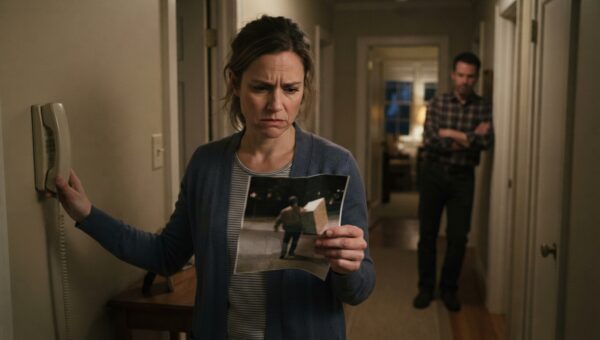
I had spent twenty-four years learning how to keep my face from showing what I was feeling, a skill I picked up the hard way during the winter of my sixteenth year when my bedroom floor was stacked with cardboard boxes that didn’t belong to me.
Across the polished walnut table, my mother leaned back in her high-backed leather chair with the easy, sprawling posture of someone who already owned the building. She adjusted the collar of her cream-colored silk blouse, the one she had clearly bought for this specific Tuesday morning, and let out a light, dismissive breath. Relax, Emma, she said with a small, patronizing laugh. We’re family. Obviously we’ll all share the millions.
Beside her, my father nodded along, offering the room a practiced, genial smile he usually reserved for real estate clients he was trying to overcharge. He crossed his legs, smoothing the crease of his wool trousers, entirely comfortable in a future he had done nothing to earn.
Neither of them looked at me, except to occasionally flick their eyes in my direction the way you might check a coat you left hanging on a hook. To them, I was still the quiet inconvenience they had managed to drop off at my uncle’s farm sixteen autumns ago.
Mr. Vance, the senior partner handling the estate of Arthur Pendelton, cleared his throat. He was a tall man with silver hair combed straight back and skin the color of old parchment. He didn’t look up from the leather-bound folio spread before him. He just adjusted his wire-rimmed glasses and turned a thick cream-colored page with a crisp, dry rustle that made my mother sit up a fraction of an inch.
Mr. Pendelton left specific instructions that this reading be conducted with all named parties present, Mr. Vance said, his voice level and devoid of any warmth. Before we get to the distribution of assets, I want to ensure everyone understands that these proceedings are final, legally binding, and backed by twenty years of notarized addendums.
My mother waved a manicured hand, dismissing the preamble with a flick of her wrist. Oh, we understand all that, she said, her voice bright and breezy. Arthur was always so dramatic with his paperwork. But blood is blood, isn’t it? He didn’t have any children of his own, so naturally everything comes back to the line. She smiled at my father, who offered a soft murmur of agreement.
I didn’t say anything. I just stared at the brass corner protector of the walnut table and thought about what the kitchen at Arthur’s house used to smell like at 5:00 in the morning. It smelled of coffee grounds and woodsmoke and the sharp, clean scent of linoleum cleaner. Arthur never talked much when he took me in. He didn’t sit me down to give me a speech about how my life was going to change or how safe I was now.
He just backed his truck up to the front steps of my parents’ suburban house on a Tuesday afternoon while they were out at a dinner party, loaded my mattress and two plastic crates of clothes into the bed, and told me to get in the passenger side. He didn’t ask my parents for permission because he didn’t need to. He had already gone to the county courthouse to get emergency guardianship papers signed by a judge who knew him from the livestock association.
My parents had moved to Florida six months later without leaving a forwarding address, sending a breezy Christmas card two years after that with a family portrait of them and the golden retriever they bought to replace whatever part of their conscience had gone missing. They built a comfortable, breezy life out of other people’s gullibility, drifting from one venture to the next while Arthur paid for my braces, my community college tuition, and the old Buick I drove until the transmission gave out on I-80.
Mr. Vance turned another page, his fingers steady. Let us begin with the primary real estate holdings, the attorney said. Arthur Pendelton’s portfolio currently consists of three commercial properties in downtown Peoria, five hundred acres of tillable bottomland in Tazewell County, and the primary residence on County Road 12, valued collectively at four point two million dollars.
My mother let out a sharp, audible gasp of satisfaction, leaning forward so fast her forearms hit the edge of the polished wood. Four point two. She whispered the numbers like they were a prayer she had been reciting in her sleep. Arthur always was smart with the land, wasn’t he, Jim? She looked at my father, her eyes bright with sudden, greedy calculation. We can finally pay off the line of credit on the Florida house. And remodel the kitchen. God, Jim, we can finally take that trip to Italy.
Mr. Vance did not look up. He simply turned the page, his expression as flat and gray as the Chicago sky outside the window. Furthermore, the commercial accounts currently held at First Midwest Bank, totaling three million one hundred and fifty thousand dollars in liquid capital, are assigned in full.
My father cleared his throat, his chest puffing out beneath his sports coat. Well, Mr. Vance, I assume we’ll need to set up a family trust for tax purposes, he said, adopting his most professional, boardroom tone. Emma can have a small monthly stipend for her trouble, of course. We aren’t monsters. We’ll make sure she’s taken care of.
The silence that followed wasn’t heavy; it was sharp. It was the kind of cold stillness that comes right before a transformer blows.
Mr. Vance finally raised his eyes, looking straight over his glasses at my father. There is no trust, Mr. Vance said quietly. And Miss Emma is not receiving a stipend.
My mother’s smile flickered, turning slightly crooked at the edges. What do you mean? she asked, her voice dropping the breezy confidence and taking on a thin, brittle edge. She’s his niece. We’re his only living blood relatives. Who else is he going to leave it to?
Mr. Vance turned the final section of the folio over, revealing a separate, stapled packet of yellowed, government-issued paper that looked entirely different from the crisp legal documents surrounding it. He didn’t answer my mother immediately. Instead, he slid the document across the shiny table until it stopped right in front of her coffee cup.
He left everything, Mr. Vance said, every acre, every dollar, every brick of the commercial properties, to Emma alone. She is the sole beneficiary of the estate. One hundred percent.
The room seemed to tilt for a second. My mother didn’t move. She just stared at the top page, her mouth slightly open, the bright red lipstick looking suddenly too loud for her face. My father half-rose from his chair, his hands palms-down on the table as if he were about to vault across it.
That’s impossible, my father barked, his face darkening from pale to a dull, mottled red. That’s legally impossible. A court won’t uphold that. You can’t just cut out family. We’re her parents. We’re his brother-in-law and sister. There are laws about this kind of thing.
Mr. Vance reached into the folder one last time and pulled out a single, neatly folded sheet of heavy cardstock, along with a small, clear plastic evidence bag containing a single crisp dollar bill. He set them both down right in front of my father’s coffee cup.
Section twelve, paragraph four, Mr. Vance said, his voice entirely devoid of inflection. To my former sister-in-law and her husband, for services rendered in the summer of 2002 when they chose to vacate their parental obligations and leave a sixteen-year-old child to the mercy of the county, I leave the sum of one dollar, receipt of which is acknowledged herewith, and a certified copy of the original abandonment and emancipation filings recorded on August 14, 2002.
The words sat in the air between us, heavy and smelling of old dust and cold judgment.
My mother made a sharp, choked sound, her hands flying up to cover her mouth as if she could physically push the words back down. She looked across the table at me, her eyes wide, glassy, and suddenly furious. You did this, she hissed, her voice trembling so hard the ice water in her glass rattled against the rim. You poisoned him against us. You sat out there on that dusty farm and you whispered in his ear every single day until he was old and confused and signed away our birthright. You ungrateful little, She stopped because Mr. Vance raised one finger, not shouting, just moving his hand with the quiet authority of a man who had seen every ugly variation of human greed and was thoroughly bored by it.
Arthur Pendelton was of sound mind until the final hour of his life, Mrs. Miller, the attorney said, his voice dropping into a register that brook no argument. I personally witnessed him draft and notarize these addendums three separate times over the last ten years. He knew exactly what he was signing. And more importantly, he knew why he was signing it.
My father grabbed the edge of the paper, his fingers curling into the corners as if he could tear the legal binding with his bare hands. This is a fraud, he muttered, looking wildly between the attorney and me. We’re going to contest this. We’ll tie this up in probate court for the next ten years. You won’t see a dime of it, Emma. Do you hear me? Not a single dime. You’ll spend every penny fighting us in Springfield.
I finally looked up from the brass corner of the table. I looked at my father, really looked at him, noticing for the first time how gray his hair had gotten around the temples and how cheap the fabric of his suit was under the bright Chicago office lights. He looked small, smaller than the man who had packed my mattress into the back of Arthur’s truck without saying goodbye.
You can try, I said. My voice was quieter than theirs, but it didn’t shake. I practiced it for years in the silence of that farmhouse kitchen. You can hire every lawyer in Cook County. But Arthur left a paper trail that goes back sixteen years, and every single document has your signatures right at the bottom where you signed away your rights for a clear road out of town.
My mother stared at me, her chest heaving beneath the cream silk blouse. She looked like she wanted to spit, her face twisting into something ugly and small. We gave you life, she whispered, the venom in her tone so thin it sounded pathetic.
No, I said, standing up slowly and buttoning my wool coat against the chill of the afternoon. Arthur gave me a life. You just left an address.
I picked up my leather bag from the spare chair and turned toward the heavy frosted-glass door of the conference room. Behind me, my father started shouting something about lawyers and courts, his voice bouncing off the walnut paneling, but Mr. Vance didn’t even bother to answer him. He was already closing the leather folio, snapping the brass latches shut with two clean, final clicks.
I walked down the long carpeted hallway of the Dirksen building, past the rows of quiet offices where other people were arguing over money and land and the messy debris of family trees that had rotted from the inside out. When I reached the bank of elevators, I pressed the down button and waited while the digital numbers ticked backward through the forties.
By the time the elevator doors slid open, my hands were entirely steady. I stepped inside the mirrored car, watching my own reflection as the cables hummed and pulled me down toward the ground floor, toward the revolving glass doors and the gray Chicago rain that was still washing the autumn streets clean.