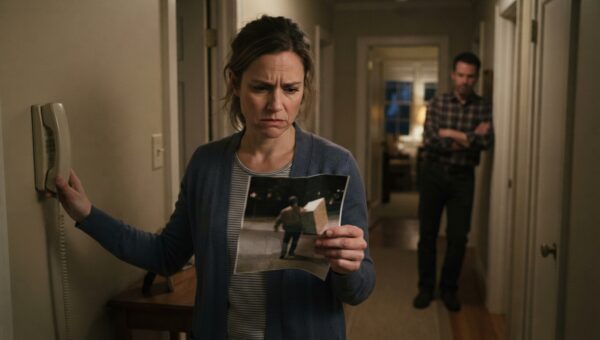
The skin on Dovie’s wrist was a jagged map of nervous energy. Every time she visited, I saw her thumb picking at the same spot, peeling away the healing layer until the pink meat underneath was exposed. I had mentioned it to Clara, my daughter, at least three times. Each time, Clara would just wave a hand and say Dovie was going through a phase, or that children just develop nervous habits when they are adjusting to a new school.
But this wasn’t a school issue. It was a spring issue. It started exactly when Clara married Verlon.
I tried to tell myself I was being the typical, overbearing grandmother. Verlon was a man who worked in corporate logistics, a man who wore crisp shirts and talked about the importance of structure. When he moved into Clara’s small house, he brought a set of rules that sounded reasonable enough on paper. No toys in the living room after six. No television during homework hours. A firm schedule for bedtime. Clara seemed happier than she had been in years, and I was terrified that if I poked holes in her domestic bliss, I would be the one standing on the outside looking in.
The $20 bill was the first real warning sign in June. It was Dovie’s seventh birthday, and I had slipped the crisp note into her palm, telling her to buy something that didn’t have a sticker saying “educational” on it.
When I stopped by the house two days later, the money was gone. Dovie wouldn’t meet my eyes. She just stared at her shoes and begged me, her voice small and trembling, not to ask her mother where it went. I thought maybe Verlon had taken it for a savings jar, or maybe she had lost it. I wanted to believe that. I wanted it so badly that I let the silence settle over the house like a thick, suffocating blanket.
Tuesday was the night the blanket finally ripped. Dovie came over for a planned sleepover while Clara worked a double shift at the medical billing office. We were reading in my guest room, the house quiet except for the hum of the attic fan. Dovie was quiet, even for her. Every few minutes, I would hear the wet, rhythmic sound of her picking at that wrist. I couldn’t take it anymore.
I reached out and closed my hand over her small, bony arm. My touch was soft, but she flinched as if I had struck her.
“Dovie, look at me,” I said.
She kept her chin tucked against her chest. I could see the blood had soaked into the cuff of her pajamas. My heart wasn’t racing; it was sinking, a cold lead weight hitting the bottom of my stomach.
“Did you do this again?” I asked.
She started to shake. It wasn’t the shaking of a child who had been caught doing something naughty. It was the shaking of a trapped animal. I didn’t push. I just waited. I waited until the silence became the loudest thing in the room. Finally, she choked out the words.
“Verlon says I have to hold them,” she whispered.
“Hold what, honey?”
“The encyclopedias. The heavy ones from the study.”
She looked up then, and for the first time, I saw the terror in her eyes.
It was a vacant, tired look that no seven-year-old should ever possess. She told me the rules. When Clara was working, Verlon would have her stand in the corner of the study. He would place one of the heavy, vintage books in each of her small hands. She had to hold them straight out, parallel to the floor, without letting them dip. If her arms shook, or if she cried, she had to start the time all over again. If she dropped them, the “fine” was another thirty minutes. She told me about the $20 bill, too. It hadn’t been a savings jar. It had been a fine, taken because she had spilled a glass of water at the dinner table.
“He says I’m building character,” Dovie whispered, her lip quivering. “But he says if I ever tell you, or Mommy, he’ll pack up all of Mommy’s things and take her away. He said I’ll be the reason she’s homeless. He said I’ll be the reason she’s all alone in the world.”
The room went absolutely still. I felt the blood drain from my face, leaving me feeling hollowed out, cold, and dangerously clear-headed. I didn’t comfort her with platitudes. I didn’t tell her it would be okay. I just pulled her into my lap and held her while she wept until she was too exhausted to do anything but sleep. I spent the rest of the night sitting on the edge of her bed, watching her breathe, staring at the walls until the sun started to bleed through the curtains. I wasn’t going to send her back. Not then, not ever.
Wednesday morning, I called Clara. My voice was steady, sharper than a razor. I told her Dovie was staying for a few extra days, that she had a mild bug. Clara sounded tired, distracted, but she didn’t argue. She trusted me. That was the tragedy of it. I told her I would drop by later to pick up some of Dovie’s school clothes.
When I arrived at the house, Verlon was in the study. The door was cracked open. I walked in without knocking. The room smelled of pipe tobacco and stale dust. There, on the bottom shelf, were the encyclopedias. I walked over and touched the leather bindings. The edges were worn, stained with the oils from human hands, exactly where a child would grip them to keep from dropping the weight. It wasn’t discipline. It was the calculated, sadistic joy of watching a small, fragile creature break under pressure.
Verlon walked in then, his face shifting from annoyance to that practiced, charming mask he wore for the neighbors. “Everything alright, Mother?” he asked, using the word like a weapon.
“Don’t call me that,” I said.
I didn’t yell. I didn’t need to. I looked at the books, then back at him. I saw the way his eyes flickered to the door, checking for Clara, and I knew exactly what he was. He was a coward who preyed on the weak because he couldn’t survive in a world where he had to be an equal.
“I know about the books, Verlon,” I said.
He stiffened. “It’s called structure. She needs it.”
“It’s called torture. And it’s over.”
Clara came home early. She walked into the kitchen just as I was laying out the clothes I had grabbed. She looked from me to Verlon, her face tight with worry. “Mom? What’s going on? Why is the house so quiet?”
I didn’t wait for him to spin his story. I walked to Clara and took her hands. I told her everything. I told her about the wrist, about the missing money, and about the threat, the threat that had forced her own daughter to view her as a burden, as someone who would be abandoned if she dared to speak the truth.
“He told her you’d be homeless, Clara,” I said, my voice barely a whisper. “He used your own life to silence her.”
Clara looked at Verlon. He started to protest, his voice rising, trying to regain the ground he had lost. “She’s a child, Clara. She’s prone to exaggeration. You know how she gets when she’s tired.”
I watched Clara. I saw the exact moment the blindfold fell away. It wasn’t a sudden explosion. It was a slow, agonizing tightening of her jaw. She looked at the books I had brought in from the study, sitting on her clean kitchen counter. She looked at her daughter’s pajama cuff, stained dark with dried blood, which I had placed next to them.
“Get out,” Clara said.
Verlon laughed, a thin, brittle sound. “You’re really going to throw away our marriage over a tantrum?”
“Get out,” she repeated, her voice louder now, steadier. “Before I call the police and tell them exactly how you’ve been spending your time while I’m at work.”
He looked at me, then at her. He saw that the power had shifted, that he had no currency left to trade. He walked out without another word, slamming the front door behind him. The house didn’t feel empty. For the first time in a year, it felt like it was finally breathing.
The next few weeks were a blur of boxes and lawyers and long, tearful conversations on my porch. Dovie spent most of her time in my garden, her wrist wrapped in fresh white gauze. The picking stopped almost immediately once she realized she didn’t have to carry the weight of the books anymore. She was seven, and she was learning that her voice had power, that she didn’t have to be the silent keeper of someone else’s cruelty.
Clara changed, too. She moved back in with me for a while, and we spent the evenings sitting in the rocking chairs on the porch, watching the shadows stretch across the lawn. The trauma didn’t evaporate overnight. It was a slow, painful process of unlearning the fear, of reminding Dovie that she was safe, that she was loved, and that no one would ever force her to hold up the world again.
There is a small glass jar on the porch table now. It holds the soothing ointment the doctor recommended for her wrist. Next to it is a clean roll of gauze, though she hasn’t needed it in days. She sits on the swing, her arms light and free, finally reaching out to grab my hand without the slightest flinch. The silence that used to hang over the house is gone, replaced by the sound of her humming, the distant barking of a neighbor’s dog, and the steady, rhythmic creak of the swing.
I look at her, and I think of all the things we keep hidden behind our doors, the way we try to protect the people we love by not seeing what is right in front of us. I think about the weight of the books, and the weight of the silence, and how one small, bleeding wrist was enough to bring the whole house of cards crashing down. I don’t know what the future holds for us, but for the first time in a long time, the path ahead looks clear. I reach over and squeeze her hand, and she squeezes back. It’s a simple thing. It’s everything.