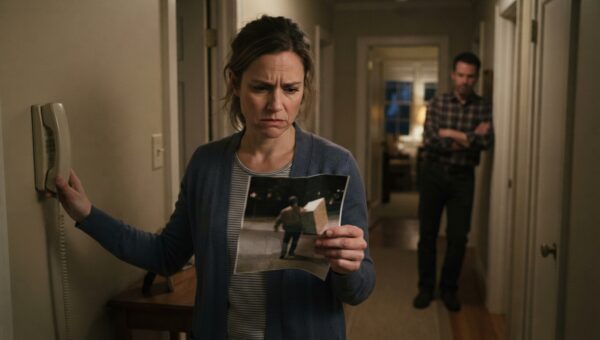
You spend nineteen years building a life out of second-hand kitchen tables and careful grocery lists, and you assume the foundation is made of something solid. I used to think loyalty was like the old oak floorboards in our rented duplex. It took weight, it took wear, and after a while, you stopped noticing the creaks because you knew where every single one of them was.
I was forty-four, earning twenty-two dollars and eighty cents an hour at the regional supply desk, and my husband, Russell, was forty-seven. We weren’t rich, but we had a routine that felt safe enough to last until we were old and gray.
Then came a Tuesday afternoon in May 2023, and the floorboards just vanished. The fluorescent lights above my desk were humming at their usual irritating pitch when my cell phone buzzed against the blotter. Russell didn’t say hello. His voice had that strange, tight rattle in it that men get when they win something they didn’t earn, like a stray dog catching a car bumper. He told me his uncle Bernard had passed away quietly down in Lansing. Then came the words that sheared nineteen years right down the middle in less than ten seconds.
“My uncle just died,” Russell said, and his breathing sounded thick and frantic. “I inherited eight hundred million dollars.
Pack your things and be out of the apartment before I get home.”
Before I could even ask him what he meant, or remind him about the grocery bill sitting on the fridge, the line went dead with a sharp click. My heart didn’t shatter into poetic pieces, and my blood didn’t run cold. My brain simply stopped working for a few seconds while I stared at a yellow sticky note reminding me to reorder printer toner. Forty-three minutes later, I pulled my old Ford into the gravel drive of our building, my hands remarkably steady on the steering wheel because numbness is a very effective anesthetic.
The apartment was entirely too quiet when I unlocked the front door. Russell was already gone, but he had been busy during his lunch hour. Right in the middle of the kitchen island sat a stack of thick legal papers with blue binders, and right beside them was a single brown cardboard box filled with my winter sweaters and a couple of framed photographs from our wedding in 2004.
There were no tears left in me, only a cold, sharp clarity that felt almost like floating. I walked over to the island, picked up the ballpoint pen Russell had thoughtfully left on top of the divorce petition, and turned to the signature pages.
I didn’t call a lawyer. I didn’t scream into the empty hallway. I simply initialed every single clause where my signature was required, signing away my share of nineteen years with the same casual indifference he had just shown me. On the very last page, I wrote my legal name in clean, deliberate cursive. Then I set the pen down squarely in the center of the papers.
Russell walked through the front door just as I was taping up the top of my single moving box. He looked flushed, his tie slightly crooked, smelling of expensive cologne and the heady intoxication of a future he hadn’t yet touched.
He glanced at the signed papers, then down at my box, and a smug, ugly grin spread across his face. He thought he had outsmarted life itself, trading me in like an outdated sedan before the title transfer cleared.
“Smart girl,” Russell said, laughing a short, breathless laugh that sounded hollow even in the small kitchen. “You never were one to make a fuss over nothing. Enjoy your hourly wage. I’ve got a lawyer waiting at the country club.”
I hoisted my box against my hip, walked past him without brushing his sleeve, and paused at the threshold. I didn’t yell, and I didn’t threaten him with courts or alimony. I just looked him dead in the eye and said, “Enjoy your fortune.”
Then I walked out the door and let it click shut behind me. For the next seventy-two hours, I stayed in a clean, cheap motel off the interstate, paying for the room with a hundred-dollar bill I had tucked away in my glove box. I turned my phone completely off, refusing to let the initial panic reach me while I figured out how to start over with four hundred dollars to my name and a single box of clothes. I needed silence to let the shock settle into something I could actually carry.
When I finally powered the phone back on late Friday morning, it nearly shook itself off the nightstand. The screen lit up with twelve missed calls, seventeen text messages, and three urgent voicemails from Russell’s sister, Clara, followed by frantic messages from his two brothers and their cousin Greg. By noon, the number for Mr. Vance, the senior estate attorney who had handled Bernard’s affairs for thirty years, flashed across the screen. I let it ring twice before I tapped the green button, my thumb resting calmly against the warm glass.
“Mrs. Miller,” Mr. Vance said, his voice clipped and entirely devoid of the professional warmth he usually reserved for family beneficiaries. “Are you currently reachable? We need you at the probate office within the hour.”
I didn’t rush. I took my time driving downtown, parking my car in the gravel lot behind the brick county courthouse where the maples were dropping sticky spring buds. When I walked into Mr. Vance’s glass-walled conference room on the fourth floor, the atmosphere felt less like a celebration of sudden wealth and more like a triage unit after a train wreck. Russell was already sitting at the far end of the long mahogany table, his face the color of wet newsprint, sweating through his expensive new shirt while Clara wept quietly into a linen handkerchief by the window.
Mr. Vance pushed a heavy, red-leather-bound folio across the table toward me without a word of greeting. He tapped a finger against a specific paragraph near the bottom of page fourteen, his glasses sliding down the bridge of his nose.
“Your husband initiated a summary dissolution of marriage seventy-two hours ago,” Mr. Vance said, his tone flat and icy. “He signed the filing stamp at precisely 2:14 PM on Tuesday.”
Russell didn’t look at me; he kept staring at his own trembling hands, which were locked tightly together on the wood. He looked smaller somehow, like the cheap suit he was wearing was suddenly two sizes too large for his shoulders.
Mr. Vance looked up at me, his eyes sharp behind his frames. “Bernard hated greed more than anything on this earth. He spent forty years watching relatives circle his accounts like vultures waiting for a carcass. So when he drafted his final testament back in 2018, he inserted a very specific condition into the primary trust.”
I leaned back in my chair, the wooden slats pressing comfortably against my spine, and waited for the piece of the puzzle that made all those frantic phone calls suddenly make sense.
“The primary beneficiary must remain in an unbroken, legally recognized state of mutual marriage at the exact moment probate officially clears,” Mr. Vance continued, turning the page to reveal a dense block of legal stipulations. “If the primary heir initiates a separation, legal filing, or divorce within ninety days of Bernard’s passing, the entire eight-hundred-million-dollar principal automatically bypasses the individual entirely and transfers directly to a designated statewide heritage charity.”
The silence in the room grew heavy and thick, the kind of quiet where you can hear the faint hum of the air conditioner overhead. Clara let out a sharp, ragged gasp from the corner, while Russell finally raised his head, his eyes bloodshot and desperate as he looked across the table at me. He had been so dazzled by the eight hundred million that he had never bothered to read past the first page of the summary distribution brief his own hasty lawyers had pulled from the internet.
“That’s not all,” Mr. Vance added, his voice dropping an octave as he delivered the final, crushing blow. “Because Russell legally claimed sole executorship and initiated the immediate marital dissolution under false pretenses of single status, the trust provisions classify him not as an heir, but as a defaulting party liable for the estate’s immediate administrative encumbrances. In plain terms, Mr. Miller is now personally responsible for four point two million dollars in deferred property taxes, legal retainers, and probate debts accrued over the last five years.”
Russell slammed both palms down onto the mahogany table, the sound cracking like a pistol shot through the quiet room. He stood up so fast his chair tipped backward and crashed against the wainscoting behind him, his face twisted in panic and raw fury.
“She has to sign a waiver!” Russell shouted, pointing a shaking finger directly at my chest while his voice cracked with hysteria. “It was a misunderstanding! We can file a retroactive reconciliation motion! Tell her she has to sign it, Vance! Make her fix this!”
Mr. Vance didn’t even flinch. He simply gathered the papers back into their red folder and closed the cover with a dull thud. “A legal filing executed and signed by a competent adult cannot be retroactively undone simply because the consequences turned out to be inconvenient, Mr. Miller. The court has already sealed the forfeiture.”
Russell stumbled around the end of the table, ignoring the lawyers and his weeping sister, and dropped heavily to his knees right beside my chair. He grabbed the fabric of my sleeve with sweaty, trembling fingers, his face inches from mine, smelling of cheap bourbon and absolute terror.
“Please,” Russell whispered, the arrogance entirely drained out of him, leaving only a pathetic, hollow shell of the man who had ordered me out of our kitchen three days ago. “Please, just tell them we’re staying together. We can fix this. We can go back to the way things were. Just sign the paper, please.”
I looked down at him, remembering the exact tone of his voice when he told me to pack my things and get out before he got home. I remembered the single cardboard box of sweaters sitting on the kitchen floor while he chased a ghost of wealth that had slipped through his greedy fingers like dry sand. I didn’t feel anger, and I didn’t feel triumph. I just felt wonderfully, perfectly empty of him.
I gently pulled my sleeve out of his grip, smoothing the cotton fabric down with my palm. I stood up, smoothing my skirt, and looked down at the man I had spent nineteen years trying to love through every hard season we ever faced.
“You told me to be out of the apartment before you got home,” I said quietly, my voice barely carrying across the silent conference room. “I was out in forty-three minutes. You wanted that fortune all to yourself, Russell. Go ahead and enjoy your debts.”
I turned my back on him without another word, walking past Mr. Vance with a polite nod and heading out the heavy glass doors into the bright May sunlight. My car was parked right where I left it, its engine starting up on the very first turn of the key. I drove straight to the rental office down on Elm Street, put down a deposit on a small second-floor apartment with a narrow wooden balcony overlooking a row of budding lilac bushes, and signed a twelve-month lease in my own name alone.
That evening, I sat out on the wooden railing with a simple mug of black coffee, watching the orange sun dip slowly behind the rooftops of the town where I had lived my entire life. I reached down into the pocket of my cardigan, pulled out the plain gold wedding band I had worn since the autumn of 2004, and dropped it into the small recycling bin beside my chair without a single second glance. The metal made a tiny, hollow clink against the plastic bottom, and then there was nothing left behind it at all except the clean, quiet evening air.