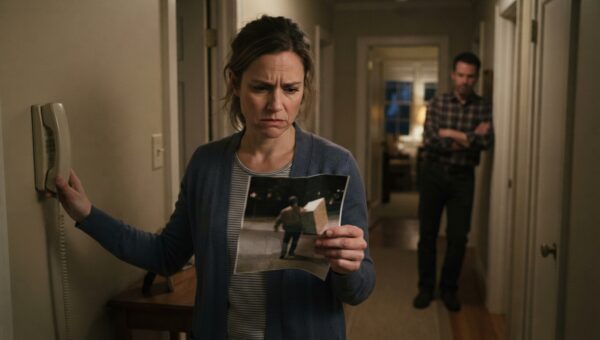
The Medicare statement arrived on a Saturday, and I read it the way I read everything, line by line, because thirty years of bookkeeping teaches you that numbers only tell the truth if you actually look at them. Twelve therapy appointments billed to my name between June and November. I have not been to therapy once since my knee replacement physical therapy ended back in nineteen-ninety-eight.
The house was quiet except for the hum of the refrigerator and Arthur out in the garage sorting through old paint cans. I called the practice Monday morning, pleasant as china.
The receptionist put me through to billing without asking what was wrong, which should have warned me right there. “Mrs. Davis, your husband checks in with your card,” the billing clerk said, her voice dropping into that breezy customer service tone that people use when they think they are clearing up a simple misunderstanding. “We assumed you were aware.”
I was not aware.
I sat there with the telephone pressed to my ear, watching a dust mote drift across the streak of sunlight hitting our linoleum. “My husband uses my Medicare card?” I asked.
“Well, yes. He brings the red, white, and blue card every Tuesday at two o’clock,” she said. “Dr. Vance’s office policy requires presentation of the primary insurance card upon arrival.
Since Mr. Davis shares your last name and date of birth range on the household secondary policy, we just linked the file.”
After two more calls and one very helpful billing clerk who took pity on my steady, flat voice, I learned my husband has been seeing a therapist weekly for seven months under my name, my Medicare number, and a diagnosis code I had to look up at my kitchen table. It took four minutes to find what that code means on the small tablet we keep by the toaster for recipes. I set the paper down and sat very still, because the diagnosis was not grief, and it was not normal aging.
Arthur came inside through the back door at four-fifteen, shaking the autumn leaves off his boots and hanging his flannel jacket on the peg by the door. He smelled like damp cedar and stale pipe tobacco, the exact same smell he has carried since we bought this Dayton split-level back when Ronald Reagan was in the White House.
“Mail good?” he asked, walking over to the counter to check the basket for circulars.
“The Medicare statement came,” I said.
His hand paused over a seed catalog. Just for a second. Then he picked it up and flipped it over, his thumb leaving a small gray smudge on the glossy paper. “Ah. Those numbers always take three weeks to clear.”
“Twelve appointments, Arthur,” I said.
He didn’t turn around. He kept his back to me, staring at the pile of junk mail like it was the most interesting thing in the state of Ohio. “Must be an administrative error at the central processing office,” he muttered. “They cross wires all the time with married couples sharing a policy number.”
“I called Dr. Vance’s office this morning,” I said, and my voice sounded like dry leaves scraping across concrete, small and hard. “I spoke to a woman named Brenda in billing.
She told me you check in with my card every Tuesday at two.”
The kitchen went dead silent. The refrigerator gave a sudden, loud click, and then the compressor kicked off, leaving us standing in an acoustic vacuum where you could hear the furnace ducts ticking as they cooled down. Arthur set the catalog back on the counter. He didn’t rush, but his shoulders had that stiff, defensive set he gets when he backs the Buick too close to the cedar hedge and refuses to admit he misjudged the distance.
“You shouldn’t be calling billing offices,” he said quietly.
“I shouldn’t have to,” I said. “Why was my name on the intake sheet? Why is my Medicare number paying for Dr. Vance?”
He turned around then, and I saw the look in his eyes, the thin, tight film of panic that old men get when they realize the engine is starting to knock and they cannot reach the ignition to shut it down. He looked older than seventy-one. His skin had that slack, grayish look people get when they carry a secret around until it wears holes in their pockets.
“You didn’t need to see that,” he said.
“F02.81,” I said, reading the digits off the kitchen table paper. “That is the code Dr. Vance filed every single week for seven months. Do you know what that code means, Arthur? I looked it up while the coffee was dripping. Major neurodegenerative disorder with behavioral disturbance. Early-stage frontotemporal cognitive decline.”
He closed his eyes for a long, slow beat. “Dr. Vance is an overly cautious man.”
“Dr. Vance is a clinical psychologist who has been treating you for something you have been hiding from me since late spring,” I said, standing up from the chair. The metal legs scraped against the floor with a sharp screech. “You used my card. You used my name. You used my medical history so your own file at your primary doctor would stay clean.”
“If it’s on my record at the clinic, the state finds out,” he whispered, finally looking me dead in the eye. “You know what happens when the state finds out a man of my age has executive function drift? They pull your driver’s license. They start talking about assisted living assessments. They put a red flag on your name before you even forget where you parked.”
“So you stole my identity to save your own?” I asked.
“I didn’t steal anything! We share a bank account, we share a bed, we share a roof,” he snapped, his voice cracking for the first time with real anger, the kind of ragged, frightened anger that comes from being cornered. “I wanted to know what was happening to my head before I brought it home to you. Is that a crime? I wanted a diagnosis from someone who wouldn’t put it in the county database on day one.”
“You lied to me every Tuesday for thirty weeks,” I said. “You walked out this front door, told me you were going to the hardware store or checking the oil in the mower, and you went to sit in a quiet room and talk about your brain failing while using my card to pay for the privilege.”
“I was trying to protect this house,” he said, his voice dropping down to a miserable rasp. “I was trying to keep us normal.”
“Nothing about this is normal, Arthur,” I said.
We stood across from each other in the exact middle of the kitchen where we had carved our grandchildren’s heights into the door frame over the last fifteen years. The marks stopped at five feet four inches. Time had marched on while we were busy pretending we were still thirty years old and invincible. I looked at the man I had made coffee for every morning since Richard Nixon was in office, and for the first time in my life, I felt like I was looking at a stranger who just happened to be wearing my husband’s sweater.
“Dr. Vance needs to be called,” I said. “The billing needs to be corrected. Your real insurance needs to be billed, or we pay out of pocket, exactly the way honest people do.”
“It’ll go on my record,” he said, and he sounded like a little boy caught taking candy from the store counter, small and pathetic.
“Let it go on your record,” I said. “If your brain is failing, we deal with it in the daylight. We do not hide it under my name like a dirty secret we swept under the braided rug.”
Arthur didn’t answer. He walked past me, his boots heavy and dragging slightly on the linoleum, and sat down at the kitchen table in the exact chair I had just vacated. He put his hands over his face, his fingers pressing hard against his eyes until the knuckles went white. I watched him tremble, a tiny, involuntary twitch in his right shoulder that he couldn’t control.
I didn’t go over to him. I didn’t touch his shoulder or tell him everything was going to be fine, because I knew as well as he did that everything was not going to be fine.
I picked up the Medicare statement and the printout of the diagnosis code. I walked over to the small bureau by the back door where we keep the household files in green hanging folders. I opened the top drawer, pulled out a fresh manila folder, and dropped the papers inside.
“Tomorrow morning, we call Dr. Vance’s office together,” I said to his bowed back. “And then we call Dr. Evans. And we get your real file straightened out.”
Arthur didn’t look up. He just gave a slow, miserable nod that barely moved his chin against his palms.
I slid the manila folder into the metal drawer, pushed it shut until the latch caught with a solid, definitive click, and dropped the small brass key into my apron pocket where it stayed, cold and heavy against my thigh, right where it belonged.