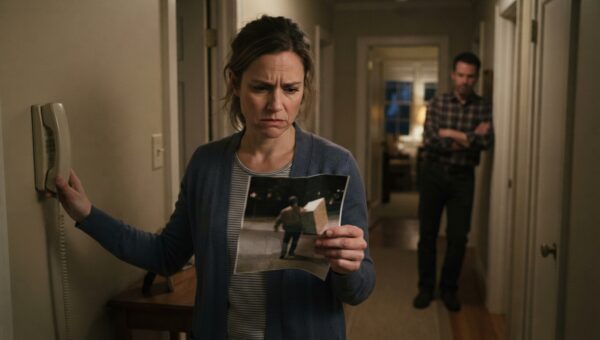
The house was entirely too quiet at 4:14 in the afternoon. Outside the front window, the gray October light was beginning to slide down the maple trunk across the gravel drive, leaving the yard in that flat, dull shade that always made the kitchen feel colder than it had any right to be. I was sitting at the laminate table with a cold cup of instant coffee I had poured twenty minutes ago and completely forgotten about.
On the local access channel, the Sunday afternoon movie was winding down, some old black-and-white picture with a train pulling out of a station while the brass instruments swelled up. I hadn’t watched a single frame of it. I was just staring at the grain of the tabletop where Vernon had spilled some linseed oil back in July, right before things turned.
Vernon passed away on the fourteenth of the month. It was a Tuesday, clear and crisp enough that the leaves were dropping off the maples in heavy, golden showers every time the wind kicked up from the creek. People from the parish brought over casserole dishes and ham platters that filled the refrigerator until the shelves groaned, and they sat in the front room talking in those low, reverent tones people reserve for the newly dead. I thanked them and nodded and drank too much lukewarm coffee. Then they all went home to their own kitchens and their own husbands, and the quiet settled back in like dust on a polished floor.
By Sunday, the casseroles were gone, the house smelled only of old cedar and floor wax, and I found myself sitting in the front room with the Sunday paper folded open to the showtimes column out of pure, stubborn habit. I have not gone to a picture show since 1988, not since my knees started acting up and the local theater downtown was turned into a furniture outlet, but my eyes still trace down the list of afternoon matinees the way a blind man reads his fingers over a page.
I knew the top shelf of the bedroom closet was waiting for me. It had been waiting since the funeral director handed me Vernon’s heavy signet ring in a little plastic baggie that smelled faintly of antiseptic. There are things you can leave alone for a week, and then there are things that start to loom over the room until you can hardly breathe around them.
The cigar box was up there behind two winter quilts and a stack of old tax folders from when Vernon still kept the books for the grain elevator. It was an old wooden box, a Garcia y Vega from back when the tobacconist down on Main Street still had a glass display case and a brass cash register that went *ding* every time a farmer bought a pouch of Red Man.
I stood on the step-stool because my balance isn’t what it used to be, and I reached up into the dark of the shelf. My fingers brushed the dry, rough weave of the quilt before they hit the smooth corner of the box. It was heavier than I remembered. When I pulled it down and set it on the mattress in the spare bedroom, a little puff of stale tobacco dust rose into the shaft of afternoon light coming through the window blinds.
I sat down on the edge of the mattress and unlatched the little brass hook. It stuck for a second, the way old brass always does when the air in an Illinois house gets damp in the fall, then gave way with a small, dry snap.
Inside was a mess of colored cardstock and thin thermal slips, thousands of them piled in thick, jumbled drifts that smelled like thirty years of damp basements and pocket lint. Vernon had kept every single one of them. Every matinee, every drive-in double feature from back when we were first courting down by the quarry road, every rainy Saturday afternoon when we went to escape the humidity and share a tub of buttered popcorn that cost ninety-five cents. I reached in and let the slips run through my fingers, listening to that dry, papery rustle that sounds like autumn leaves sliding across a sidewalk.
“You old fool,” I said out loud to the empty room. My voice sounded thin and raspy, like paper rubbing against paper.
I teased him about that box more times than I could count. Back when we were still running the house and the kids were small enough to leave muddy bootprints across the back porch, I told him he was turning into a pack rat. I teased him that a grown man ought to have a better hobby than saving scraps of cardboard from the Majestic Theater. He would just sit there in his armchair with his reading glasses halfway down his nose, turning the pages of the farm report, and he wouldn’t even look up from the print.
“You never know when you might need to check the date on a western,” he’d tell me, that little half-smile of his twitching at the corner of his mouth just enough to let you know he was pulling your leg.
I never thought he was actually keeping score. I figured it was just one of those harmless habits men pick up when they spend forty years working maintenance for the county highway department, stacking nuts and bolts in coffee cans until the shelves bow in the middle.
Now, sitting on the edge of the bed with the gray light fading out of the room, I decided I was finally going to do what should have been done five years ago. I was going to empty the thing into a Hefty trash bag, tie it off, and carry it out to the metal bin by the alley. There is a point in grief where holding onto the trash of a person’s life starts to feel less like remembering and more like a tax you’re paying for having loved them.
I grabbed the sides of the cigar box and tipped it over, spilling the whole colorful heap across the white candlewick bedspread. The stubs tumbled out in a long, ragged fan, pinks and yellows and faded blues, some of them so old the ink had nearly vanished into the paper. I ran my palms across the pile to sweep them toward the center so I could gather them up in one go.
That was when my hand caught on something that didn’t slide.
It wasn’t a ticket. It didn’t have that slick, glossy feel of modern movie paper, nor the stiff grain of the old cardboard slips from the seventies. It was rough, small, and tucked tight into the very corner where the cedar wood met the bottom panel, pinned beneath the dead weight of three decades’ worth of paper.
I paused with my hand flat against the quilt. The light from the window had shifted from gold to a hard, pale slate. I didn’t want to pick it up. I honestly almost reached for the trash bag and swept the whole mess off the mattress without looking closer, because there is a strange kind of cowardice that comes with being seventy-two years old and living alone in a house that still smells of someone who isn’t coming back for supper. I thought about leaving it there, letting the garbage men haul it away to the county landfill where the bulldozers would chew it into pulp by Tuesday morning.
Instead, my thumb reached out and hooked underneath the edge of the corner piece.
It came loose with a dry little tearing sound, like a postage stamp being peeled off a letter that had been stuck down too long in the humidity. When I brought it up into the dim light near my face, I saw it wasn’t a ticket at all. It was a square of lined notebook paper, torn out from the spiral spine with a ragged edge on the left side, folded over twice until it was no bigger than a postage stamp.
My fingers were shaking just a little bit, which made me angry at myself. I’m a woman who spent forty years balancing farm accounts down to the last penny without an adding machine, and here I was getting the vapors over a scrap of trash in an empty bedroom. I pinched the corner with my fingernail and worked the folds open one by one until the paper lay flat against my palm.
The ink was blue ballpoint, the kind that skips if you press too hard on cheap paper. It was Vernon’s handwriting, unmistakable even from fifty years back, before his knuckles got stiff from the arthritis in the county garage. The letters were blocky and square, leaning just a little to the left the way they always did when he was writing something he didn’t want anyone else to look over his shoulder and read.
I had to lean forward until my nose was nearly touching the quilt to catch the light from the streetlamp that had just flickered on outside.
*November 12,* it said at the top, followed by a year I recognized instantly because it was the autumn before we were married, the year my father still had the hardware store on 4th Street and Vernon was driving a gravel truck with no muffler. *First movie with Sarah. If I’m lucky, there will be ten thousand more.*
I sat there for a long time. The furnace down in the basement gave a loud, metallic clank as it kicked on, rattling the pipes behind the wall, but I didn’t move an inch.
Ten thousand more. We didn’t make ten thousand. We made maybe a thousand if you counted the rainy afternoons and the bad comedies where the projector broke halfway through the second reel. We made a life out of small, ordinary rooms smelling of stale popcorn and floor cleaner, sitting three rows back from the screen while the world went on outside without us. I had spent thirty years teasing him about being a pack rat who couldn’t throw away a piece of colored paper, never once understanding that the box wasn’t a collection of trash at all. It was a ledger. It was the only way a quiet man who never had much use for poetry could keep a count of every time he got to sit in the dark next to the girl he chose.
My throat felt tight, dry and hot like I’d swallowed a mouthful of wood smoke. I didn’t cry the way people do in the movies, with big heaving shoulders and water running down their cheeks. I just sat there until my eyes stung, looking down at those twenty little words written on a scrap of five-cent notebook paper while the house around me hummed with its old, familiar machinery.
I didn’t sweep the stubs into the Hefty bag.
Instead, I spent the next twenty minutes gathering them up by handfuls, sliding them back into the cedar box one by one until the bottom was covered again. Then I took that little folded square of lined paper, smoothed the creases out with the flat of my thumb, and laid it right back in the center of the pile where it had been resting all those years while the children grew up and moved to Peoria and the mortgage was finally paid off.
I closed the lid. The brass hook snapped down tight, secure and solid in the quiet room.
I carried it down the narrow hallway, past the blank wall where the family portraits hung in their heavy walnut frames, and took it into my bedroom. I didn’t put it back on the top shelf in the dark where nobody would ever see it again. I set it right on the corner of the cherry-wood nightstand, right beside the glass of water I leave out every night and the little amber bottle of blood pressure pills.
The light from the lamp cut a warm, yellow circle across the polished wood, catching the edge of the brass latch. I sat down on the side of the bed and kicked off my slippers, listening to the wind rattle the dry leaves against the windowpane down in the yard.
“Ten thousand more,” I said to the dark corner by the closet door.
The house stayed quiet, but for the first time since the fourteenth of October, the silence didn’t feel quite so empty.