The house had this way of settling into itself right around two in the morning, the old floorboards contracting against the chill of an October draft, so when the back door clicked open, I woke up instantly. Arthur never went outside at that hour unless the sump pump was acting up or a stray raccoon had gotten into the metal garbage cans by the driveway.
I pulled my quilt up to my chin and waited for the latch to drop back into place, but ten minutes dragged by with only the low, flat hum of the refrigerator downstairs. I slipped my bare feet into my slippers, the fleece worn thin after six years of mornings, and padded down the hallway without turning on a single overhead bulb.
The garage door was cracked an inch, letting a thin wedge of amber yard light slice across the cement floor where Arthur kept his old radial arm saw and the stacks of cedar planks he swore he was going to build bookshelves out of someday. He was sitting on an overturned five-gallon paint bucket by the workbench, his shoulders hunched over so far his gray flannel shirt pulled tight across his spine. The phone was pressed hard against his ear, the little blue screen glowing against the side of his face like a match struck in a cellar.
He was whispering something low and rhythmic, the words swallowed by the hum of the freezer against the far wall, his thumb rhythmically rubbing the plastic casing of the device.
When I pushed the service door open an inch, the hinge gave a dry squeak that cut right through his conversation. He jerked upright like he had been struck with a cattle prod, his hand dropping the phone into his lap so fast it bounced twice against the hem of his jeans, and he turned around with his eyes bloodshot and wet. “Wrongnber,” he muttered, his voice thick and gravelly from sleep or something much heavier. He scrubbed his palm across his face, trying to wipe away the dampness on his cheeks before I could get a real look at him, but I had already seen the heavy red swell around his eyes. “Go back to bed, Clara. Just checking on the latch.”
I didn’t argue then because I was tired and the kitchen floor was freezing through the soles of my slippers, so I let it go and went back to the quiet warmth of the bedroom. But three weeks later, it happened again at 3:14 on a Tuesday morning, and then again on a humid Saturday night while the ceiling fan clicked overhead at two-fifteen. Arthur would slip out of bed with that practiced, careful slowness of a man trying not to disturb a sleeping dog, and each time he came back twenty minutes later smelling faintly of night air and old cedar, his face blank and closed off. I tried telling myself he was just worrying about the taxes or the farm equipment loan we took out for the truck, but people don’t weep over a John Deere statement at three in the morning.
The breaking point arrived on a Thursday afternoon when the monthly itemized statement from our landline and cellular carrier came in the mail, bundled with three junk credit card offers and a local grocery circular.
I usually tossed the bill into the wicker basket by the pantry and let Arthur pay it online like we always did, but my hand hovered over the folded paper because the page count felt unusually thick for just two phones. I sat down at the laminate kitchen table, pushed a stray envelope out of the way, and unfolded the stapled pages with a thumb that felt heavier than usual.
Down the second page, past the routine calls to our daughter in Knoxville and the hardware store in town, a cluster of numbers caught my eye with the stubborn persistence of a burr in a wool sock. Twenty-two late-night connections, all of them punched in between midnight and four in the morning, all pointing to the same prefix down south. 828. Western North Carolina. The timestamps matched every single night Arthur had slipped out to the garage or locked himself in the downstairs half-bath with the water running in the sink.
I sat there at the table while the refrigerator kicked on with a heavy shudder, feeling the silence of the house press down on my ears until my own breathing sounded loud. I didn’t know a soul in the mountains of North Carolina, and neither did Arthur, or at least he had never mentioned anyone in forty years of Saturday morning breakfasts and shared coffee cups across this very table. I pulled my phone from my apron pocket, my fingers clumsy against the smooth glass, and typed the ten-digit string into a search engine with a strange, dull numbness spreading behind my ribs.
The screen flickered for a second against the white daylight coming through the window, bringing up a directory listing that resolved into a small-town bakery profile just outside of Asheville. The business page had a cover photo of a wooden counter lined with frosted ginger cookies and braided loaves, and underneath it was the name of the owner, neat and plain in bold black text: Linda Hayes. I scrolled through the public posts, half expecting to find a supplier invoice or some mundane business dispute about grain prices, but people don’t whisper into a phone at two in the morning about flour delivery.
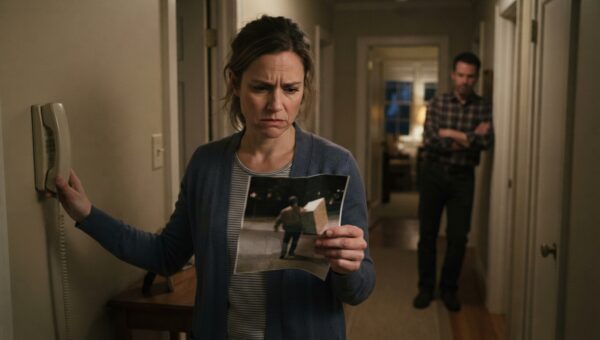
Then I clicked on the old photo albums tucked away at the bottom of the grid, the ones people forget are searchable when they set up a social media page back in the early days of the internet. The pictures drifted backward through time, past birthday cakes shaped like tractors and golden retrievers sleeping on front porches, until I hit an upload dated back in the autumn of 1996. The man in the picture was Arthur, though his hair was thick and dark instead of silver, standing on a gravel driveway with his arm slung around a young woman whose smile reached her eyes. In the crook of her other arm, wrapped in a faded yellow receiving blanket, was an infant with a shock of dark hair.
The phone felt heavy in my hand, the screen cold against my palm as I stared at the small pixels until they blurred into gray static. I didn’t yell, and I didn’t throw anything across the room the way they do in the movies, because when the ground falls out from under you, you don’t wave your arms around; you just stand there and try to figure out where the floor went. I laid the printed receipt and the screenshot of the 1996 photo right in the center of the kitchen table, put the heavy ceramic coffee pot back on its burner, and waited for Arthur to come back from hauling the salvage load down at the scrap yard.
When the truck gravel crunched in the drive at five o’clock, I heard the engine die with that familiar dying cough the muffler had had since the winter of 2012. Arthur walked up the back steps, his canvas jacket smelling of grease and iron filings, and pushed the screen door open with his shoulder while carrying a box of replacement washers. He stopped dead the second he crossed the threshold, his eyes dropping straight to the kitchen table where the two pieces of paper lay side by side under the harsh light of the ceiling fixture.
He didn’t try to make up a story about a wrong number this time, and he didn’t reach for his jacket or look for an exit through the pantry door. His face went entirely slack, the color draining out from under his weathered skin until he looked ten years older than the man who had walked out to the truck that morning. He pulled out the wooden chair across from me, his knees knocking once against the table leg with a hollow thud, and lowered himself down like a man carrying a sack of wet feed that was about to tear open.
“Linda is my first wife,” he said, his voice so quiet I had to lean forward to catch the words over the hum of the refrigerator. He didn’t look at the photo; he just stared at the scarred wood grain between his calloused hands, his thumbs twitching against one another. “Before the army, before we met up in Ohio, before any of this. It was right when we were kids, Clara. Less than a year. It fell apart before the paint on the porch could even dry, and I packed what little I had into the bed of that old Ford and drove north because I was a coward who didn’t know how to fix a broken thing.”
My chest felt tight, the air catching somewhere near my throat as I looked at the stranger sitting across from my kitchen table. “And the baby?” I asked, my voice sounding thin even to my own ears, like paper tearing in another room. “Is that why you’ve been sitting out in the garage talking to a stranger while I’m sleeping upstairs?”
Arthur finally looked up, and the sight of him broke something sharp inside my chest, because his eyes weren’t angry or defensive; they were just hollowed out by twenty-eight years of running from a ghost. “She’s twenty-eight now,” he whispered, his chin trembling slightly before he managed to steady it with a hard swallow. “And she just got diagnosed with something bad down there at the clinic in Raleigh. That’s why I’ve been calling. That’s why I’ve been sitting out in the dark crying like an old fool, because she’s my flesh and blood, and I wasn’t there for her first step, and now I might not be there for the end of it.”
The silence that settled over the room then wasn’t the cold, suspicious quiet of the weeks before; it was heavy and damp with decades of unsaid things, the kind of silence that settles into an old cellar when you finally pull up the floorboards and find what was buried beneath them. I sat there looking at my husband, at the lines around his eyes that I had traced with my own fingers a thousand times, realizing for the first time that the man I had built a life with had spent half his days carrying a second life in his pocket like a heavy stone. He hadn’t betrayed our marriage for another woman; he had been drowning in the wreckage of a family he abandoned before he even knew how to be a man.
I didn’t pull my hand back when he reached across the table, his fingers rough and shaking as they brushed against my knuckles. The anger that had kept me awake for three nights didn’t vanish all at once, but it shifted, turning into something heavier and more complicated that I didn’t have a name for yet. “You should have told me the first night,” I said, my voice dropping down to match his quiet tone. “We don’t carry things like that alone in this house, Arthur. That’s not what we agreed to thirty years ago by the creek.”
He let out a ragged breath that sounded like a sob trying to find a way out of a locked chest, and for a long moment neither of us moved. “I was scared you’d look at me the way I’ve been looking at myself for half a lifetime,” he said, his thumb pressing hard against my wrist. “I was scared you’d pack your bags and leave me with the ghosts.”
I pulled my hand out from under his only to reach across the table and slide the phone toward him across the laminate surface, right next to the photograph of the young girl in 1996. “Pick it up,” I told him, pointing my finger at the screen while the afternoon light cut a long, clean line across the floorboards. “Call her back while the sun’s still up. And this time, you don’t have to go out to the garage to do it.”
Arthur looked down at the phone, then up at me, his eyes shining in the fading light, before he picked the device up with steady fingers and dialed the number in the mountains. We stood together on the back porch ten minutes later while the autumn wind rustled the dry corn stalks in the bottomland, watching the last orange sliver of the sun drop behind the ridge. He held the phone to his ear with his head held high in the open air, and I stood right beside him with my hand resting firm and steady against his shoulder, ready to listen to whatever echoes came back across the line.