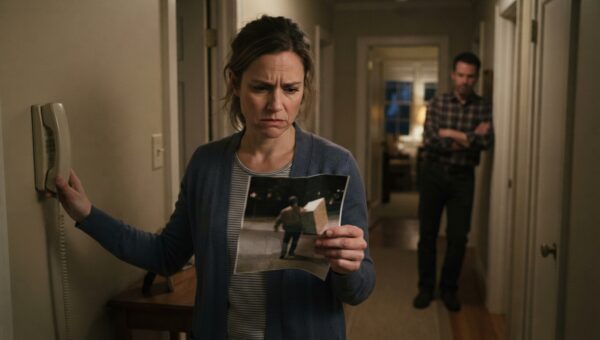
You climbed the ladder… you stayed a nobody. I need someone better.
Those were the exact words Arthur threw at me after twelve years of marriage, twelve years of boiling coffee at two in the morning while he drafted business proposals at the kitchen table, twelve years of stretching every paycheck so he could buy the suits that supposedly got him into the room where decisions were made.
He packed his canvas duffel bags, zipped them shut with a heavy, final sound, and walked out of our front door to join Chloe in her downtown high-rise condo. I didn’t scream. I didn’t throw plates against the drywall. I just stood by the sink and watched his sedan pull out of the gravel driveway, leaving behind a silence that felt heavier than any argument we had ever had.
For a long time, our life had been built on quiet routines. We lived in a modest split-level house three blocks past the hardware store, a place with peeling white paint on the southern gable and floorboards that groaned every time the weather turned damp. Arthur used to love my beef stew on Sunday evenings, or at least he used to pretend to before his firm started moving him up into the executive tier. By year ten, he was attending dinners where partners brought wives who wore pearls and talked about art galleries.
I wore cotton skirts from the department store and talked about the local garden club. I didn’t mind it much then, because I thought we were a team building toward something safe.
When he told me I was a nobody, it didn’t just break my heart; it made me feel invisible, like the last twelve years had been erased from the ledgers of time. I signed the divorce papers four weeks later without asking for a dime of his new corporate accounts, just wanting the clean break he seemed so desperate to buy. I figured that was the end of it, that I would go back to full-time bookkeeping at the grain elevator and he would live out his shiny new life with Chloe in the clouds. I figured wrong.
Life has a strange way of stripping away pretenses when you least expect it. Just four months after he walked out, the phone rang at 6:15 in the morning.
It wasn’t Arthur. It was a doctor at St. Jude’s calling from a number I didn’t recognize. Arthur had collapsed during an early morning board meeting, and the tests came back fast, brutal, and final. An aggressive, rapid-onset neurological infection was eating away at his nervous system, shutting down his mobility and his independence piece by piece.
When the diagnosis became public, Chloe didn’t stick around to see the regression. She packed her own designer luggage within forty-eight hours of his discharge from the intensive care unit, leaving a curt note on the marble kitchen island about how she didn’t sign up to be a full-time nurse. Arthur called me himself on a borrowed cell phone, his voice shaking and barely above a whisper.
“Can you help me?” he asked.
There was no pride left in his tone, only the ragged edge of a man who realized too late who had been holding the safety net all along.
Despite every cruel word he had spoken in our kitchen, despite the way he had discarded me like an old coat, I didn’t hesitate. I drove straight to his condo, loaded his remaining clothes and medical gear into the back of my truck, and brought him home to the same creaky bedroom he had walked out of a few months prior.
The next three months were quiet, exhausting, and strangely intimate in a way neither of us expected. I washed his linens, tracked his pill schedules on a yellow legal pad, and helped him walk from the bed to the armchair when his legs refused to carry his weight. We didn’t talk much about the past, but the air between us cleared of the old bitterness. He spent his afternoons looking out the window at the old oak tree in the front yard, watching the gray sparrows flutter through the branches.
He passed away just as the sun was starting to crest the horizon on a Tuesday morning. I was sitting right beside him in the green vinyl chair, holding his calloused hand, whispering that he wasn’t safe from the dark, but he wasn’t alone either. When his breathing finally stopped, the room went very still, and I felt a strange mixture of profound grief and a weird, hollow peace settling into my bones.
I thought the story ended right there in that quiet bedroom with the morning light hitting the floorboards. I arranged the simple service at the chapel down on Elm Street, keeping it small because most of Arthur’s corporate friends had already stopped calling the moment he left the office. I wore a plain black dress that used to be my mother’s, standing near the front of the chapel as the organist played a slow, heavy hymn that seemed to drag on forever.
Then the heavy oak doors at the back of the chapel creaked open.
I didn’t turn around immediately, but the sudden shift in the air caught my attention, the faint smell of expensive floral perfume cutting right through the scent of old beeswax and damp wool. I looked back and saw Chloe standing near the threshold, wearing a tailored black designer coat and dark sunglasses inside the dim church. She didn’t look like a grieving widow; she looked like a hawk scanning a field for mice, her eyes darting past the casket straight toward the front rows where the family reserved seats usually sat.
During the short service, I watched her out of the corner of my eye. She wasn’t singing, she wasn’t bowing her head, and she certainly wasn’t crying. Instead, she spent the entire time whispering urgently to the funeral director whenever he walked past her aisle, leaning in close with her lips pressed tight into a hard line. I knew that posture; it was the exact same way she used to corner Arthur at cocktail parties when she wanted to know the exact valuation of a competitor’s portfolio.
When the final prayer was spoken and people began filing out into the bright morning sunlight for the graveside committal, Chloe didn’t head for the exit. She intercepted me right by the heavy brass baptismal font near the vestry door, blocking my path with her arms crossed over her chest.
“We need to talk about the estate,” she said, her voice sharp and devoid of any warmth.
I stopped, adjusting the strap of my handbag over my shoulder and looking right at her. “There is no estate to talk about, Chloe. You cleared out his accounts when you left the condo.”
“Not his investment portfolio,” she snapped, stepping closer and lowering her voice so the remaining mourners wouldn’t overhear. “Arthur had private holdings. Stocks, insurance riders, property options that haven’t cleared yet. As his legal partner of record until the final paperwork went through, I am entitled to my share of what he left behind. Don’t play games with me.”
She looked so sure of herself, standing there in her expensive coat, treating a man’s death like a delayed business transaction. I felt a cold wave of disgust, but it washed over me quickly and left me entirely calm. Arthur hadn’t been stupid during those last three months of clarity; he had spent plenty of hours talking to our old family attorney over speakerphone while I sat across the kitchen table shelling peas.
“You think you’re still his partner?” I asked quietly, my voice barely carrying over the hum of the ceiling fan above us.
“My name was on the lease of our primary residence,” she said, her chin lifting with that same defensive arrogance Arthur used to wear like armor. “And the divorce hadn’t been fully certified by the state registrar’s backlog. You know it as well as I do. Hand over the paperwork, or my lawyer will make sure you spend every cent you have trying to defend yourself in probate court.”
I didn’t blink. I reached slowly into my black leather handbag, pulled out a thick, folded manila envelope bearing the embossed seal of Miller and Sons Attorneys at Law, and held it out toward her.
“You can take it up with them if you want,” I said, my voice completely steady. “But you might want to read page four first.”
She snatched the envelope from my hand, tearing the flap open with trembling fingernails that ruined her manicure. She pulled out the single folded sheet of heavy cream paper, her eyes darting across the dark ink of Arthur’s final handwritten codicil, signed just eleven days before his heart finally gave out.
“This… this isn’t possible,” she whispered, her face losing all its color as she read the clauses he had dictated from his bed while I held the glass of water to his lips.
“He changed his mind,” I said softly, watching the realization wash over her features. “He left everything, down to the last cent of those private holdings, to the local hospice care fund and the deed of this house to me. He filed the revocation the morning after you walked out the door.”
She stared at the paper for three long seconds, her mouth opening slightly as she tried to form a sentence that wouldn’t come. Then she crumpled the corner of the legal document in her fist, let out a sharp, breathless gasp of pure fury, and turned on her heel, her designer heels clicking frantically against the stone floor as she stormed out through the heavy oak doors without looking back.
I stood there in the quiet foyer for a long moment, listening to the echo of her footsteps fade away into the parking lot. The weight I had been carrying for twelve years, the invisible label of being somebody’s nobody, finally dissolved completely into the dusty air of the old church. I walked slowly out the side doors into the warm morning sunlight, leaving Arthur’s final folded letter resting untouched on the empty wooden pew behind me, fully ready to walk into whatever came next all on my own terms.