We were wrong about the math of love, Marsha and I. We thought love was just a ledger of subtractions where you gave whatever was left in the checking account until the line hit zero, believing that if you kept your kid afloat, she would eventually swim on her own. I used to balance our credit union statements every single Sunday morning with a sharp yellow No. 2 pencil, licking the lead tip when a column of figures refused to balance, convinced that hard work and plain living were the only armor a family needed against the world.
I am a retired machinist from a paper mill that has since rusted into a row of broken brick shells, and my wife Marsha spent thirty years sorting mail at the county annex before her fingers started stiffening up with arthritis. We never asked for much, just a dry roof, a garden that gave us four rows of tomatoes each August, and the quiet pride of knowing our twenty-six-year-old daughter Chloe was making her way in the city three hours south.
It started innocently enough with a text message that pinged against the quartz countertop while Marsha was rinsing breakfast dishes in the sink. Chloe was twenty-six, living in a cramped studio apartment near the transit line, trying to break into commercial graphic design while working a string of odd jobs that paid in gift cards and empty promises. Her rent had gone up by $300 without warning, she said, and her landlord was threatening to throw her drafting table onto the sidewalk by Tuesday noon.
My daughter asked me for $5,000 to pay her rent, and because her voice on the phone sounded thin and hollow like dry grass in November, I didn’t even argue with her. I sent it immediately through the mobile app, watching the green checkmark flash on the screen with a small sense of heavy-chested relief that I could still protect my only child from the cold.
The next month, the pattern hooked its teeth into us. She asked $3,000 for car repairs after a phantom mechanic claimed her transmission was shot to pieces. I sent it without calling her back to ask for an itemized receipt, trusting the frantic tremor in her voice over the speakerphone. Then came $2,000 for emergency medical bills after a supposed urgent care visit for an infected molar. Then $4,000 for summer tuition credits she needed to graduate on time. Over fourteen months of text messages, wire transfers, and hurried late-night phone calls, I gave her $38,000, draining the retirement savings account we had spent decades building one hundred-dollar paycheck at a time.
Marsha and I stopped buying beef, turning instead to store-brand pasta and canned peas, telling ourselves that sacrifice was just what parents did when their children were standing on the edge of adult life.
The break didn’t come with a thunderclap or a shouting match; it came with the soft, blue glow of Marsha’s iPad sitting next to a cold cup of chamomile tea on a rainy Thursday night. Marsha has always been sharper with computers than I am, her old postal-sorting brain wired to spot discrepancies in rows of data that look identical to anyone else. She was looking up a local bakery’s weekend hours when she noticed a public profile under a strange handle, something flowered and foreign that used a stylized photograph of Chloe’s profile silhouette. We clicked it out of idle curiosity, thinking maybe she had started a side business selling digital art to make ends meet without having to ask us for another handout.
What spilled across that ten-inch glass screen didn’t look like a struggling graphic designer living on instant ramen in a studio apartment. There were high-resolution photographs of Chloe smiling on the sun-bleached deck of a chartered yacht in Bali, wearing designer sunglasses that cost more than my first used truck. There were short video clips of her laughing inside crowded VIP nightclub tables lit by neon sparklers, surrounded by expensive bottles of champagne and people whose clothes looked like they belonged in a magazine spread. Every dollar I had sent her over fourteen months of frantic text messages had been converted into luxury linen, imported liquor, and VIP wristbands for a life we couldn’t even spell correctly. Marsha didn’t cry when she saw the fourth photograph of our daughter posing in front of a private helicopter on an island airstrip, her fingers freezing on the screen while the rain tapped a steady, mocking rhythm against the kitchen windowpane.
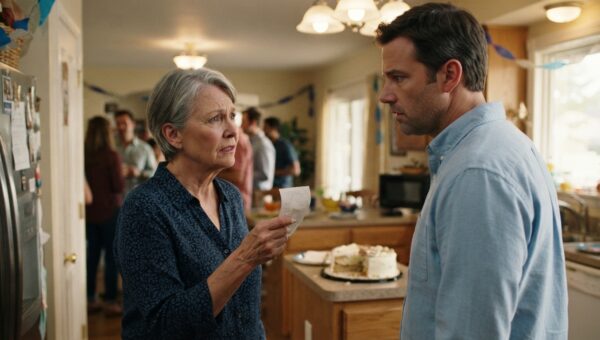
“Look at this one, Arthur,” Marsha said, her voice dropping into a flat, toneless whisper that scared me worse than any scream she had ever let out. “Look at the date on that post. That was the exact same Tuesday we ate tuna salad for three days straight so we could wire her rent money.”
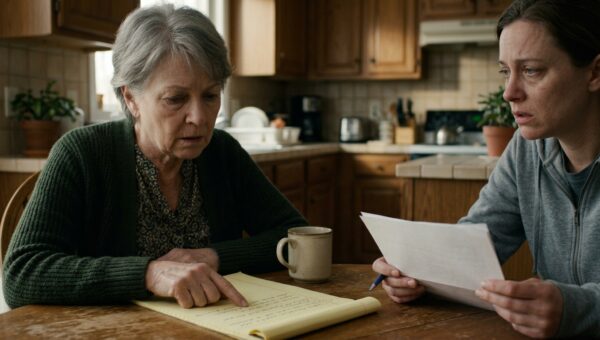
We didn’t sleep that night, sitting across from each other in the dark kitchen with the refrigerator humming its low, steady chord while the numbers on the digital stove clock ticked past midnight and into the gray hours of dawn. I felt a cold, sour weight settle in the pit of my stomach, a mixture of burning anger at my own foolishness and a sickening dread that we didn’t actually know our own child at all. By eight o’clock the next morning, Marsha had printed out twenty-two pages of screenshots, wire receipts, and bank statements, laying them out in neat, agonizing piles across our oak kitchen table like evidence in a murder trial. When Chloe walked through our front door twenty minutes early for her usual weekend visit, carrying her canvas tote bag and smelling faintly of expensive perfume, she expected the usual warm greeting and a hot plate of eggs. Instead, she found the tablet resting between her parents like a drawn sword.
She stopped dead three feet inside the kitchen threshold, her eyes darting from Marsha’s stony face to the scattered papers on the wood grain, her fingers instantly tightening around the leather strap of her bag until her knuckles turned the color of skim milk. We didn’t yell, and we didn’t throw things, because the shock of the betrayal had stripped away all our noise, leaving only a heavy, suffocating stillness that felt three times heavier than anger. I pointed my finger at the iPad screen where Chloe was smiling beneath a string of white paper lanterns in a resort garden six thousand miles away.
“Explain this,” I said, my voice sounding cracked and old, like dry wood snapping underfoot in the woods. “Explain how you’re sitting on a beach in Bali while your mother and I are eating canned beans to keep your lights turned on.”
Chloe didn’t run, and she didn’t try to bolt for the front door, but she began to shake from head to toe, her lower lip trembling so violently she could barely form the syllables. When she finally broke down, it wasn’t the defiant weeping of a spoiled kid caught red-handed in a lie; it was the wet, gasping panic of someone drowning in deep water without a life jacket. She dropped her bag on the floor with a heavy thud, sliding down into one of our ladder-back kitchen chairs and burying her face in her hands as the ugly, broken sobs tore out of her throat.
“You don’t understand the pressure,” she cried out, her voice ragged and small, curling inward like a dead leaf in a fire.
I slammed my palm flat against the table surface, the sound echoing off the plaster walls and making the coffee cups rattle in their saucers. “Pressure? You took thirty-eight thousand dollars of hard-earned money we saved for our old age and you spent it on designer clothes and yacht trips? That isn’t pressure, Chloe, that’s pure greed and cruelty.”
She pulled her hands away from her face, her eyes wide, red-rimmed, and wild with a terror that finally made my skin prickle with cold sweat because I realized she wasn’t just acting guilty. She looked like a cornered animal that had forgotten how to fight back, her chest heaving as she stared at the papers spread out across the wood grain.
“Someone is making me this way,” she whispered, her voice dropping so low I had to lean across the table to catch the words.
I frowned, the anger momentarily stuttering as a cold, unfamiliar confusion took its place in my chest. “Who?”
Chloe didn’t answer right away, her gaze darting frantically toward her coat pocket where her phone was beginning to vibrate with a muted, rhythmic hum against the fabric lining. She looked at her phone, then at Marsha, and finally met my eyes with a look of such absolute, bone-deep dread that my legs suddenly felt like warm tallow under my weight. And she said a name that made my knees buckle and forced me to reach out and grab the edge of the counter to keep from sliding down onto the linoleum floor.
“Julian,” she whispered.
The name hung in the air between us, smelling of cheap cologne and old grease, entirely alien and yet somehow heavy with the weight of an anchor. For ten minutes, sitting there in our quiet kitchen while the coffee grew ice cold in our cups, the whole terrible structure of lies unspooled itself until the truth stood bare and shivering in the room. Chloe hadn’t gone to Bali for pleasure, and she hadn’t bought those designer bags to show off to her friends on a whim. Six months after moving to the city, she had met a man named Julian at a downtown gallery opening, a charismatic, older operator who moved in expensive circles and seemed to know everyone worth knowing in the local design scene. Within three weeks, he had moved into her studio apartment, charmed her until her defenses were completely dissolved, and then slowly began turning her life into a quiet, inescapable prison.
It started with a weekend trip to a private resort where Julian had introduced her to wealthy investors, plying her with drinks until she passed out in a guest suite. While she was unconscious, he had taken photographs in compromising positions, using them as digital handcuffs to lock her into a web of manufactured debts and fabricated legal liabilities. Whenever Chloe tried to pack her bags and walk out the door, he would send a single thumbnail image to her phone with a text message detailing what he would post to her employers, her university alumni network, and her family back home. He had forced her to create the secret social media side account to maintain the illusion of high-society success, using her as his public ornament while she lived in constant, silent terror of his next command.
Every single dollar of the $38,000 we had sent her over fourteen months hadn’t been spent on designer shopping sprees for her own enjoyment; it had been siphoned directly into Julian’s hands to pay off fake extortion demands, mounting gambling debts, and luxury rentals he used to trap other young women in the exact same cycle. She had been living in a waking nightmare of digital blackmail, too ashamed to call us for help because she believed her own foolishness had brought the monster to her door.
As Chloe sat there weeping, clutching her forearms as if she were trying to hold her own bones together beneath her sleeves, the red mist of my initial anger didn’t vanish, but it shifted into something colder, harder, and infinitely more dangerous. The machinist in me who had spent decades repairing broken stamping presses didn’t see a rebellious daughter anymore; I saw a trapped gear jammed inside a dirty machine, and I knew the only way to fix it was to take a wrench to the housing before it tore itself to pieces. Marsha didn’t say a word of reproach, her maternal instincts kicking in with the quiet, devastating efficiency of a woman defending her nest from a fox. She stood up from her chair, walked around the table, and pulled our shaking daughter into her arms, burying Chloe’s face against her shoulder while Marsha’s own eyes stayed dry and fierce as tempered steel.
“We are going to fix this,” Marsha said, her voice steady and absolute, leaving no room for argument or doubt. “We are going to stop him right now.”
We spent the next six hours doing what we should have done months ago if we had known how to read the warning signs hidden in our daughter’s voice. We confiscated Chloe’s phone, blocked Julian’s number across every channel, and sat side-by-side at the kitchen table going through every single text message, threatening voice note, and wire receipt he had ever sent her. There were over four hundred pages of digital intimidation, financial demands, and psychological abuse archived in her cloud storage, a complete paper trail of extortion that traced right back to Julian’s personal banking accounts and IP addresses. By mid-afternoon, we drove straight to the county sheriff’s office instead of waiting for Monday morning, walking through the heavy glass doors with a thick manila folder tucked firmly under my arm like a legal brief.
The detective on duty wasn’t some sleepy small-town officer who brushed off family disputes; she was a sharp-eyed cyber-crime investigator named Sergeant Vance who took one look at the screenshot printouts and immediately asked for Julian’s full name and last known address. We spent two hours in a small, windowless interrogation room giving our statements, watching as Sergeant Vance cataloged the extortion texts, the forced wire transfers, and the compromising digital files Julian had used to hold our daughter hostage. By the time we walked back out into the cool afternoon air, a formal investigation had been opened, federal cyber-harassment protocols had been initiated, and a circuit court judge had already signed off on an emergency protection order that made it a felony for Julian to come within five miles of Chloe or our home.
The drive back home was quiet, but it wasn’t the heavy, suffocating silence of the night before; it was the quiet of a house that had finally weathered a violent storm and was waiting for the sun to break through the cloud cover. We didn’t talk about the $38,000 we had lost, and we didn’t mention the retirement savings account that now sat at zero, because money is just paper that can be earned back with time and sweat, while a daughter’s life is something you only get one chance to save. When we pulled our old Dodge pickup into the gravel driveway just as the sun was dipping below the tree line, painting the valley in shades of bruised purple and gold, Chloe reached out from the passenger seat and took my hand in hers. Her fingers were still a little cold, but the frantic, desperate tremor had finally left her skin, replaced by the steady, rhythmic pulse of someone who was breathing free air for the first time in over a year.
We walked up the wooden steps to the front porch together, the screen door swinging open with its familiar, comforting squeak that we had listened to for twenty years. Inside the warm, yellow light of the living room, Chloe sat down on the old floral sofa, her shoulders finally dropping an inch as she picked up her new phone that Marsha had set up with a completely secure, unlisted number. The screen of the phone glowed softly against her cheek, reflecting the warm light of the corner table lamp as she systematically blocked the final incoming ghost numbers from Julian’s burner accounts one by one. I stood by the front window watching the shadows lengthen across the yard, knowing that the world outside was still full of sharp edges and hidden traps, but feeling the heavy, rusted anchor finally lift from my chest. Chloe looked up from her phone, her eyes clear and steady for the first time since she had left our kitchen table, and her hand rested safely and permanently inside her mother’s open palm.