“Someone is making me this way.”
Those were the words that finally broke the silence in our kitchen, right after my wife Brenda laid the blue-grey tablet screen flat between our coffee mugs. On that glass screen, glowing under the kitchen light, sat twenty-six-year-old Chloe, our only daughter, sitting at a marble-topped VIP table with sparklers jammed into a bottle of champagne I wouldn’t spend grocery money on in six months.
I sat there with my hands flat on the scarred oak grain, my mind refusing to stitch the pieces together. For fourteen months, my bank account had bled $38,000 in steady increments. Rent falling short. A alternator blowing out on her old Honda Civic. A sudden emergency root canal. Every single time she called with that tight, trembling voice, I transferred the funds before I even finished my morning coffee. Brenda and I had cut back on our own grocery trips, putting off the roof repairs and letting our old truck rattle down the road with a dying muffler, just to make sure our girl kept her head above water in the city.
Then Brenda found the side account. It was under a scrambled version of her middle name with the location settings left wide open.
“Who?” I had asked her, my voice dropping lower than I meant it to. “Who is making you live like this?”
Chloe stared down at her phone screen, the blue light catching the dark circles under her eyes, and she whispered a single name that made my legs buckle right there against the kitchen counter. Julian.
Before that Tuesday night, our life had a predictable, steady rhythm to it. Brenda and I spent our retirement managing a small hardware supply yard down in Dayton, Ohio, working six days a week among the smell of galvanized nails and cedar sawdust. We raised Chloe to believe that family meant showing up when the call came. When she moved up north for that graphic design job that never quite paid enough to cover her rent, we treated every wire transfer like an investment in her future.
“Dad, the landlord is threatening eviction,” she had told me over the phone twelve months ago, her voice shaking so hard I could barely make out the words. I wired the first $5,000 within the hour.
Then came the car repairs. Then the medical bills for some fictitious clinic visit. Each time, the story sounded just plausible enough to bypass my usual caution.
Brenda had questioned the frequency of it once or twice, saying kids today had no sense of budgeting, but I always brushed it off with a tired wave of my hand. You don’t let your own flesh and blood sleep on a pavement sidewalk if you have a few hundred dollars sitting in savings.
The trouble started bubbling up around four o’clock that Tuesday afternoon when Brenda walked into the back office of the supply yard holding her phone out like it was a live coal.
“Look at this, Arthur,” she said, her voice unusually flat. “Tell me this isn’t Chloe.”
I squinted through my bifocals at a brightly lit Instagram grid filled with palm trees, private balconies overlooking a turquoise ocean, and shopping bags from boutiques I couldn’t even pronounce. The handle was entirely foreign, but the smile belonged to our daughter. There she was, holding a glass of amber liquor, posing against a backdrop of white sand. The geotag said Seminyak, Bali.
I remember running my thumb across the edge of my desk calendar, trying to match the dates of that tropical trip with the exact week I had wired her $4,000 for her supposed tuition extension.
We didn’t call her. We waited until she came home for what she called a quick weekend visit to pick up her winter sweaters.
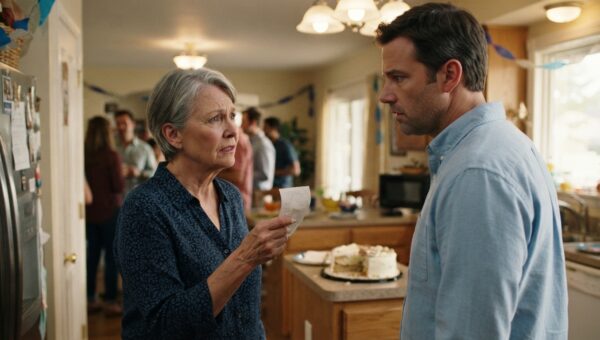
When Chloe walked through our front door that evening, she dropped her canvas duffel bag by the coat rack and walked into the kitchen expecting the usual pot roast and warm greetings. Instead, she found Brenda sitting upright at the end of the table and me standing by the sink with my arms crossed tight over my chest.
Brenda didn’t yell. She just slid the tablet across the table until it clicked gently against the salt shaker.
Chloe froze. The color drained out of her face so fast it looked like someone had turned off a lamp behind her eyes. She didn’t reach for the tablet. She just stared at it, her fingers twitching against the hem of her oversized cardigan.
“We want to know how a girl who can’t afford her own car insurance is flying to Bali,” Brenda said, her voice dangerously quiet. “We want to know why we’ve been eating canned soup for a year while you’re sitting at VIP tables.”
Chloe started crying then, small, breathless gasps that turned into heavy, wet sobs. She sank into the wooden chair opposite us, hiding her face in her hands.
“I had to,” she choked out. “You don’t understand the pressure.”
“Pressure?” I snapped, stepping away from the sink. “We sent you thirty-eight thousand dollars, Chloe. That’s not pressure, that’s a robbery.”
“Someone is making me this way,” she cried, her shoulders shaking violently under her sweater.
That was when I asked the question that tore the whole illusion wide open. “Who?”
She looked down at her phone resting on the table, then up at us with eyes wide and full of absolute terror. And she said the name: Julian.
The name meant nothing to Brenda and me at first, just three syllables hanging in the stale air of our kitchen, but the way Chloe flinched after saying it told us everything we needed to know about the shadow our daughter had been living under.
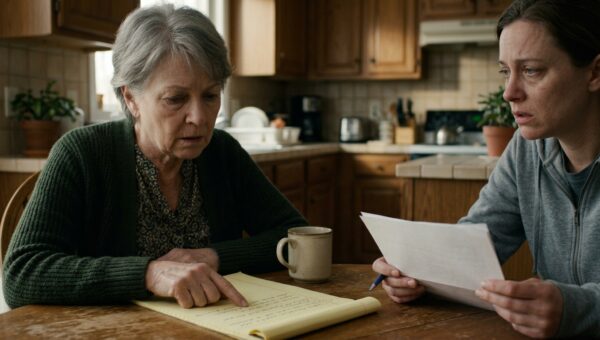
Over the next two hours, sitting around that kitchen table long after the sun had gone down outside, Chloe unspooled a nightmare that made my blood run hot and cold all at once.
She had met Julian six months after moving to the city. He was older, smooth-talking, and supposedly connected to high-end event promotion and digital marketing. At first, he was charming, taking her to upscale restaurants and introducing her to a circle of people who lived entirely on social media validation. But within weeks, the dynamic shifted.
During a weekend getaway he insisted on planning, Julian had recorded private, compromising videos of her without her consent during a night where she had been heavily drugged at a private club. When Chloe tried to break things off, he showed her the footage. He told her that unless she funded his lifestyle, paid off his mounting debts, and maintained the appearance of a wealthy influencer girlfriend on a secret social media account to attract high-paying investors to his schemes, he would send those videos to her employers, her clients, and us.
Every dollar of the $38,000 we had sent for rent and medical bills had been funneled directly into Julian’s digital wallets and bank accounts within minutes of hitting her account. She wasn’t living a life of luxury; she was working a full-time job just to pay off an extortionist who monitored her phone twenty-four hours a day through spy software he forced her to install.
“If I didn’t send it, he said he would ruin you guys too,” Chloe sobbed, her fingers digging deep into the palms of her hands. “He knew where you lived. He knew about the hardware yard. He said he’d make sure you lost everything.”
The anger that had been burning in my chest shifted in an instant, turning into a cold, heavy protective fury that felt like lead in my stomach. For fourteen months, my daughter had been walking through a minefield while I sat foolishly in the dark, complaining about the price of drywall while she was being held hostage by a predator in a tailored suit.
“Get your phone,” I said, my voice dropping into that low, steady register I usually reserve for trouble at the supply yard.
Chloe looked up, startled. “What?”
“Get your phone,” I repeated. “And put it right here on the table.”
She hesitated for a second, glancing at the glowing screen as if it might bite her, then slid the device across the wood.
Brenda reached out, picked it up, and didn’t even blink before she walked over to the back door, opened it, and dropped the phone hard onto the concrete patio outside, crushing it beneath the heel of her heavy winter boot until the glass crunched and the screen went black.
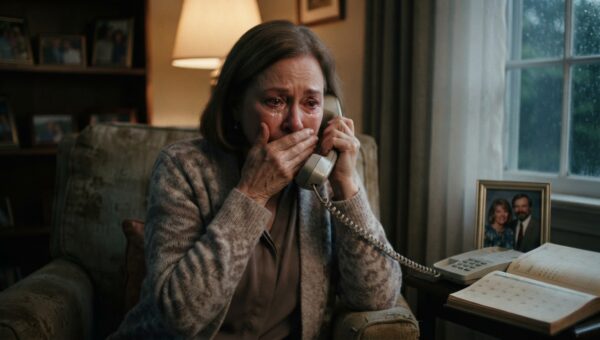
Chloe gasped, half-rising from her chair, but Brenda just walked back inside, pulled out her own landline phone from the wall jack, and set it down in front of our daughter.
“We are going to call the state police cybercrimes division right now,” Brenda said, her voice shaking with a fierce, quiet authority I hadn’t heard in all our years of marriage. “And then we are going to hire the best attorney in the county to tear this little bastard apart.”
The next three weeks were a blur of bank statements, police interviews, printouts of threatening text messages, and digital forensics experts sitting in our small living room going through fourteen months of wire transfers. Julian tried to reach out through a burner number two days after we smashed Chloe’s phone, threatening legal action and worse, but our lawyer handled the call with a sharpness that made the man go entirely silent within forty-eight hours.
The authorities pieced together a federal case involving extortion, digital blackmail, and financial coercion, pulling in several other young women who had fallen prey to the exact same trap. Julian was arrested outside a downtown coffee shop on a Thursday morning, his expensive jacket handcuffed behind his back before he even had time to realize his web had finally collapsed.
We brought Chloe home to live with us for a while, clearing out the spare room that used to be a storage space for old tool catalogs. She didn’t talk much at first, spending long afternoons sitting on the back porch wrapped in a heavy wool quilt, watching the crows circle above the timber line behind our property.
The financial loss stung, and it would take us years to rebuild the retirement cushion we had drained piece by piece for emergencies that never existed. But money is just paper and copper wire, things you can sweep up and replace if you have the strength to bend your back.
On a clear Sunday evening about a month after Julian’s arrest, I was standing on the back porch watching the sun drop low behind the valley hills, turning the sky the color of old brass. Chloe came out the screen door, holding a steaming mug of tea, and leaned her shoulder against the wooden post beside me.
“The bank called today,” she said softly, her voice steady for the first time in over a year. “The remaining fraudulent credit lines are officially closed. It’s all over, Dad.”
I reached out, wrapping my rough, calloused hand around her smaller one, feeling the faint tremor still lingering in her fingers. I didn’t say anything grand or literary. I just squeezed her hand and looked out across the gravel driveway where our old Dodge sat parked under the maple tree, its rusty fender gleaming quietly in the fading twilight.
She stood there beside me in the cooling air, her hand resting safely inside her mother’s palm as Brenda stepped out onto the porch with a soft wool blanket, tucking it gently around our daughter’s shoulders while the distant lights of the valley blinked on one by one in the gathering dark.