Odis handled the money for forty-one years. I never once saw a bank statement. He said figures gave me headaches, and I let him.
The kitchen was quiet that Tuesday afternoon except for the hum of the refrigerator and the ticking of the round plastic clock above the pantry door. I had just come in from hanging a load of towels on the backyard line, the March wind still cold enough to bite through my sweater sleeves.
On the oak kitchen table sat a stack of mail that the carrier had dropped through the slot around one o’clock. Most of it was circulars and coupons for the local hardware store, but right in the middle was a pale yellow envelope with the county seal stamped in the top left corner.
It was addressed to me. That was the first thing that felt slightly wrong, because tax papers usually bore both our names or went straight to Odis’s little walnut desk in the den. I didn’t think much of it at first. I slit the flap open with a dull butter knife, pulled out the folded blue sheet, and ran my thumb down the lines until I found the red-inked box marked escrow shortage.
The number stared back at me with a stark, printed coldness. Our property tax escrow was short by two thousand four hundred and ten dollars.
More than that, the accompanying notice mentioned a missed assessment from the previous November that had supposedly been paid out of our primary holding account.
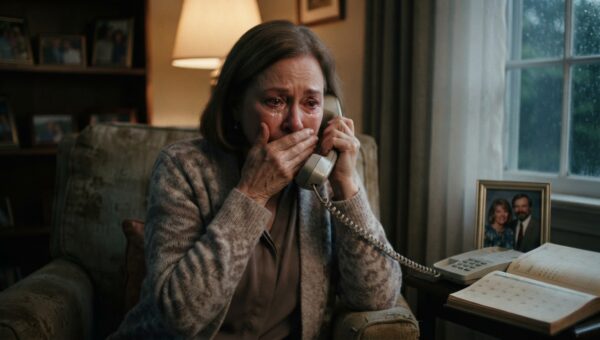
I walked over to the landline on the wall, my fingers leaving slight smudges on the cream-colored plastic. I didn’t call Odis at the lumber yard. I called the main branch of the Merchants and Farmers Bank down on State Street, the same place where we had opened our first joint passbook back in nineteen eighty-three when the interest rate was six percent and we thought we were rich just because we had a rusted Ford pickup parked outside a rented duplex.
A young woman with a crisp, polite voice answered after three rings. I gave her our account number from the top of the tax form, waiting for her to confirm that it was just a clerical glitch, some computer error at the courthouse that happens every spring when the assessments roll over.
There was a long pause on the line, just the sound of a keyboard clacking in the background and a faint hum of office chatter. Then she cleared her throat.
“Mrs. Miller,” she said, her tone shifting from routine business to something careful and soft, like she was handling a fragile dish. “Are you seeing the current statement in front of you?”
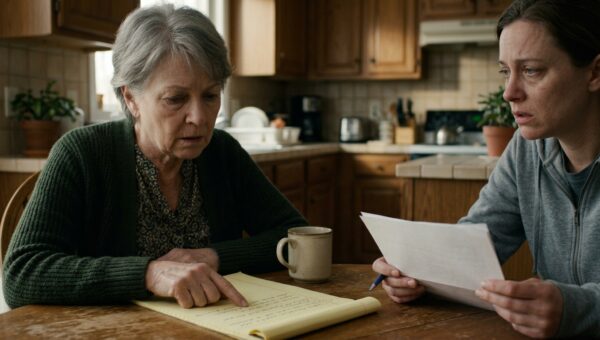
“No,” I told her, my thumb rubbing against the textured wall paper near the phone jack. “I’m looking at a tax notice. I just need to know why the escrow didn’t cover the levy.”
“Well,” she said, and I heard the mouse click twice. “The escrow draw happened because the primary checking account balance dropped below the minimum threshold three weeks ago. As for your savings and retirement account holding… I’m showing a balance of nine thousand four hundred and twelve dollars.”
The kitchen seemed to tilt just an inch to the left. I had to grip the edge of the counter with my left hand because my knees felt suddenly hollow, like dried corn stalks.
Nine thousand. There had been two hundred fourteen thousand dollars sitting in that exact account when the bank sent the annual summary back in April. I knew the number because Odis had mentioned it over breakfast one Sunday morning when we were talking about replacing the back porch stairs. Two hundred fourteen thousand dollars. Forty-one years of overtime at the mill, every bonus check he brought home in a brown manila envelope, every dollar we saved by eating chuck roast instead of sirloin.
“Are you sure?” I asked her, and my own voice sounded small, coming from somewhere near the ceiling. “You must be looking at the wrong suffix. That’s the retirement holding. Account four-four-zero.”
“Yes, ma’am,” she said gently. “Account four-four-zero. There were forty-two separate wire transfers out of that account over the last fourteen months. The most recent one cleared yesterday morning for four thousand five hundred.”
I put the receiver back on its cradle with a small, plastic click. I didn’t slam it. I just set it down very carefully, as if the house might fall apart if I made too much noise.
I put both hands flat on the table until the room stopped moving. The grain of the oak felt cool against my palms. I stood there for a long time, watching a stray sparrow hop across the grass outside the window, wondering how a person could live with a man for four decades and have not the slightest notion where the floorboards were rotting out beneath her feet.
The rest of the afternoon passed in a blur of gray light. I didn’t cry. I didn’t pace the floor or tear open drawers. I simply washed the breakfast dishes that I had left sitting in the porcelain sink, scrubbing the edges of the skillet until the cast iron shone black and clean. I peeled six potatoes, dropped them into cold salted water, and set them on the back burner to boil for supper.
Odis came home at five minutes past six, exactly as he had every weekday since the Carter administration. His pickup crunched down the gravel drive with that familiar, heavy rattle of the muffler that we had never quite gotten around to fixing. He stepped through the back door smelling of cedar sawdust and cheap tobacco, kicking off his work boots on the rubber mat by the door without looking up.
“Evening, Martha,” he said, hanging his canvas jacket on the peg behind the door. His hair was completely white now, thinning at the crown, and he had that slight stoop in his shoulders from forty years of leaning over ledger books and lumber invoices.
“Evening, Odis,” I said. I was standing at the stove, stirring the white sauce for the potatoes with a wooden spoon that had worn down flat on one side over the years.
He washed his hands at the sink, drying them on the roller towel with a familiar, brisk scrub. Then he sat down at his usual place at the head of the table, pulling his chair in with a familiar scrape against the linoleum. I dished up a plate of pot roast, three boiled potatoes, and a spoonful of canned green beans, setting it down in front of him before taking my own seat across the table.
He picked up his fork and knife, cutting into the beef without a glance at me. He looked tired, the way he always looked after a long day down at the yard, but there was no extra tension in his jaw, no nervous twitch in his fingers. He looked like a man who owned his own house and his own name.
“How were things at the yard today?” I asked. My voice was level, almost casual, the way I might ask about the weather or whether the neighbor’s cow had gotten out again.
“Same old grind,” he said, chewing a bite of meat. ” Miller Lumber isn’t going to run itself. Tom wanted to order another load of hemlock from the northern mills, but I told him we’d wait until the market settles next month. Prices are too high right now.”
“Mmm,” I said, watching him butter a piece of white bread. “Odis, how are our savings doing these days?”
He didn’t look up from his plate. He didn’t even pause his knife.
“Same as always,” he muttered, reaching for the salt shaker. “Don’t worry your head about it. Everything’s tied up where it needs to be.”
That was his favorite phrase. *Don’t worry your head.* He had said it when we bought the Buick in ninety-two. He had said it when my mother died and we had to settle her small estate. It was the phrase he used to lock the door on any conversation that he didn’t care to have.
“Nine thousand dollars,” I said softly.
He stopped chewing. The knife hovered an inch above his plate, the blade catching the yellow glare of the overhead dome light. For three seconds, nobody said anything, and honestly that felt worse than shouting.
“What did you say?” he asked, his voice dropping into that low, flat rumble he used when someone at the lumber yard tried to short him on a delivery of pine boards.
“I said the bank told me we have nine thousand dollars left,” I repeated, looking straight across the oilcloth table into his eyes. “Not two hundred fourteen thousand. Nine thousand. Where did it go, Odis?”
He set the knife down very slowly, laying it across the rim of his stoneware plate with deliberate care. He wiped his mouth with the paper napkin, his hands steady, though I noticed the skin around his eyes tightening up the way it did when a deal went sour.
“You called the bank,” he said, and it wasn’t a question. It was an accusation, as if I had gone out and stolen a neighbor’s mail or walked into a stranger’s house without knocking.
“The tax notice came to me,” I told him. “The escrow was short because the account was empty. I had to call them to find out why our taxes weren’t getting paid.”
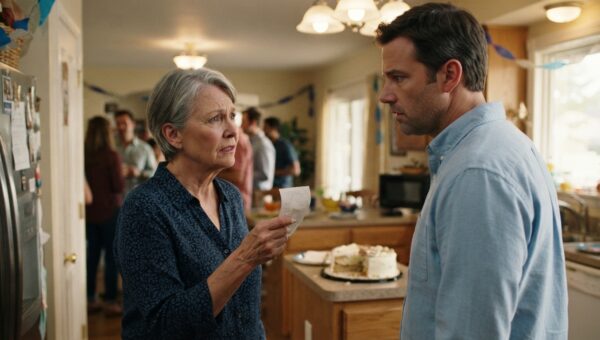
“You had no business calling them,” he snapped, his voice rising just enough to rattle the salt cellar. “I handle the finances in this house. I’ve handled them since the day we got married. You don’t know the first thing about commercial credit lines or cash-flow management. You’ll just get yourself worked up over figures you aren’t equipped to understand.”
“Try me,” I said.
He leaned back in his chair, crossing his arms over his chest. The loose skin of his forearms looked pale under the kitchen light. He gave me that familiar look of patient, weary superiority, the look he used when I asked him why he always bought trucks with manual transmissions instead of automatics.
“My brother Arthur’s boy down in Topeka got into a bind with his distributorship three years back,” Odis said, his tone flat and defensive. “He needed a bridge loan to keep the warehouse from going under. I co-signed some notes. Temporary things. They were supposed to pay back every dime by last winter. It got a little deeper than I expected, that’s all. It’s under control.”
“For two hundred thousand dollars?” I asked. My hands were resting in my lap now, my fingers laced together so tight the knuckles were white. “You gave our retirement to Arthur’s boy?”
“It’s family, Martha,” he said, as if that single word was supposed to patch a hole the size of a barn door. “You don’t turn your back on family when they’re drowning. If I hadn’t stepped in, Arthur’s whole name would have been dragged through the mud in three counties.”
“And our name?” I asked. “What about the name on the deed to this house? What about the taxes due next month?”
“We’ll sell a parcel of the back timber,” he said dismissively, waving a hand toward the window as if acres of oak trees were just loose change in his pocket. “It’s no use crying over it now. The money went where it had to go. Now let’s eat our dinner and drop it.”
He picked up his fork again, expecting the world to spin back on its axis just because he told it to. He expected me to lower my eyes, clear the plates, and go wash the dishes while he turned on the evening news in the den.
I didn’t move. I sat right where I was, watching him stab a piece of potato with his fork.
“The timber isn’t yours to sell by yourself,” I said quietly.
He paused, his fork halfway to his mouth. “What are you talking about?”
“My name is on that deed,” I said. “Every square foot of it. And my name is on the bank accounts, too, whether you bothered to give me the statements or not. I went down there this morning before I came home.”
Odis put the fork down, and this time his hand shook just a little bit, the tines clinking against the stoneware. “You went down to the bank?”
“I did,” I said. “And I talked to a man named Mr. Henderson in the commercial lending department. I showed him my identification and the copy of our joint title. He printed out every single wire transfer you signed over the last fourteen months. Every last one of them.”
The silence in the kitchen came back, heavy and thick, smelling faintly of boiled potatoes and burnt grease from the stove. Odis stared at me across the table, his mouth slightly open, the gray color rising from his collar up into his cheeks. For the first time in forty-one years, I saw something in his eyes that wasn’t pride or stubbornness. It was pure, unadulterated panic.
“You shouldn’t have done that, Martha,” he whispered, and his voice sounded thin, almost fragile, like dry paper tearing in the wind. “You’ve made a mess of things now.”
“No, Odis,” I said, standing up from the table and smoothing down the front of my apron. My knees didn’t shake anymore. The floor felt solid beneath my shoes, made of good oak and thick nails that had held up through forty winters of ice and wind. “You made the mess. I’m just the one cleaning it up.”
I walked over to the counter, picked up my leather handbag, and pulled out a crisp, heavy envelope bearing the letterhead of Miller and Vance Attorneys at Law down on Main Street. I laid it right beside his half-eaten plate of pot roast, right over the edge of the blue-checked oilcloth.
He looked down at the envelope, his fingers twitching once against the edge of the table before he pulled them back into his lap.
“What’s this?” he asked, though he already knew. He knew the moment he saw the name of the firm that handles probate and property division in the county seat.
“That’s a temporary restraining order on the remaining credit lines and the commercial account in Topeka,” I told him, looking down at him from the head of the table where he usually sat. “Mr. Henderson helped me file it this afternoon. The remaining nine thousand has been moved into a sole-name account under my control. The truck title is being transferred as part of the asset review. You’ll be staying at the motel down by the highway tonight while we sort out the rest with the lawyers in the morning.”
Odis opened his mouth to say something, to tell me not to be foolish, to reach for that old phrase about not worrying my head. But the words didn’t come out. He just sat there in his work shirt, staring at the white envelope resting beside his fork as the evening shadows began to lengthen across the floorboards.
I didn’t wait for him to answer. I walked out of the kitchen, down the short hallway to the small spare bedroom where the old maple desk sat beneath the window, leaving him alone with his ledger and his silence.