Twelve years of eating generic brand saltines so we could save for a new water heater, and he booked first class to Honolulu. That was the first thing that went through my head when Clara let it slip in the front seat of Dave’s sedan. My husband Greg’s truck had thrown a rod out on County Road Twelve around noon, and since he was supposed to be working late at the engineering yard over in Clarksburg, I told Dave I would swing by and grab him.
Clara hopped in the passenger side to keep me company. We were halfway down the bypass when she turned around from the vent, adjusting her sunglasses, and smiled right at me like she was delivering a bouquet of roses.
“I hope you enjoy Hawaii next month,” Clara said, leaning her elbow on the center console. “Dave said $4,200 for a week is a steal.”
I kept my hands at ten and two on the steering wheel. The tires hummed against the asphalt, and the air conditioner made that loose rattling sound it always made when you turned the fan past three. I didn’t say anything for a good ten seconds because my brain simply refused to stitch those words together into anything that made sense.
“Hawaii?” I finally managed, my voice sounding thin even to me.
Clara laughed, a light, airy sound that made my stomach turn over twice. “Yes!
Your husband told my husband he booked the tickets yesterday. First class, too. Must be nice to finally get away after all this time.”
Twelve years. Twelve whole years of Greg looking across our kitchen table with those tired, honest brown eyes of his, running his calloused thumb over his coffee mug, and telling me we just had to tighten the belt one more quarter. We didn’t go to Myrtle Beach for our tenth anniversary. We didn’t go to the mountains when my mother passed. There was always a leaky roof, or a compressor on the walk-in cooler at his shop that needed replacing, or some sudden engineering audit that meant his quarterly bonus had vanished into the company ledger. I believed him because he was my husband, and because he looked so damn convincing when he sighed and kissed the top of my head and said we were building something secure for our old age.
I pulled the sedan up to the side of the highway where Greg was leaning against the fender of his Ford, wiping grease off his hands with a blue shop rag. He looked up when the headlights hit him, expecting Dave, I suppose, and when he saw me behind the wheel instead, his face did something funny. It wasn’t panic, not yet. Just a quick, sharp tightening around the corners of his mouth before he slapped on that trademark exhausted smile he wore like a uniform.
“Hey, honey,” Greg said, opening the door and sliding into the passenger seat without a word to Clara in the back. “Thought Dave was coming.”
“Dave was busy with the loader,” I said, my voice unnervingly steady. I pulled back onto the blacktop without looking at him. “Clara rode with me.”
Greg turned his head sharply toward the back seat. “Oh. Hey, Clara. Didn’t see you there.”
“Just telling Diane how excited you must be about the trip,” Clara chirped, completely oblivious to the way the air in the cab had turned into something thick and sharp enough to cut with a pocketknife. “Four thousand dollars! Dave said you’re flying right out of Pittsburgh.”
Greg let out a short, forced chuckle that sounded like stones rattling in a tin can. “Yeah. Well. You know how it is. Got to treat the better half now and then.”
He didn’t look at me when he said it. He looked straight out the windshield at the white lines rushing past, his jaw working behind his beard like he was chewing on a piece of gristle he couldn’t swallow. I didn’t argue. I didn’t scream. I just drove Clara home first, dropped her off at her porch with a stiff wave, and then drove the remaining three miles to our little ranch-style house on Elm Street in absolute, suffocating silence.
When we walked through the back door, Greg immediately dropped his lunch box on the counter and started complaining about his back. That was his usual routine after a breakdown. He liked to shed his work boots right by the register vent so the heat hit them first.
“I’m beat to the bone, Diane,” he muttered, unbuttoning the top two buttons of his blue chambray work shirt. “If that loader transmission goes again, I swear I’m walking off the site.”
“Go wash up,” I said quietly, walking past him toward the little pine desk in the hallway where we kept the mail basket.
I didn’t check the joint checking account first. I already knew what I would find there because I balanced it every Sunday morning down to the last nickel, and the balance as of yesterday was $314.16. Instead, I reached into the metal box where I kept the household receipts and pulled out the stack of unopened envelopes that had come in the afternoon mail carrier’s run.
There it was. A heavy white envelope with no return address, just a computerized window showing my name and our address. Inside was a statement for a credit card I didn’t even know existed. A Platinum Mastercard issued through a bank in Columbus, opened eight months ago in Greg’s name only, using his work address for the billing.
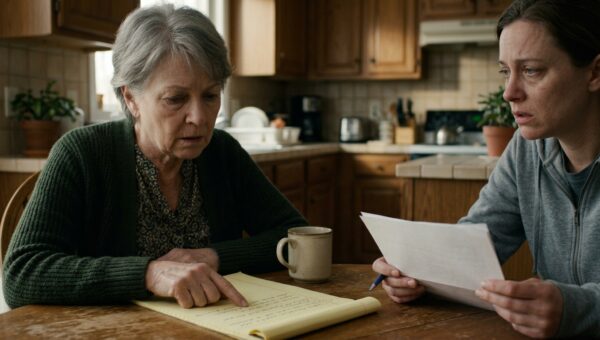
I sat down at the kitchen table with the paper shaking just a little bit in my fingers. The current balance was $4,850.12. And right there near the top, dated yesterday afternoon, was a single line item: Hawaiian Airlines, First Class Booking, Honolulu HI. Amount: $4,200.00.
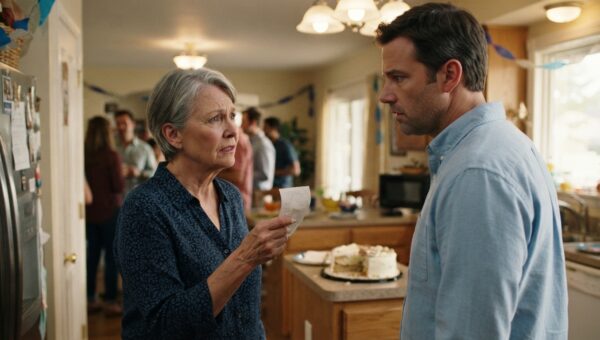
Greg came out of the bathroom wiping his hands on a kitchen towel, his hair still damp from the sink. He stopped dead in the doorway when he saw the paper flat on the oak table between us.
“What’s that?” he asked, his voice dropping an octave into that low, reasonable register he used when he was trying to explain why we couldn’t afford new tires for my station wagon.
“You told Clara we were going to Hawaii,” I said. I didn’t look up from the page. “You told Dave you booked it yesterday.”
Greg took two slow steps into the kitchen, his shoulders dropping just a fraction. “Diane, look. It’s… let me explain. It’s a client thing. The firm booked it through my rewards card so we could, “
“I called the airline, Greg,” I said softly.
The kitchen went so quiet I could hear the electric refrigerator humming in the corner. I had called them right after parking the car, sitting in the driveway with my phone pressed against my ear while the sun glinted off the steering wheel. I didn’t use my own name. I used that clipped, brisk tone I learned from my years managing the front desk at the county clinic, telling the representative I was Greg’s administrative assistant needing to verify the passenger manifest for an upcoming corporate booking under that confirmation number.
The agent on the other end had typed away for a few seconds before cheerfully reading back the names.
“Passenger one, Mr. Gregory Miller. Passenger two, Ms. Megan Vance. First class, seat 2A and 2B.”
Megan Vance. The twenty-eight-year-old marketing director the firm had hired last winter out of Indianapolis. The one Greg had spent three weekends traveling to regional trade shows for, coming home smelling faintly of imported cedarwood soap that didn’t match anything we bought at the local pharmacy.
Greg opened his mouth, but no sound came out. The easy, practiced excuse he’d been building in his head just dissolved against the wall of my kitchen because he saw the look in my eyes, and for the first time in twelve years, he realized the performance wasn’t working.
“Twelve years, Greg,” I whispered, and the sound of my own voice surprised me with how steady and cold it was. “You told me we couldn’t afford to fix the back porch steps. You told me my dental work had to wait until the fall because the steel mill supply contracts were tight.”
“Diane, honey, you don’t understand how corporate politics work,” he started, taking another step forward, his hands reaching out toward me in that pleading gesture he always used when he wanted me to smooth things over for him. “Megan is just… she handles the regional accounts. The board expects a certain presentation when we travel to the Pacific conference. It’s optics. It doesn’t mean, “
“Don’t,” I said, holding up one hand.
I reached into the folder I had pulled from the filing cabinet behind the desk, the one where I kept our tax returns and the old W-2 statements I downloaded every spring. I laid three more pieces of paper down right on top of the credit card bill. They were printouts from our secondary portal, showing three separate quarterly performance bonus deposits made directly into an individual savings account at the credit union downtown, an account I hadn’t known existed until I logged in with his social security number twenty minutes ago using his old password from our home desktop.
$8,400 in October. $6,200 in January. Another $9,100 just last month.
“You’ve been stashing your bonuses since the winter after my mother died,” I said, looking right into his eyes. “Every extra dollar you made while I was turning down shifts at the clinic so I could stay home and cook your dinners from scratch. You were saving it for her.”
Greg’s face didn’t go white. It went grey, the color of wet concrete when the rain starts coming down too fast on a fresh pour. He dropped his hands to his sides, his fingers twitching against the seam of his work trousers. All that engineered charm, all those years of playing the patient, hardworking provider in a small-town valley where everybody trusted a man who went to church every Sunday and shook your hand with a firm grip, just crumbled away into nothing.
“Where are you sleeping tonight?” I asked.
He blinked, staring at me like I had spoken in a foreign language. “What do you mean? Diane, we’ve been married twelve years. You can’t just throw me out over a business trip, “
“It’s not a business trip, Greg,” I said, standing up from the chair. My knees didn’t shake. That surprised me, too. I felt lighter than I had in a decade, like someone had finally cut away a fifty-pound sack of wet salt I’d been hauling around on my back through the mud. “And I’m not throwing you out. I’m just telling you that the spare bedroom is already cleared out, and your bags are going out on the porch in ten minutes.”
He tried to argue then, raising his voice the way men do when they realize they’re losing control of the room, shouting about how the house was in his name, how I couldn’t touch his salary, how the neighbors would talk if he packed up his truck tonight. I didn’t listen to the words. I just walked past him down the hall, grabbed his canvas duffel bag from the top shelf of the bedroom closet, and started dropping his work shirts into it one by one without folding them.
When I carried the bag to the front door and set it down on the welcome mat, Greg followed me, his face twisted in a mixture of fury and absolute, pathetic disbelief.
“You’re making a mistake,” he muttered, his hand hovering over the brass doorknob. “You’ll never make it on your own in this town without my income, Diane. You know what things cost.”
“I know exactly what things cost, Greg,” I said, opening the door and letting the cool evening air blow in from the porch. “I’ve been paying for everything except your secret life for twelve years.”
He left. He didn’t slam the door, because he still cared too much about what Mrs. Gable across the street might hear through her hydrangeas, but he walked down those three concrete steps with his head down, carrying his duffel bag like a whipped dog.
I watched him climb into his broken-down truck in the driveway, the one that wasn’t even going anywhere tonight, and sit there in the dark with the engine off for twenty minutes before he finally cranked the starter and drove off toward the highway motel by the creek.
I didn’t cry. Not then, and not later when the house went completely quiet except for the hum of the refrigerator. I walked back into the kitchen, picked up the Hawaiian Airlines confirmation paper, and tore it straight down the middle into four neat pieces before dropping them into the wastebasket. Then I opened my laptop, logged into the bank where my independent clinic pension had been sitting untouched since my mother left me that small inheritance back in ninety-eight, and transferred enough to cover my own name on the utility bills for the next three years.
The next morning, the sun came up over the valley just like it always did, turning the ridge behind the water tower the color of an old copper penny. I sat at the kitchen window with my favorite yellow mug filled with chicory coffee, looking out at the back lawn where the dew was still shining on the grass.
On the table in front of me sat a single piece of paper: a confirmation email for a five-day ticket to Savannah, Georgia, booked in my own name, paid for with my own money, sitting in a seat right by the window where nobody would be lying to me about who was sitting next to them.