PART 1
The envelope sitting on my kitchen counter smelled faintly of damp cardboard and stale coffee, the way my brother David always smelled when he dropped by uninvited to check on the books. It was a standard legal window envelope, but the Certified Mail sticker plastered across the top corner told me everything I needed to know before I even broke the seal.
Fourteen days. That was the length of time David and his high-priced real estate attorney wife, Melanie, had decided I was worth after twenty-two years of working twelve-hour days in the dirt.
At fifty-three, my knees ache when a hard frost is coming in, and my fingernails have permanent gray crescents under the skin from potting soil that no pumice stone can ever quite scour away. For over two decades, I lived in the drafty caretaker cottage fifty yards behind the main greenhouses of our family nursery here in the Hudson Valley, keeping the business afloat while my younger brother lived an hour downstate in a glass-and-steel condo in White Plains, selling high-end commercial real estate and watching his bank accounts swell during the suburban boom.
When our mother passed away in late winter after a long, quiet decline with Alzheimer’s, I didn’t ask for a grief counselor or a lengthy probate lawyer.
I just kept watering the flats of hardy perennial stock and organizing the spring propagation schedules. Mom had always said the nursery was our legacy, built by our father back when Route 9 was still a two-lane blacktop surrounded by working dairy farms. Dad left the business to both of us on paper years ago, but David lost interest the day he got his broker license, leaving me alone in the greenhouses with mom while he built a life of country clubs and leveraged investments.
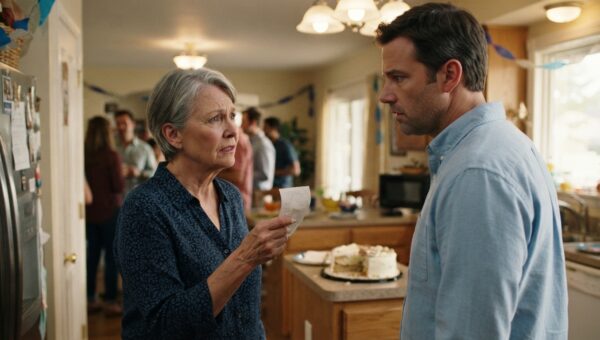
Now, David stood in my kitchen holding a clipboard like he owned the place, wearing a tailored charcoal suit that looked ridiculous against the backdrop of my scarred laminate countertops. Melanie stood behind him by the screen door, tapping her polished fingernail against her phone screen as if she had a dinner reservation she was going to be late for.
“It is strictly a business decision, Sarah,” David had said, dropping the developer’s contract onto my kitchen table just before sliding the eviction notice beside my coffee mug. “Mom died intestate.
Without a formal will updated in the last ten years, the probate court splits the estate equally, but as the active corporate officer, I have binding authority over asset liquidation. The township zoning board approved the commercial rezoning last Tuesday. A regional retail developer is putting up a strip mall with a national coffee chain anchor. The purchase agreement is signed for one million eight hundred fifty thousand dollars. Your personal occupancy of the caretaker cottage terminates in two weeks. We left a ten thousand dollar severance check in the packet to help you relocate into an apartment in town.”
Ten thousand dollars. After twenty-two years of managing twelve acres of rare botanical stock, maintaining five commercial greenhouses, nursing frost-damaged nursery inventory back to life during winter power outages, and wiping mom’s chin while David took tropical vacations.
“The inventory alone in the lower hoop house is worth over three hundred thousand dollars, David,” I said, my voice dangerously steady. “The Japanese maples and mature boxwood hedges take twenty years to grow. You can’t just bulldoze them into a pile of brush.”
Melanie didn’t even look up from her phone. “The developer bought the land as-is, dirt and weeds included. They’re bringing in grading equipment on the fifteenth. Pack your clothes, Sarah. Don’t make this harder on yourself than it already needs to be.”
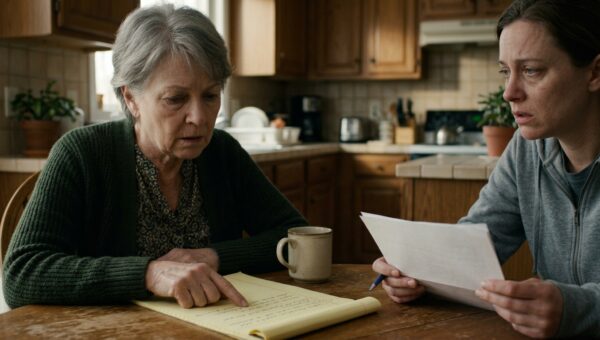
They left twenty minutes later, their luxury SUV kicking up gravel down our unpaved driveway as they headed back to Westchester County to spend money they didn’t have yet. I sat alone at the kitchen table with the afternoon sunlight filtering through the dirty glass of the window, looking at the check for ten thousand dollars. I didn’t cry. Tears were a luxury I had given up years ago when mom stopped recognizing my face. But something cold and sharp settled into my chest. David thought he had won because he knew how to talk to lawyers and wear an expensive suit. He forgot that I was the one who stayed behind when the bills piled up, and he certainly didn’t remember what happened twelve years ago when the town came after this property for unpaid municipal taxes.
PART 2
The next morning, I didn’t go out to turn on the automated misting systems in greenhouse three. Instead, I drove my old battered Ford pickup down to the Dutchess County Office Building in Poughkeepsie. My hands were shaking slightly as I gripped the steering wheel, not from fear, but from the sudden, sharp realization of how thoroughly David had underestimated me.
For the past week, a strange piece of mail had been sitting in my office inbox—a municipal property tax assessment bill addressed exclusively to me as the sole fee-simple owner, bearing a parcel identification code that didn’t match the general estate records David kept waving around. Two days before that, an urgent email from a title insurance underwriter had bounced into our general greenhouse inbox, asking for clarification on municipal tax lien satisfactions before they could clear title for the commercial developer’s purchase agreement.
At the county clerk’s office, I paid the fee for a historical records search and sat down at a tall wooden counter with a stack of faded files brought up from the archives. I didn’t need to dig very deep. Twelve years ago, when the nursery was teetering on the edge of municipal tax foreclosure after a terrible drought year and falling sales, David had refused to contribute a single dime, claiming his broker license required him to keep his liquid capital clear. Mom had sat at this very kitchen table weeping because the town was going to auction off the twelve-acre parcel on the courthouse steps.
I had quietly emptied my entire personal savings account—every dollar I earned from my landscape design consulting side work—and paid off the thirty-eight thousand five hundred dollar delinquent tax lien directly to the county treasurer. But I didn’t just pay it off. At the advice of an old-school real estate attorney who knew my father, we executed a registered statutory warranty deed with a commercial life estate for mom, placing the recorded fee-simple title exclusively in my name to protect the land from future business liabilities. Mom signed it willingly in front of a notary public, and David had been so wrapped up in his downstate career that he never bothered to check the registry, assuming mom owned everything until her dying breath.
When the clerk handed me the certified copy of the recorded deed from twelve years ago, my name stood clear and unencumbered at the top of the owner ledger. David’s contract with the developer wasn’t just unethical. It was a complete legal nullity. He had contracted to sell property he did not own, to a buyer who had no idea they were walking into a title defect disaster.
Before I could figure out my next move, my phone buzzed on the counter. It was a text message from David, sent with casual cruelty.
*Just reminding you, Sarah. Eight days left on the cottage. Movers are booked for next Tuesday. Don’t leave any junk behind.*
I looked down at the certified deed in my hand, then back at my phone. The grief I had carried for mom vanished, replaced by a cold, steady clarity. I called Arthur Vance, a retired real estate litigation attorney whose family had bought flowering shrubs from my father back in the seventies. When he answered his office phone, I didn’t waste time with pleasantries.
“Arthur,” I said, my voice calm and even. “I need you to draft an emergency formal cease-and-desist letter to a commercial developer, and I need a certified copy of a land record hand-delivered to my brother’s office before lunch tomorrow.”
PART 3
Two days later, the quiet gravel driveway of the nursery was crowded with heavy machinery. A large flatbed truck carrying a yellow caterpillar bulldozer idled near the main entrance, and a surveyor in a high-visibility neon vest was hammering wooden stakes into the perennial beds near the display gardens.
David stepped out of a sleek black sedan, accompanied by a nervous-looking man in a sharp gray suit who I recognized from the developer’s letterhead as their acquisitions director. David looked flushed and triumphant, holding a roll of blueprints under his arm as he strode up the gravel path toward the caretaker cottage. He spotted me standing by the porch with my arms crossed, wearing my mud-stained work boots and a faded canvas jacket.
“Well, Sarah,” David called out, his voice carrying across the quiet yard. “I see you haven’t started packing your boxes. The movers are scheduled for Tuesday morning whether you’re ready or not. Mr. Henderson here is ready to sign off on the site prep phase, so I suggest you step aside before county code enforcement gets involved.”
The acquisitions director, Mr. Henderson, looked uncomfortable, shifting his briefcase from one hand to the other. He glanced down at a manila folder he was holding before looking up at David with a frown.
“Mr. Sterling,” Henderson said, his voice dropping an octave. “Before we proceed with the unloading of the equipment, your sister’s legal counsel served my office with a rather unusual document about an hour ago. We need to verify the underlying chain of title before my firm moves another inch of dirt onto this parcel.”
David scoffed, waving a hand dismissively in the air. “My sister doesn’t know anything about title chains. She’s a gardener. The estate is intestate, probate is moving through the surrogate court down in White Plains, and I have full administrative authority to execute this transaction.”
“You have administrative authority over an estate that owns zero real estate, David,” I said, stepping off the porch and walking slowly toward them.
I reached into my canvas jacket pocket and pulled out the certified county clerk deed and the official title abstract Arthur Vance had couriered over that morning. I didn’t raise my voice. I didn’t need to.
“Twelve years ago, when the town filed for tax foreclosure and you refused to send a single dollar to save mom’s home, I paid off the thirty-eight thousand five hundred dollar tax lien with my own money,” I said, holding the certified paper out where both of them could see the embossed county seal. “Mom executed a statutory warranty deed transferring fee-simple title directly to me. I am the sole recorded owner of this twelve-acre parcel. You don’t own it, David. The estate doesn’t own it. And you just signed a one million eight hundred fifty thousand dollar purchase agreement for land that belongs entirely to me.”
David froze. The color drained from his face so fast his skin turned the gray-green of winter mulch. He snatched the paper from my hand, his eyes darting frantically across the legal description and the notarized signatures from over a decade ago. His hands began to shake so violently he dropped the roll of blueprints onto the gravel.
“This… this is impossible,” David stammered, looking up at Henderson with wide, panicked eyes. “She’s my sister. Mom told me… mom said everything was split down the middle!”
“Mom suffered from Alzheimer’s for six years, David, and you hadn’t visited her in three,” I said quietly. “You didn’t check the county records because you were too busy spending money you didn’t have on speculative real estate downstate. And speaking of money, Arthur’s forensic audit of the nursery operating accounts showed that over the last eighteen months, you quietly diverted thirty-eight thousand five hundred dollars in wholesale client payments into your personal business account. That constitutes wire fraud and commercial conversion.”
Henderson took a sharp step back, slamming his manila folder shut with a loud snap. “Mr. Sterling, if you have misrepresented your authority to convey clear title on commercial real estate, my firm’s legal department is going to sue you for breach of contract, fraudulent conveyance, and full recovery of our earnest money deposit. We are pulling all equipment off this site immediately.”
“Wait—let’s talk about this—just give me twenty-four hours—” David lunged forward, grabbing Henderson’s sleeve, but the director jerked his arm away in disgust, climbed back into his sedan, and motioned frantically to the flatbed truck driver to reverse out of the driveway.
Within ten minutes, the heavy machinery was rumbling back down the road, its tires kicking up dust in the morning air. The yard fell silent again, save for the familiar hum of the greenhouse ventilation fans and the chirping of robins in the old apple tree near the barn.
ENDING
David stood alone in the middle of the gravel driveway, his expensive suit jacket rumpled, staring at the empty road where the developer’s car had vanished. The arrogance that had carried him through our mother’s decline and his own financial desperation had completely evaporated, leaving behind a small, broken man who suddenly realized the bill for his entire life had finally come due.
“You can’t do this to me, Sarah,” David whispered, his voice cracking as he looked at me. “The developer’s penalty clauses… I’m facing over two hundred thousand dollars in default damages. My real estate license is going to be revoked. Please. We’re family.”
“You called this a strict business decision, David,” I said, sliding the ten thousand dollar severance check out of my pocket and letting it flutter down onto the gravel at his feet. “Here is my business decision. You have twenty-four hours to wire every single dollar of the thirty-eight thousand five hundred you stole from the nursery accounts back into our operating fund. If that money isn’t in the account by tomorrow morning, Arthur files the criminal fraud charges before lunch. And if you ever set foot on this property again, I will have the county sheriff arrest you for commercial trespass.”
He didn’t answer. He just turned around, climbed into his sedan without looking back, and drove away.
The next morning, the wire transfer confirmation notification pinged on my office computer, showing the full return of the thirty-eight thousand five hundred dollars into the nursery account. I printed out the receipt, placed it neatly in the desk drawer alongside the certified county deed, and walked out into the lower hoop house.
The morning sun was just beginning to burn through the mist hanging over the Hudson Valley, warming the glass panels of the greenhouses. I picked up my pruning shears from the wooden workbench, walked over to a row of young Japanese maples I had propagated myself from cuttings, and gently snipped away a stray dead stem, breathing in the rich, damp scent of living earth that had sustained me for twenty-two years. The land was mine, the home was secure, and the greenhouses were quiet at last.