PART 1
The shoebox was at the bottom of the hallway closet behind a pile of old flannel shirts my father never threw away. When we were clearing out his side of the house after the funeral, my brother Marcus insisted on sorting the home office himself. He told me not to bother with the filing cabinet because he had already handled the insurance papers and the cemetery plot.
I believed him because I was tired. For three weeks leading up to the service, I had driven back and forth between my house and my parents’ place, bringing casseroles, running errands, and listening to Marcus talk about how much money he had spent on the arrangements.
“Don’t worry about the reception costs,” Marcus had told me outside the church while shaking hands with distant cousins. “I’ve always taken care of Mom and Dad. That’s just what I do.”
It was a line I had heard in some form for the last twelve years. Ever since Marcus got his promotion at the logistics firm, he loved reminding the family that he was the one who funded my parents’ annual summer trips. Every July, my father and mother would pack their blue sedan and drive down to the coast for a full week at a resort by the water. Whenever I asked how they managed it on their fixed Social Security income, Marcus always smiled and said it was his treat.
“Our treat,” he would say, clapping our father on the shoulder. “They earned it.”
So when I found the battered shoebox tucked behind the flannels while looking for extra hangers, I only opened it because I thought it held my mother’s recipe clippings. Instead, I found twelve credit card statements, one for each year going back over a decade.
Each statement was printed on crisp white paper from a bank account I did not recognize. And every single one of them contained the exact same line item. A charge for $4,800, posted every July. The merchant name was the coastal resort where my parents always stayed.
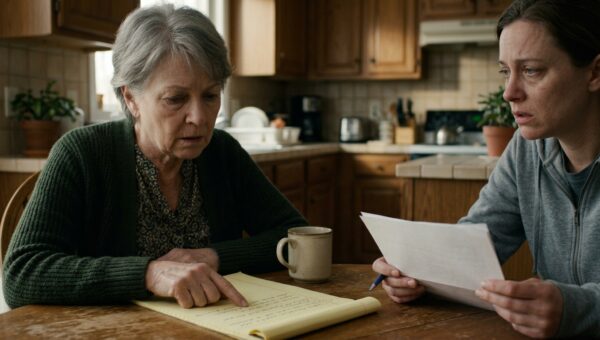
I sat down on the hardwood floor of the hallway with the box in my lap, the dust motes floating in the afternoon light. I pulled out the statement from two years prior, running my finger down the columns. The dates matched the exact week my parents were away.
But when I looked closer at the bottom of the page, I noticed something else. The billing address listed on the account was not Marcus’s house across town. It was my father’s home address.
I pulled out the statement from the year before that, and the year before that. Twelve years. Twelve charges of $4,800. A total of $57,600 billed quietly to an account my father apparently held, while Marcus stood at family dinners and accepted praise for his generosity.
PART 2
I put the shoebox back in the closet and went straight to my car. My hands were shaking against the steering wheel as I drove across town, the numbers spinning in my head. Fifty-seven thousand six hundred dollars. On a fixed income, that amount represented every dollar my father had managed to save from his years at the hardware store, money he had intended to leave behind for medical emergencies or my mother’s care.
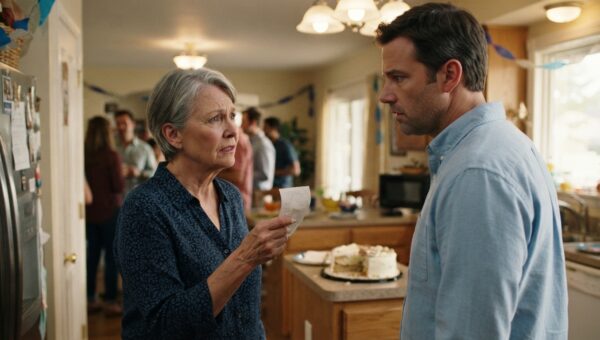
When I reached Marcus’s house, his wife answered the door holding a basket of laundry. She looked surprised to see me without calling first.
“Marcus is out in the garage,” she said, nodding toward the side door.
I found him wiping grease off a wrench with an old rag. He looked up, his expression shifting from casual annoyance to caution when he saw my face.
“Everything okay?” he asked, tossing the rag onto his workbench.
“I was at the house today,” I said, my voice lower than I intended. “I found the shoebox in the hall closet.”
Marcus froze. He did not ask what shoebox. He did not pretend he had no idea what I was talking about. He simply let out a long, slow breath and leaned back against the workbench, his shoulders dropping.
“You shouldn’t have been going through his personal files,” Marcus said, though there was no real fight in his voice.
“You told me for twelve years that you paid for their vacations,” I said, taking a step closer to him. “You let everyone think you were the generous son. You made Dad feel like a charity case in his own family, while you were charging those trips directly to his credit card.”
“It wasn’t like that,” Marcus said, rubbing the back of his neck. “Dad wanted to go. He couldn’t afford the peak season rates on his own. I just managed the booking for him.”
“You charged his own card $4,800 every July,” I said. “That’s not managing a booking, Marcus. That’s theft. And you called it a security hold whenever Mom asked why the statements looked funny.”
“Mom knew,” Marcus said defensively, pushing off the workbench. “She knew about the card.”
“She knew?” I asked, the words catching in my throat.
“She found out five years ago,” Marcus muttered, looking down at his boots. “She didn’t want to make a fuss. She thought it was easier than arguing with Dad about his savings.”
I stared at my brother in the dim light of the garage. The man who had played the grieving, benevolent provider at the funeral was standing right in front of me, admitting he had drained our father’s retirement account under the guise of treating him to the beach.
“I’m calling Mom right now,” I said, pulling my phone from my pocket.
Marcus reached out as if to stop me, then let his hand drop back to his side. “Go ahead. Call her. See what else she didn’t tell you.”
PART 3
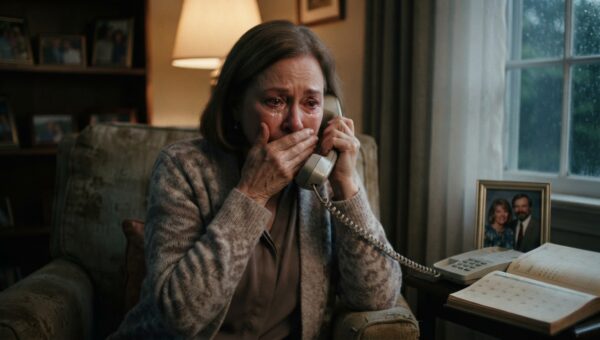
I dialed my mother’s number from the driveway, sitting in my car with the engine off. She answered on the fourth ring, her voice sounding thin and tired through the speaker.
“Mom,” I said. “I found the statements in Dad’s closet. The charges for the resort. Marcus has been charging Dad’s own card for those trips for twelve years.”
There was a long pause on the other end of the line. I could hear the faint hum of the refrigerator in her kitchen, the same kitchen where we had eaten Sunday dinners for decades.
“I know,” she said quietly.
“You knew?” I asked, my voice rising. “Mom, he stole nearly sixty thousand dollars from Dad over twelve years. Why didn’t you stop him? Why didn’t you tell me?”
My mother went quiet again. The silence stretched out, heavy and uncomfortable, filling the space between our houses.
“Because,” she finally whispered, her voice cracking slightly, “the hotel key card in his wallet last summer wasn’t from the resort. It was from a motel six miles away. And the second key card was for someone else.”
I sat very still in the driver’s seat, the phone pressed against my ear. The numbers on the credit card statements suddenly felt small compared to the weight of what she had just said.
“What are you talking about?” I asked.
“Marcus didn’t just use your father’s card for the vacations,” my mother said, and I could hear the tears in her voice now, restrained by years of keeping family secrets. “He used his name to book rooms down there for things he didn’t want his wife to see. Your father found out about it three years ago when the bills came to the house. Marcus didn’t pay for those trips, and he didn’t use his own card because he couldn’t leave a paper trail. Dad paid for the silence, and he paid for the rooms, and he let Marcus take the credit so the family wouldn’t fall apart.”
The garage door across the driveway was closed now. My brother was still inside, alone with his tools and his ledger, waiting for the fallout of a secret that had finally run out of room.
“He used Dad’s money to pay for his affairs,” I said, the truth settling over me like cold water.
“Your father chose to keep it quiet,” my mother said softly. “And I did too. Now the money is gone, and your father is gone, and I am sitting in this empty house by myself.”
ENDING
I stayed in the car for a long time after the call ended, watching the shadows lengthen across the asphalt. I did not go back into the garage to look at Marcus. I did not pick up the shoebox from the hallway closet.
When I finally drove home, the sun was dipping below the horizon, turning the sky the color of bruised slate. I walked through my front door, tossed my keys into the ceramic bowl on the hall table, and sat down on the sofa in the dark.
For the first time, I looked around my own living room and realized how much of my life had been built on stories that never held any truth at all. The family generosity, the annual treats, the selfless brother, all of it built on a foundation of hidden debts and quiet compromises my father carried until he died.
I reached out and turned on the small lamp on the side table, letting the yellow light push the shadows back from the walls. Then I picked up my phone, blocked my brother’s number for the first time in my life, and waited for the morning.