The boarding pass on my phone vanished with a soft, dismissive chime just as I reached the TSA line. The screen flickered once, grayed out, and replaced my seat assignment with a generic error code. Right below it, a text from my father lit up the glass: “Walk home.” I stared at the message for three seconds, let out a short, dry laugh that startled the woman ahead of me in line, and typed back before I even had time to think: “You sure about that?” Five minutes later, my phone started exploding with calls while the family SUV suddenly turned around and sped back toward the airport terminal. But by then, I had already made my choice.
The airline employee behind the counter glanced up from her computer monitor, offered a tight, sympathetic grimace, and tapped her keyboard twice. “I’m sorry, Ms. Parker,” she said, her voice dropping into that careful, customer-service cadence that usually means trouble. “Your reservation was canceled online forty-seven minutes ago by the person who originally bought the ticket.” For a moment, I just stood there. Suitcases rolled past me on rubber wheels while announcements echoed through the high, vaulted ceilings of Seattle-Tacoma International Airport. I didn’t feel panic. I felt a strange, cold clarity settling into my chest, the exact weight of a door finally clicking shut from the inside.
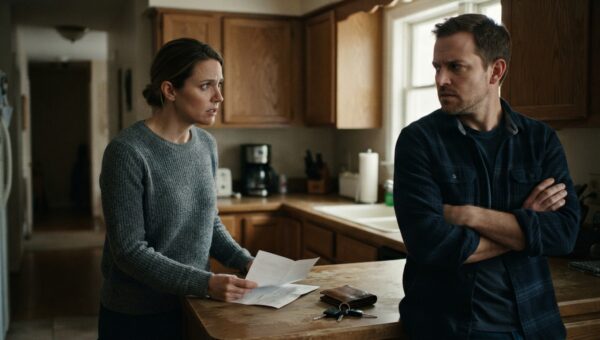
Arthur Parker had been running our family, our finances, and our compliance records like a feudal estate for thirty years. To him, my three-day visit to Seattle wasn’t a family trip; it was a scheduled check-in to make sure the junior partner was still licking boots and keeping her mouth shut.
He liked his daughters compliant, his taxes laundered through subsidiary accounts he didn’t want his name attached to, and his control absolute. When I told him over Sunday pot roast that I had accepted an independent offer with a compliance firm in Portland, the air in the dining room had gone dead. He didn’t yell. Arthur never yelled when he could use a checkbook instead. He just smiled that thin, practiced smile of a man who owned every mortgage, every car title, and every insurance policy within a fifty-mile radius of our hometown.
“You’ll need us,” he had said, carving his roast beef with slow, deliberate strokes. “Nobody goes it alone in this family, Clara.”
And now, standing in Terminal C with two bags and a dead boarding pass, I watched out the massive floor-to-ceiling glass windows as our black Lincoln Navigator aggressively cut off a shuttle bus, swerved into the departures drop-off lane, and slammed on its brakes.
My brother, Marcus, bailed out of the passenger side first, his face red and sweating, while my mother stared anxiously from the back seat, her hands fluttering against the window glass like trapped moths. Arthur didn’t even turn off the engine. He just threw his door open, stepped out onto the gray pavement, and pointed a finger directly toward the sliding glass automatic doors, expecting me to come running like a stray dog caught in traffic.
My phone buzzed again in my palm. It wasn’t a text this time. It was Arthur.
I didn’t answer. I swiped the screen upward, silenced the ringer, and dropped the phone straight into the side pocket of my canvas carry-on bag. The airline agent was still looking at me, waiting to see if I was going to throw a tantrum or start crying. “Do you want me to hold the seat, miss?” she asked quietly. “I can see if there’s a supervisor override.”
“No,” I said, my voice steady enough to surprise even myself. “Just book me a one-way ticket to Portland on the next available carrier. Any airline. First class if they have it.”
She blinked, tapped her screen with renewed respect, and swiped my independent corporate credit card, the one Arthur didn’t know existed, tied to an account I opened the day I passed my board exams. “Window or aisle?”
“Window,” I said. “I want to watch us clear the clouds.”
By the time I checked into a quiet, minimalist airport hotel room forty minutes later, the barrage had truly begun. My phone screen was practically dancing across the mahogany nightstand. Forty-two missed calls in under an hour. Texts from Marcus accusing me of being ungrateful, hysterical, and unhinged. Texts from my mother begging me to just come back to the car before your father loses his temper. And finally, a long, breathless voicemail from Arthur himself, his authoritative baritone cracking just a fraction at the edges. “Clara, this game has gone far enough. Get your bag and get out to the curb right now. You are missing your signature deadline, and you know damn well what happens to your mother’s trust if those registry forms aren’t filed by midnight.”
I walked over to the desk, set my laptop down, and plugged in the power cord. The screen lit up with a familiar blue-tinted desktop background: our shared family cloud storage drive. For years, Arthur had insisted that all of us keep our professional portfolios backed up on the central server he managed. He called it family transparency. I called it a digital hostage situation.
I didn’t open my personal files first. I opened the hidden system logs.
Arthur thought he was clever using my name, Clara Parker, as the managing partner of Parker Logistics LLC, a shell corporation he set up back in 2018 to funnel municipal contracting kickbacks through state tax loopholes. He figured if the state ever audited the books, the liability would land neatly on his twenty-six-year-old daughter, who was too naive to know what a Schedule C actually meant. He had spent the last week trying to force me to sign a fresh batch of retroactive indemnification waivers during my visit, swearing it was just standard family business protocol. When I hesitated at the dinner table, he decided a little public humiliation at Sea-Tac would bring me back into line.
He just didn’t check the audit logs before he tried to strand me.
I scrolled down through the directory, past the inflated property assessments and the doctored payroll ledgers, right down to the secure folder marked P-409. There it was. The complete, unedited transaction history of every unauthorized wire transfer Arthur had routed through my digital signature without my explicit, witnessed consent over the past thirty-six months. Every single dollar, every offshore routing number, and every forged authorization timestamp stamped with his personal administrator IP address.
My phone buzzed again on the desk. This time, it was an unknown number, direct dial from Arthur’s corporate counsel, a man named Henderson who usually only spoke to people if they were holding a subpoena.
I let it ring out to voicemail. Then I opened my email client, composed a new message to the Washington State Department of Revenue and the federal district compliance division, and attached the entire unredacted archive, complete with my formal affidavit of identity theft and corporate impersonation.
The room grew very quiet as the sun began to dip below the Seattle skyline, turning the gray concrete towers outside my window into hard silhouettes of orange and purple. My phone stopped ringing around 9:00 PM. The silence was heavier than any of the shouting had been. By 11:30 PM, I received one final, solitary text message from my father’s number. It wasn’t an order, and it wasn’t a threat. It was just four words: “Where are you, Clara?”
I didn’t reply. I simply selected the master folder on my laptop, clicked delete from the family cloud, and permanently revoked all administrative access rights from every IP address originating from the Parker estate.
By sunrise, the morning light hit the Seattle harbor with a sharp, blinding clarity, illuminating the coffee cup sitting untouched beside my phone, which remained permanently on silent while the city hummed below. Arthur and the rest of them were discovering right about now that my departure wasn’t a tantrum, and the only thing walking home today would be their impending federal audit.