PART 1
The message came through while I was standing under bright grocery store lights, a pumpkin in one hand, my phone in the other.
Mom… I know you just bought us the house, but Sarah’s dad doesn’t want you at Thanksgiving.
I read it once. Then again.
Around me, carts overflowed with turkeys and cranberries, families laughing, children arguing over pies, people preparing for holidays in homes where they actually belonged.
I typed responses in my head. About respect. About everything I had given.
About what it meant for a son to erase his own mother because someone else said so. I deleted them all.
In the end, I sent one word. Okay.
Then I left the cart right there in the produce aisle and walked out.
My name is Margaret Gray. Sixty years old. For thirty-eight years, I worked the front desk at the county records office, keeping track of deeds, mortgages, and boundary disputes that people swore would tear their families apart. I always thought paperwork was cold until I learned that the real coldness lives in dinner tables where someone pretends you never existed.
My husband Tom passed away five years ago, leaving behind a modest insurance payout and a life we built brick by brick in a working-class neighborhood outside Grand Rapids. When our only son, David, married Sarah three years ago, I wanted them to have the start Tom and I never had.
David was working at an auto parts warehouse while finishing his degree at night, and Sarah was trying to build a boutique photography business. They were drowning in rent, student loans, and credit card debt that piled up like winter snow.
Two months ago, David came to my kitchen table with dark circles under his eyes. He said they found a small fixer-upper on Maple Lane, a three-bedroom house with a big backyard where they could finally plant a garden. But the bank wanted twenty percent down, and their credit was a mess from medical bills Sarah had run up the year before.
If we don’t get this house, Mom, David had said, his hands trembling around his coffee mug, we are going to have to move out of state. We won’t make it.
I didn’t hesitate. I sold the boat Tom left behind, dipped into the last of our retirement savings, and wired three hundred fifty thousand dollars straight to the title company.
No mortgage. No monthly payments for them to stress over. Just a clean slate, a front porch with a swing, and a home they could call their own. David hugged me so hard my ribs ached. He called me his hero, the woman who saved their future.
That was sixty days ago. Today, I was uninvited from turkey dinner because Sarah’s father, a retired car dealership owner named Richard Vance who never liked me, decided my presence would cramp his holiday style in the dining room I essentially paid for.
PART 2
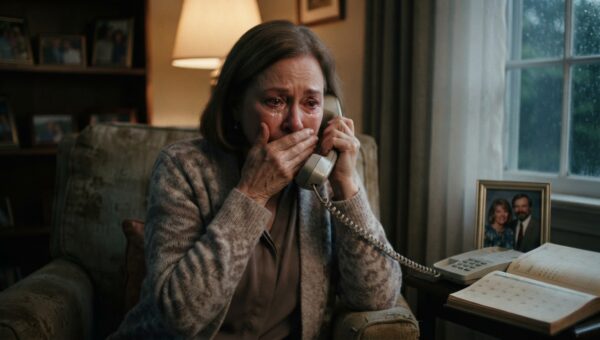
I drove home in silence, the heater rattling against my shins. The house felt unusually quiet when I unlocked the front door. The coat rack stood empty. Tom’s old canvas jacket still hung in the hall closet, right where he left it five years ago.
For two hours, I sat at my kitchen table watching the autumn leaves blow across the front lawn.
I thought about every birthday card I had mailed with twenty dollars tucked inside, every load of laundry I folded when David worked late, every time I bit my tongue when Sarah made snide remarks about my modest furniture or my sensible shoes. I had excused it all because I thought family meant absorbing the blows.
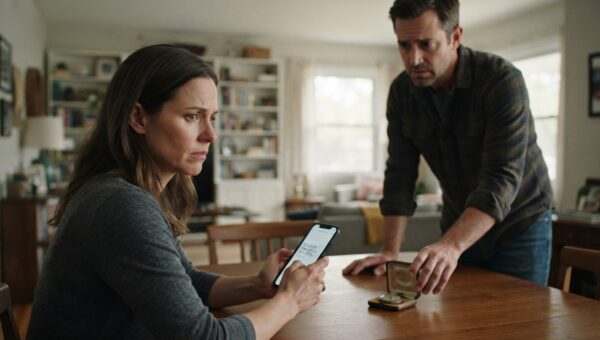
My phone buzzed around five o’clock. It was David again.
Mom, are you okay? I saw you didn’t text back much. Look, don’t take it personally about Thursday. Richard is just stressed about his blood pressure, and he likes things quiet. We can bring you a plate of turkey on Friday afternoon.
I stared at the screen. A plate of leftovers. Handed to me at my own back door like I was a stray dog.
I didn’t call him back. Instead, I walked down the hall to my small home office, switched on the desk lamp, and pulled out the green accordion folder marked PROPERTY & LEGAL.
When I transferred the funds for David and Sarah’s house, the title company had used a standard warranty deed. But because David’s credit score was still recovering and Sarah had a pending tax lien from her photography studio, the title officer had advised me to structure the initial purchase carefully to protect my investment until their finances stabilized. Legally, the deed had been filed under a specific family trust provision. My name was still listed as the primary grantor and trustee holding the reversionary interest for sixty days, expiring at midnight on December first.
Today was November twenty-fourth.
I picked up the landline and dialed Arthur Miller, the real estate attorney who had handled my late husband’s estate work.
Arthur answered on the third ring, his voice warm and steady. “Margaret? Everything alright?”
“Arthur,” I said, leaning against the edge of the wooden desk. “I need to look at the paperwork for the house I purchased on Maple Lane. The sixty-day provisional clause.”
“The one where you hold the primary security interest?” Arthur asked, shuffling papers on his end. “Yes, it runs through the end of this month before the final quitclaim transfers full ownership to David and Sarah. Why? Is something wrong?”
“Everything is wrong, Arthur,” I said quietly. “And I need to know what happens if I choose not to sign that final transfer.”
PART 3
The sun was barely up on Tuesday morning when I pulled my sedan into the gravel driveway of the Maple Lane house. Frost coated the lawn, crunching beneath my boots as I walked up the porch steps.
I didn’t knock. I used the spare key David had given me the day they moved in, the one he told me would always mean I had a place at their table.
The house smelled of fresh coffee and cinnamon candles. David was sitting at the kitchen island in his bathrobe, scrolling through his phone while Sarah stood by the counter pouring hot water into a mug. They both froze when the front door clicked shut.
“Mom?” David asked, dropping his phone onto the quartz countertop. “What are you doing here? How did you get in?”
“You gave me the key, David,” I said, walking into the kitchen. I laid a single manila folder on the clean white marble surface right between them.
Sarah crossed her arms, her face tightening into that familiar defensive scowl she usually reserved for waitresses and store clerks. “If this is about Thanksgiving, Richard already explained everything. It’s just easier if you aren’t there. My family gets loud, and—”
“Quiet, Sarah,” I said. My voice wasn’t loud, but it had the hard, flat weight of thirty-eight years handling legal records at the county office. The room went dead still.
David stood up slowly, looking between my face and the manila folder. “Mom, what is this?”
“This is the title paperwork for this house,” I said. “The house I bought with three hundred and fifty thousand dollars of money I earned after your father died. The house where Richard Vance told you I wasn’t welcome to eat turkey.”
“Dad didn’t mean it like that,” David stammered, his face flushing red. “He just… he gets overwhelmed.”
“He doesn’t own this house,” I said. “And neither do you. Not yet.”
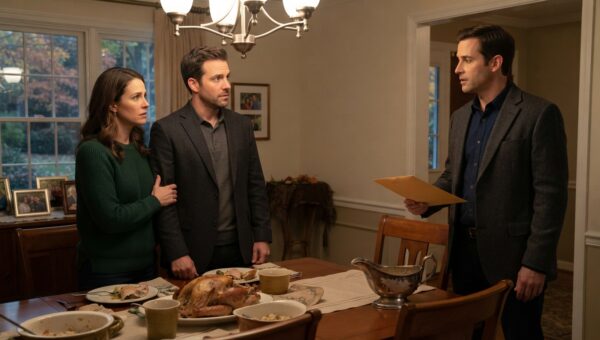
I opened the folder and slid the final quitclaim document across the marble. Beneath it was the revocation notice prepared by Arthur Miller early this morning.
“The sixty-day provisional period ends next week,” I told them, looking my son straight in the eye. “Today, I filed the notice to rescind the transfer. Legally, this property reverts back to my trust until the security advance is repaid in full, or until I decide what to do with my investment.”
Sarah gasped, unclasping her arms and slamming her mug down so hard coffee sloshed over the rim. “You can’t do that! We live here! This is our home!”
“You told me I couldn’t cross your threshold on Thursday,” I said calmly. “It turns out I own the threshold.”
David looked as if someone had punched him in the stomach. He reached out a trembling hand toward the papers. “Mom, please. You’re punishing us over a dinner seating? Dad made a stupid comment, we can fix this—”
“This isn’t about dinner, David,” I said, turning toward the front door. “This is about respect. You let a man who contributed nothing to your life erase your mother because it was convenient for his holiday schedule. I spent my whole life making sure you had a roof over your head. I am not going to sit in the cold while strangers enjoy the fire I built.”
ENDING
I walked out to my car and started the engine.
As I backed down the driveway, I saw David standing on the front porch in his bathrobe, staring after my sedan with his hands shoved deep into his pockets. He didn’t run. He didn’t yell. He just stood there under the gray Michigan sky, looking like a boy who had finally realized what he traded away for a quiet dinner.
I drove back to my house, pulled into the garage, and turned off the ignition.
The kitchen was still quiet when I walked inside. Tom’s old canvas jacket was still hanging in the hall closet. I reached out, brushed my fingers against the rough cotton fabric, and smiled to myself.
For the first time in five years, the house didn’t feel empty. It felt like mine.