The fluorescent lights above my desk at the regional water authority hummed a low, familiar tune that I had learned to ignore over the past eight years. My coffee was lukewarm, sitting in a chipped mug that read World’s Okayest Accountant, and the quarterly budget spreadsheets were staring back at me with rows of uncompromising numbers. Life was predictable. It was steady, quiet, and built on the rhythm of early mornings, predictable traffic on Interstate 35, and coming home to a husband who spent most of his evenings complaining about his lower back and the lack of upward mobility at his hardware distribution job.
Then my cell phone buzzed against the scuffed mahogany laminate of my workstation.
Marcus never called me during work hours unless the hot water heater had burst or the dog had managed to slip out the side gate again. I picked up on the third ring, expecting some minor domestic emergency about a repairman or a delivery. Instead, his voice sounded thin, tight, and completely hollow, like he was trying very hard not to laugh out loud in a crowded room. My uncle just died, he said without even a hello. And I inherited $125 million. Pack your things and leave.
The words hung in the air between the humming fluorescent bulbs and the stack of municipal ledger printouts, entirely divorced from any real gravity. I blinked at my computer screen where column four of the drainage maintenance report remained uncompleted. Marcus, what are you talking about? I asked, my voice dropping into that calm, measured register I used whenever an irate contractor called demanding extra funds.
Uncle Arthur passed away? Arthur Vance was his mother’s half-brother, a notoriously reclusive old eccentric who lived out in the sandhills of western Nebraska and whom we had visited precisely once in twelve years of marriage, an awkward Sunday afternoon where the old man sat on his porch and didn’t speak more than six sentences to either of us.
I am not playing games with you, Marcus snapped back, his voice rising in pitch, cracking with a sudden, giddy cruelty that I had never heard in him before. He left everything to me. The land, the municipal bonds, the commercial portfolio, all of it. One hundred and twenty-five million dollars, Clara. My lawyer just called me from Lincoln. You are legally required to vacate the premises by five o’clock because I am having the locks changed and filing the paperwork this afternoon. Don’t make this ugly. Just take your car and your clothes and get out.
The line went dead with a sharp click before I could ask another question. I sat there in the quiet hum of the cubicle farm for a long moment, my finger resting on the plastic end-call button. My heart didn’t race. My blood didn’t run cold. I simply felt a strange, detached stillness settle over my ribs, the kind of quiet that comes right before a heavy storm breaks over the flat Iowa plains. I saved my spreadsheet, closed out of the municipal database, locked my computer terminal, and walked out to my ten-year-old Honda Civic without telling a single soul.
The drive home took twenty-four minutes. The traffic on the bypass was sluggish, clogged with semi-trucks hauling gravel toward the new housing development off Exit 42. I had plenty of time to let the sentence bounce around inside my skull. Pack your things and leave. Twelve years of sharing a mortgage, folding his work shirts, splitting grocery bills, listening to him complain about his boss, sitting together on the worn plaid sofa through Sunday night football, and it all dissolved into a single phone call because an old man he barely knew had died with a massive bank account.
When I pulled into our gravel driveway, Marcus’s truck was parked sideways, taking up both lanes of the small concrete apron. The front door was unlocked. I walked inside, and the house smelled faintly of stale coffee and the lemon Pledge he must have grabbed in a frantic rush to make the place look presentable for whatever imaginary guests he was planning to invite over to celebrate his new station in life.
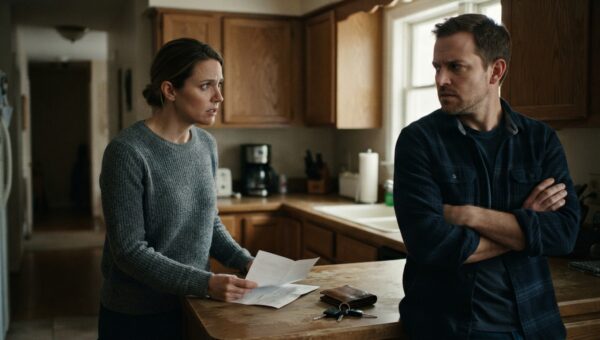
The kitchen island was cleared off except for a single manila folder. Lying right on top of it was a heavy black fountain pen, the kind with the gold nib that his father had given him for his thirtieth birthday. Marcus was standing by the refrigerator, holding a bottle of cheap craft beer he must have pulled out of the crisper drawer, his face flushed and his eyes darting around the room like he was auditioning for a part in a play about a king taking his throne.
You’re here, he said, trying to steady his breathing, trying to look imposing even though he was still wearing his grey New Balance mowing shoes. Good. Look, Clara, let’s not drag this out. It’s just business. You know as well as I do that we grew apart. I’m going to be moving into a much better place downtown by the river. You can take the car, and I’ve put five thousand dollars into a cashier’s check that’s clipped to the back of the agreement. It’s more than fair.
I walked over to the island, pulled out a wooden stool, and sat down. I didn’t touch the beer or look at his face. I opened the manila folder. Inside were three pages of standard, pre-printed district court dissolution paperwork, filled out in hurried blue ink with our names, the date of our marriage, and the standard boilerplate language about irreconcilable differences. He hadn’t even bothered to hire a real attorney yet; he had downloaded the forms from the county website and checked the boxes himself.
You want this signed right now, I said, looking up at him.
I want my life to start, Clara. He took a heavy swig of the beer, his Adam’s apple bobbing sharply. You were always holding me back anyway. Always playing it safe, counting pennies, worrying about the water district’s pension fund. I’m a wealthy man now. I don’t have time for small-town routines. Sign it, take your check, and let’s just be done with it.
I didn’t cry. I didn’t beg. I didn’t remind him of the nights I stayed up helping him study for his distribution manager exams or the years I covered his half of the rent when his car transmission blew. I picked up the heavy gold-nibbed pen, flipped to the signature page, and wrote my name with the steady, precise cursive I used every day at the water department. I initialed every required box, peeled the cashier’s check off the back with two fingers, laid the pen down on the counter, and slid the folder across the granite surface toward him.
Enjoy your fortune, I said.
He let out a sharp, breathless laugh of pure disbelief, grabbing the papers like a lottery ticket. He didn’t even say goodbye. He just watched me walk out the front door, his head already spinning with visions of luxury cars and high-rise penthouses, entirely certain he had just won the greatest lottery of life.
The next three days were astonishingly quiet. I spent them packing my clothes into eight cardboard liquor boxes I picked up behind the grocery store, loading them into the back of my Civic, and moving into a small, furnished second-floor apartment three miles away on Maple Street. The place had yellowed wallpaper in the tiny kitchen, a creaky floorboard near the radiator, and a view of a gravel alleyway where a stray calico cat liked to sleep under an old red wheelbarrow. It was small, but it was mine. I didn’t turn on the television. I didn’t check my phone. I just sat at the formica kitchen table with a cup of instant coffee and watched the afternoon light move across the wall.
On the third morning, right around 9:14, the tranquility of my new kitchen shattered.
My cell phone, which had been sitting face-down on the counter, suddenly began vibrating with such violent persistence that it skidded two inches across the laminate. I picked it up. The caller ID showed my mother-in-law, Brenda. I let it ring out. Ten seconds later, it started again. Then came a text message from Brenda, all capital letters: CLARA WHERE ARE YOU MARCUS IS LOSING HIS MIND CALL ME RIGHT NOW.
Followed immediately by a text from Marcus’s sister, Denise: Clara please tell me you didn’t actually sign those papers. Uncle Arthur’s lawyer is on the phone with the estate office and everything is frozen. You have to talk to him.
I stared at the glowing screen for a long, slow beat, feeling a strange, cold clarity wash over the remaining fatigue in my bones. I didn’t call them back. Instead, I walked over to my laptop, opened my email, and found a message forwarded from an acquaintance I used to work with at the county courthouse who now clerked for probate judge Miller. Attached was a three-page PDF summarizing the probate filing for the Estate of Arthur Vance, dated two days prior.
I sat down and read through the legal jargon, skipping past the stock paragraphs about real estate holdings in Cheyenne County and commercial acreage along the Platte River, down to the special provisions section highlighted in bold yellow ink by the clerk.
The testator, Arthur Vance, being of sound mind and fully cognizant of the predatory nature of his surviving kin, hereby establishes that all monetary funds, corporate shares, title deeds, and liquid assets comprising the one hundred and twenty-five million dollar trust shall remain strictly and irrevocably tethered to the primary household unit of the primary beneficiary, Marcus Vance, as legally registered on the exact date of the testator’s passing. Furthermore, in the event that the primary beneficiary initiates legal separation, divorce proceedings, or removes his lawful spouse of record from said household without the verified, notarized counter-signature and written consent of said spouse within a period of five years from the probate filing date, the entirety of the estate shall immediately and automatically forfeit to the Nebraska Public Land Preservation Trust. Upon such forfeiture, the primary beneficiary shall be held personally and severally liable for all accrued estate taxes, probate fees, and legal penalties arising from the dissolution of the trust structure.
I read the paragraph three times, letting every word sink into the quiet room. Arthur Vance had spent forty years building an empire out in the dust, watching his greedy sister and his shiftless nephews wait around like vultures for him to die, and he had engineered the ultimate trap. He knew Marcus. He knew Marcus would inherit a mountain of cash and immediately try to discard the woman who had kept him afloat, trading down for something shinier the second the ink dried. The fortune wasn’t a gift. It was a live grenade with the pin already pulled, handed directly to a man too arrogant to read the instructions.
At 11:30 that morning, someone pounded on the exterior stairwell door outside my apartment. It wasn’t a polite knock. It was the frantic, heavy banging of someone whose entire world had just collapsed in slow motion.
I walked over to the window and looked down. Marcus was standing beside his truck in the gravel alley, his tie loosened, his hair matted with sweat, looking smaller and greyer than he had when he stood in our kitchen three days ago. He looked up and saw me standing behind the glass.
Clara! he yelled, his voice echoing off the brick wall of the bakery across the lane. Clara, open the door! Please, you have to open the door!
I unlocked the deadbolt, pulled the wooden door open six inches, and stood in the gap with my arms crossed over my chest, looking down at him as he scrambled up the exterior metal stairs two at a steps.
Clara, he gasped, grabbing the metal handrail and leaning his forehead against the painted iron frame. You have to come back to the house. The lawyers called me an hour ago. They said… they said the trust is locked. They said everything is gone. The house, the accounts, the cars, everything is frozen and they’re talking about tax liens.
I didn’t move. I just looked at him, taking in the frayed edges of his collar and the panic in his wide, bloodshot eyes. You told me to pack my things and leave, Marcus, I said softly.
That was a mistake! It was a joke! A stupid mistake, I didn’t read the whole thing, there was too much paperwork, nobody reads those lawyer documents word for word! He reached out a trembling hand toward the door frame, his fingers clawing slightly at the wood. You’re my wife. You’re still my wife on paper if we… if we go down to the courthouse and sign a rescission. The lawyer said if we invalidate the filing within seventy-two hours of the probate flag, the forfeiture clause gets held in abeyance. We can fix this, Clara. We can have everything. One hundred and twenty-five million dollars. We can buy whatever we want.
I looked down at his hand, then back up at his face. The man who had stood in our kitchen three days before, sneering with absolute certainty that he had won the lottery of life, was gone. In his place was a terrified stranger standing in a dusty alleyway, drowning in legal debt he couldn’t even spell.
I can’t sign anything like that, Marcus, I said, my voice as steady as the water meters back at the municipal office. The divorce papers are already signed. You handed me the pen yourself. You told me to enjoy my fortune.
Clara, please! He slammed his palm against the door frame, a sharp, desperate crack that rattled the glass in the storm door. My mother is having heart palpitations, the family is going to lose the farm, they’re seizing everything, they’re going to come after my wages at the distribution center to pay the probate penalties! I’ll lose everything I ever had!
You wanted your life to start, I said quietly. Now it has.
I closed the door. The heavy click of the deadbolt sliding back into its brass housing sounded clean and final in the small hallway. I heard him shouting my name one more time, his voice cracking with a ragged, ugly panic, followed by the heavy thud of his boots stumbling backward down the metal steps. Then came the sound of his truck engine roaring to life, sputtering twice before tearing out of the alleyway in a cloud of grey dust and loose gravel.
I walked back into the small kitchen, picked up my ceramic mug of tea, and sat down by the window. The morning light was hitting the glass just right, catching the tiny dust motes floating in the warm air. My phone lay on the formica counter, completely silent, its screen dark and undisturbed. I took a slow sip of the tea, watching the calico cat stretch its legs out beneath the red wheelbarrow down in the alley, entirely at peace in the quiet world I had built for myself.