The classroom smelled of damp wool and old cedar pencils, that familiar March scent in the valley when the winter mud finally starts to give up and dry into dust. I was wiping down the alphabet blocks near the reading corner when Martha pushed the classroom door open. She didn’t knock. Martha never knocked because she didn’t have to; she had walked both her daughters through these same green vinyl chairs ten years ago, and now she was walking her grandson Leo through them.
But she didn’t look like a grandmother who was just dropping off a kid for third period. Her knuckles were white where she gripped the strap of her canvas bag, and she had that tight, pinched look around her mouth that usually meant her water heater had blown or the county was raising her property taxes again.
“He’s got his spelling workbook in the blue pocket,” Martha said, her voice shaking just enough to make the words rattle. “I checked twice. But I need you to look at this, Clara. I don’t know who else to show it to.”
She reached into her bag and pulled out a stiff piece of heavy cream cardstock folded in thirds. It wasn’t a school flyer or a dental reminder. Across the top, printed in stark black Helvetica, were the words Notice to Quit. My stomach did that cold, sickening drop that usually comes right before you slam on the brakes on black ice.
I wiped my hands on my apron and took the paper, feeling the heavy grain of it between my fingers. It gave thirty days. Thirty days for Martha, for little Leo, and for roughly four hundred other people living out at the Oasis, that sun-baked patch of gravel and double-wides just three miles past the beet processing plant where nearly thirty percent of our school’s kids went home every afternoon.
“Martha, what is this?” I asked, even though the text was right there in black and white. “You guys own your unit. You paid the back equity three years ago.”
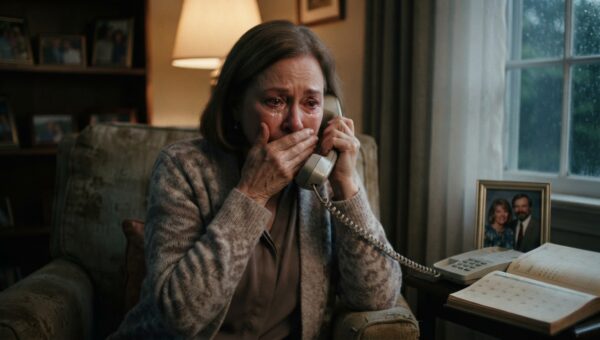
“We own the trailer, Clara. We rent the pad,” she said, her voice dropping to a harsh whisper so Leo wouldn’t hear from the reading rug where he was already digging through his crayons. “And nobody’s taking our money. That’s the part the sheriff wouldn’t listen to. I went down to the county office on Tuesday with three hundred and eighty-four dollars in a cashier’s check.
The portal online has been throwing error codes for two months. Every time I try to log in to pay the space rent, it says server maintenance. So I drove down to the management office behind the laundry mat. The door was locked. A sign said mail slot only. So I dropped the check in the slot. Three days later, it came back in my mailbox. Uncashed. With a red sticker on it saying account closed.”
I stared at her over my reading glasses, my brain scrambling for some kind of logical anchor. Landlords don’t just refuse rent unless they want you out. And when they want you out of a park that large, it usually means someone with very deep pockets has smelled blood in the water. “Did you call management?”
“The number is disconnected,” Martha said, and for the first time her chin wobbled. “The whole office is cleaned out.
Desks gone, carpets rolled up. Just that paper taped to the glass telling us to direct all inquiries to a post office box in Sacramento.”
That was the first crack in the glass. The next four hours of my school day dragged by like lead. Every time I looked at Leo sitting in the second row, his tongue clamped between his teeth as he struggled to balance his fractions, I kept picturing him dragging a garbage bag of clothes down a gravel driveway while some anonymous bulldozer sat idling by the chain-link fence. By three o’clock, after the final bell rang and the last yellow bus rumbled out of the turnaround, I didn’t go home to my empty kitchen. I went straight to the county recorder’s office down at the courthouse.
The clerk on duty was a young man named Toby who used to be in my husband’s bowling league, and he looked at me with mild pity when I laid Martha’s notice on the counter. “Clara, if it says Notice to Quit, it’s not strictly an eviction yet. The new owners are just clearing the ledger. Property changed hands last month. Sold for sixteen point eight million. Big block purchase.”
“Sixteen million for a gravel lot with fifty-year-old single-wides?” I asked, leaning over the laminate counter. “Toby, nobody pays that kind of money for scrap metal in this county unless they’re putting in a distribution center or a solar farm. Who bought it?”
He sighed, tapping his keyboard a few times before squinting at the monochrome screen. “Let’s see. Oasis Holdings LLC. Registered out of a suite in Reno. Usually means a shell company.”
“Trace the suite,” I said. “Somebody owns the LLC.”
Toby clicked his tongue, muttering under his breath as the printer beside him whirred to life, spitting out a single sheet of yellow municipal history. He handed it over across the counter. My eyes tracked down the corporate hierarchy through two layers of Delaware holding funds until they hit the primary managing partner listed at the very bottom. The name didn’t belong to a local developer or a shady real estate shark from Fresno. It belonged to the Vance Educational Foundation.
The same Vance Educational Foundation whose granite plaque was currently bolted to the brick wall of our school’s brand-new STEM wing. The same foundation that had sent its silver-haired founder, Arthur Vance, to our gymnasium last October to hand me a giant cardboard check for fifty thousand dollars while the local newspaper photographer flashed pictures of us smiling next to a row of brand-new laptops.
I didn’t sleep that night. I sat at my kitchen table with a cold cup of coffee and Martha’s notice spread out next to a printout of the foundation’s annual tax filings. The numbers didn’t lie, but they didn’t make sense either. Why would a billionaire philanthropy dedicated to rural education spend nearly seventeen million dollars to buy a dusty trailer park just to hand out thirty-day notices to the children who sat in my classroom every morning?
By Thursday afternoon, I had my answer, though I had to drive out to the county planning commission archives to dig it out. Tucked away in a preliminary zoning amendment request filed three weeks before the public sale announcement was a single map. The Oasis wasn’t staying residential. The acreage was currently zoned for low-density mobile housing, but the application requested an immediate variance for light industrial commercial and high-density mixed-use retail. In plain English, the trailers were coming down to make room for a regional logistics hub and a strip mall to service the new highway off-ramp. And under state law, if a property is rezoned for commercial use while occupied, the tenants have certain grandfathered relocation rights that cost millions in payouts. But if the tenants can be legally classed as default leaseholders who refused to pay their rent, those rights evaporate overnight.
The blocked online payment portal wasn’t a glitch. The uncashed checks weren’t an administrative error. They were a mechanical, deliberate sabotage designed to manufacture four hundred evictions before anyone realized the zoning board was even meeting.
“You need to drop this, Clara.”
Principal Daniels didn’t look up from his desk when he said it. He was spinning a gold-plated pen between his fingers, a gift from the Vance Foundation’s annual donor dinner back in January. The office smelled of floor wax and the stale lemon drops he kept in a crystal dish by the door.
“Drop it?” I said, standing on the other side of his mahogany desk. “Arthur Vance’s people are about to put forty of my students out on the highway before the spring testing cycle even starts. Leo’s grandmother is crying in her kitchen because she tried to pay her rent three different ways and they locked the door on her.”
“Clara, listen to me,” Daniels said, finally stopping the pen and looking up with tired, bloodshot eyes. “The foundation is funding the new roof on the gymnasium. They’re paying for the remediation of our asbestos pipes this summer. If I go to the superintendent and start making noise about a real estate deal three miles away, the district loses six hundred thousand dollars in capital grants. Where do you think those kids go then? You think the board is going to find money for a new roof out of property taxes? You know damn well they won’t.”
“So we just trade a gym roof for forty kids’ homes?” I asked, my voice rising until it bounced off the acoustic ceiling tiles. “Is that the exchange rate now?”
Daniels didn’t answer. He just looked down at his desk and slid a single piece of yellow notepad paper toward me. On it was written the date of the next town council hearing where the final commercial rezoning variance was set to be rubber-stamped. No public debate required, consent agenda item number twelve. Next Tuesday at 6:00 PM.
“I didn’t give you that,” Daniels said softly, his voice dropping into that professional register principals use when they want you to walk out the door and pretend you never had the conversation. “And if anyone asks, you were grading spelling tests in your classroom all evening.”
I didn’t go home to grade spelling tests. I spent the weekend driving my old Honda Civic down every dusty lane of the Oasis, knocking on screen doors that had faded plastic flamingos out front and wind chimes made of old silverware. I didn’t have to explain much. Word travels through a trailer park faster than a brushfire in August. By Sunday evening, I had six shoeboxes full of crumpled envelopes, returned cashier’s checks with the red stickers, bank printouts showing blocked online transfers, and signed affidavits from twelve different families swearing they had attempted to pay their rent every month like clockwork.
On Tuesday evening, the municipal chambers smelled like wet wool and floor cleaner from the evening rain. The room was mostly empty except for three zoning commissioners sitting behind a high walnut bench, looking like they wanted nothing more than to sign their paperwork and get home to dinner. Arthur Vance wasn’t there himself, of course; he had sent a pair of young lawyers in charcoal suits who smelled faintly of expensive cologne and airport lounges. They had a thick binder of architectural renderings showing sleek glass-fronted warehouses and manicured green lawns where Martha’s front porch used to be.
When the chair called for public comment on consent agenda item twelve, I didn’t wait for my name to be called. I walked down the center aisle with Martha right behind me, her hand gripping Leo’s small shoulder so tight his fingers were white.
“Before you vote on the variance,” I said, my voice shaking only a little as I stepped up to the podium and laid the six shoeboxes across the shiny wood surface, “you might want to look at how the applicant cleared the title.”
One of the lawyers in the charcoal suit stood up immediately, smoothing his lapel. “Point of order, Mr. Chairman. These proceedings are strictly concerned with municipal land-use designation, not private landlord-tenant disputes.”
“It’s not a dispute,” I said, turning to face him before the commissioners could gavel me down. “It’s a manufactured default. The Vance Educational Foundation bought this land for sixteen million dollars and then deliberately disabled the online payment portals and bounced uncashed checks back to sixty families so they could claim abandonment before the rezoning hearing.”
The room went dead silent. A couple of reporters from the county weekly who usually slept through these meetings suddenly sat up straight and started tapping the screens of their phones.
I opened the top shoebox and pulled out Martha’s uncashed check, holding it up toward the panel like evidence in a courtroom. “Here is three hundred and eighty-four dollars. Postmarked four weeks ago. Sent to a locked office where nobody worked anymore. The foundation that gives millions to our children’s schools with one hand is evicting those exact same children with the other so they can pave over a trailer park for a loading dock.”
The lawyer opened his mouth to object, but the chairman of the commission, an old dairy farmer named Henderson who had known Martha’s late husband for thirty years, held up a calloused hand. He looked down at the shoeboxes, then at Martha standing there in her faded cardigan with Leo hiding behind her skirt.
“Let’s see those bank logs, Mrs. Miller,” Henderson said quietly, adjusting his glasses. “And nobody is moving any bulldozers anywhere until the county legal counsel reviews these default filings.”
It took three months of quiet, grinding pressure from the state attorney general’s office and a local legal aid coalition before the foundation finally backed down. They didn’t issue an apology; billionaires rarely do that. But they signed a consent decree nullifying every single Notice to Quit across the entire fifty-acre parcel, restoring the residential zoning status, and transferring the underlying land title into a permanent community land trust managed by a board of local residents, including Martha. The commercial warehouse project was quietly shelved, relocated to an empty industrial park five miles down the highway where it belonged.
The last day of the school year was bright and hot, the kind of June afternoon where the asphalt out in the parking lot smells like melting tar and freedom. The kids were already packing up their desk drawers, dropping stray crayons and pencils into their backpacks while the final bell echoed down the hallway.
Leo walked up to my desk just before the three-O’clock dismissal, his backpack slung crookedly over one shoulder. He didn’t say anything at first. He just laid a heavy, folded piece of construction paper right on top of my attendance register.
I unfolded it carefully. Inside was a crayon drawing of a square metal trailer with a blue tin roof, a crooked chimney puffing purple smoke, and a bright yellow sun in the corner with eyelashes. Right across the top, in large, uneven letters traced in green marker, was a single word.
Home.
I looked up, and standing just outside the open classroom door in the hallway was Martha. She wasn’t holding a legal notice this time. She was just holding Leo’s hand, her shoulders finally relaxed, her chin held high in the warm afternoon light.