The envelope from Shurgard Self-Storage was bright yellow and arrived on a rainy Tuesday morning while Gerald was supposedly down at the hardware store picking up two gallons of cedar-tinted deck sealant.
It was addressed right to him at our rural route box, Unit 144, listing an automatic monthly deduction of eighty-nine dollars and fifty cents from our joint checking account under a vague category called equipment maintenance.
We have lived in the same split-level house outside Murphysboro since 1988, and the only heavy equipment Gerald has touched since he took early retirement from the foundry ten years ago is a rusty lawnmower that requires three pulls of the cord just to turn over.
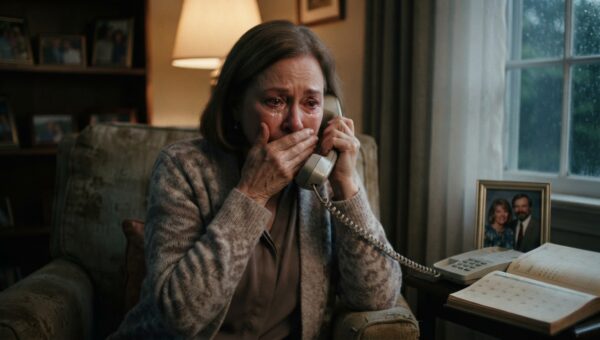
I set the bill down on the laminate kitchen counter right next to the electric kettle and stared at it for a long, quiet minute while the rain tapped against the kitchen window.
Gerald had been retired for a decade, spending his mornings reading the local paper front to back, drinking two cups of black coffee, and telling me he was just resting the gears whenever I asked him if he wanted to take a drive or visit his brother in Cairo.
He didn’t look like a man with secrets when he kissed the top of my head at eight o’clock and backed his old red pickup out of the gravel drive with the blinker clicking that steady, monotonous rhythm.
He looked like every other retired union man in southern Illinois who had spent forty years breathing foundry dust and listening to the hum of massive stamping presses until his ears rang even in his sleep.
I went straight to the hall closet and pulled down his heavy canvas golf bag, the one he had not unzipped since a rainy Saturday back in the late nineties when he tried to play nine holes with his old foreman and ended up with a fractured collarbone after a bad swing on the seventh tee.
It took me nearly ten minutes of rummaging past stiff leather headcovers and rusted nine-irons before my fingers brushed against a small, cold piece of brass tucked deep inside the nylon lining near the base.
A single brass key on a greasy ring, stamped with the number 144 in faded black ink.
I didn’t call him and I didn’t wait around for him to come back with his deck sealant.
I grabbed my car keys off the wall hook, walked out to my sedan, and drove the four miles down Route 13 toward the edge of town where the corrugated metal sheds of the storage facility sat baking in the gray humidity.
The manager was a skinny kid with bad skin who didn’t even look up from his phone when I laid forty dollars cash on the counter for a one-day visitor pass, though he did toss me a ring of master keys after I told him my husband had locked his insulin inside Unit 144 and left his own keys hanging on the kitchen rack.
I walked down the long, gravel-paved lane between rows of rusted metal roll-up doors until I found the one marked with greasy black digits.
My hands were shaking so hard I dropped the brass key twice into the wet gravel before I finally managed to jam it into the padlock and turn it with a sharp, echoing snap.
When I heaved the heavy metal door upward, the springs shrieked in the damp morning air and the smell hit me before my eyes even adjusted to the dim interior light.
It didn’t smell like mildew or old tires or any of the usual junk people cram into those metal boxes when their garages run out of room.
It smelled like cedar shavings, old book bindings, and that specific brand of clove pomade Gerald had slicked his graying hair back with every Sunday morning since we were married back in seventy-four.
The concrete floor was covered by a faded red braided rug we had thrown out of the sunroom back when the dog was still alive and chewing on the fringe.
In the corner stood our old green velvet armchair, the one Gerald claimed had gotten too lumpy for his back when we bought the reclining sofa.
Beside the chair sat a metal folding table covered in towering stacks of creamy bond paper, weighted down by a heavy glass ashtray filled with crushed-out Pall Malls that Gerald must have smoked on the sly.
And right in the center of the table sat an Olympia manual typewriter with a black ribbon spool half-visible beneath the metal cover, surrounded by little yellow sticky notes covered in his cramped, precise handwriting.
I stepped inside the ten-by-twelve metal box and pulled the heavy door half-shut behind me to keep out the sound of the highway traffic.
I didn’t feel angry and I didn’t feel like a wronged wife in a Sunday movie, though I suppose I should have felt something grander than the dull, heavy ache behind my ribs.
I just felt tired, the kind of bone-deep exhaustion that comes from realizing you have spent forty years sleeping beside a stranger who only showed you the parts of himself he thought you could handle.
On the corner of the table lay an open black ledger with a ribbon bookmark dangling from the spine, and I reached out and flipped it open to the very first page dated nearly four years ago.
The handwriting was neat and straight, written with the fountain pen I bought him for our thirtieth anniversary, the one he always swore he only used to sign our property tax checks.
The first line read: *The first shift at the lower mill started at four in the morning when the frost was still thick enough to crack the window glass.*
I turned the page, and then another, my thumb leaving faint gray smudges on the margins as I realized what was sitting in those cardboard bankers boxes stacked six high against the back wall.
It wasn’t money and it wasn’t letters from another woman, which was the stupid, small fear that had flickered in the back of my mind during the drive over.
It was three hundred pages of history, detailed right down to the names of the men who lost fingers on the stamping lines, the price of coal during the strike of nineteen-thirty-one, and the way the river used to smell in August when the tannery upstream dumped its waste into the current.
Gerald hadn’t been resting his gears for ten years.
He had been walking down the hill every Tuesday and Thursday with a canvas satchel full of peanut butter sandwiches and black coffee, locking himself into a metal box, and writing down the entire life of a town that everyone else had given up on.
Tucked into the back pocket of the ledger was a white envelope bearing the letterhead of the state historical society in Springfield, dated just three weeks ago.
I pulled the single sheet out and read it twice while the fluorescent bulb overhead flickered with a low, steady hum that sounded just like the old generator at the plant.
They were going to publish it, the letter said, complete with an advance check for two thousand five hundred dollars and an invitation to speak at the annual regional heritage dinner in Springfield next month.
At the bottom, penned in the director’s own hand, were the words: *Your father would have been proud to see this work preserved, Mr. Vance.*
Gerald’s father had died of lung cancer in room four of the old county hospital back when Gerald was twelve, leaving behind a gold pocket watch and a pair of steel-toed boots that sat in the back of our garage until the yard sale back in ninety-two.
I sat down in the green velvet armchair, and the springs groaned beneath my weight just the way they used to back when it sat in our den before the great redecorating project of 2012.
The air in the metal box was warm and still, smelling faintly of cedar and tobacco, and for a long time I just sat there looking at the small stack of typed pages beside the carriage return.
He hadn’t told me because I had spent the last ten years telling anyone who would listen that retirement was supposed to be about resting, about traveling to see our niece in Denver, about finally sitting on the front porch without a schedule to keep.
Every time he picked up a pencil around the house, I would hand him the Sears catalog or ask him to help me sort through the coupons for the grocery store in town.
I had loved him so hard and so loudly that he had to rent a twelve-by-ten metal tomb just to find enough silence to hear his own thoughts.
The sound of tires crunching on the gravel outside made me straighten up in the chair, my heart giving a sharp, stupid thud against my ribs like a trapped bird.
A truck door slammed shut, heavy and familiar, followed by the sound of boots scraping against the asphalt and the jingle of keys that meant Gerald was back from his hardware run.
I didn’t move from the chair, but I watched through the gap between the metal door and the jamb as his shadow fell long and dark across the concrete floor of the storage bay.
He stopped about three feet short of the threshold, his old canvas jacket zipped up to his chin despite the humidity, holding a brown paper bag from the co-op with the corner of a red plastic deck-sealant can sticking out the top.
He didn’t drop the bag and he didn’t look angry, just very old and very small in the harsh midday glare of the Illinois sun.
“Clara,” he said, and his voice sounded thin and dry, like old leaves scraping across a sidewalk. “The manager told me somebody unlocked number 144.”
I stayed sitting in the green velvet chair with my hands folded in my lap, looking at the way his knuckles were white where he gripped the handle of the paper bag.
“You’re a terrible liar, Gerald,” I said, and my own voice sounded stranger to me than his did, flat and quiet in the small metal space. “You always were.”
He didn’t step inside, but he shifted his weight from one boot to the other, looking down at the red braided rug like he expected it to open up and swallow him whole.
“I didn’t want to make a fuss,” he muttered, staring at the toes of his work boots. “You always said we were done with the past.”
“I said we were done with the foundry, Gerald,” I told him, and for the first time in ten years, I felt the tight, hard knot in my chest loosen just a fraction. “I didn’t say I wanted you to disappear into a tin box.”
He stood there in the doorway for another long moment, the afternoon sun catching the gray stubble on his jaw and the deep lines around his eyes that I had stopped looking at somewhere around our thirtieth anniversary.
Then he set the bag of deck sealant down on the gravel outside the door, reached up, and pulled his cap off to run a trembling hand through his thinning hair.
“The state historical society called again yesterday,” he said softly, still not looking at me. “They want to know if I’ll sign the contract by Friday.”
I stood up from the green chair, smoothed the front of my cardigan, and walked past him out into the bright, blinding sunlight of the parking lot.
“Sign it,” I said, picking up the bag of sealant by the wire handle and handing it back to him before I turned toward my car. “And bring your draft home for dinner.
We have three hundred pages to read before the sun goes down.”