The smell of boiled pine and damp cardboard always brings me right back to those seven weeks we spent clearing out Dad’s study after the funeral. Julian had been the one to take charge, barking orders about which boxes went to the charity truck and which ones stayed, moving with the brisk, heavy-handed certainty of a man who believed the world was already partitioned into his winners and losers.
He told me, more than once, that there simply wasn’t anything left to divide. He said Dad’s medical bills from the last three years had eaten through every last certificate of deposit, leaving only the main house on Elm Street, which he promptly signed over into his own name under the tidy excuse that he had lived closest and carried the heaviest burden. I didn’t fight him on it. I was tired, my own joints ached from years of driving back and forth across the county line to help Dad through his bad spells, and I just wanted the quiet.
Then came November. The morning air was crisp enough to bite your nose, and the oak leaves had turned that dull, wet-paper brown that means winter is right on top of you. I was standing by our kitchen counter with a cup of lukewarm black coffee when I pulled the white envelope from the stack of junk mail.
The return address stamped across the top corner said County Assessor, and the figures printed inside the window didn’t make any sense at all. It listed a parcel number I had never laid eyes on, attached to a street name I hadn’t heard mentioned in thirty years, and demanded a delinquent payment of precisely $1,460.20 to avoid a tax lien sale.
I sat down at the kitchen table, running my finger over the printed parcel description until my thumb caught on the edge of the paper. It listed a small single-story brick house at 412 Willow Street, registered under my own full name as the sole legal owner of record. I didn’t remember ever buying a house, let alone one on the east side of town where the streets narrow out into gravel and the mailboxes lean at tired angles.
My first thought was that it had to be some kind of clerical glitch, a mix-up with a middle initial or a bad digit in the county database.
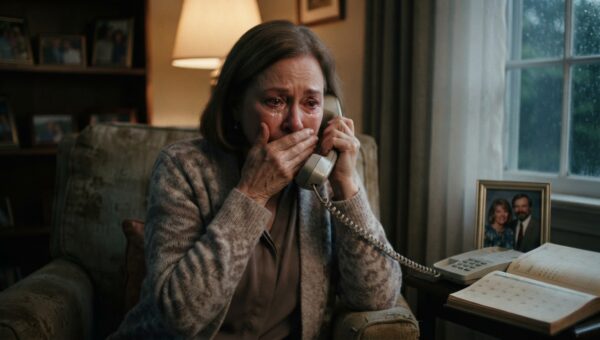
But the tax office in our county isn’t known for making mistakes that specific. I picked up the landline, my hand shaking just a little against the plastic receiver, and dialed the number printed at the bottom of the assessment slip.
The clerk on the other end, a woman named Clara Vance whose voice sounded like she had chewed on gravel every morning since 1994, pulled up the digital ledger while I waited. “That parcel has been assessed in your name for eight years, honey,” she told me, her tone flat and entirely unbothered by my confusion. “The tax bills always went straight to the address on file, but someone changed the mailing preference back when your father was still living in the hospital. It went to a private P.O. box downtown. Until today, that box renewal lapsed, so the system kicked the notice back to your primary residential address.”
I hung up the phone without saying goodbye. The coffee in my cup had grown stone cold, but I drank half of it anyway just to give my mouth something to do while my brain tried to catch up.
Julian had known about that P.O. box. Julian had been the one who handled Dad’s mail during those final, hazy months when the old man couldn’t make it down to the corner himself. I grabbed my car keys off the hook by the back door, walked out to my old sedan, and turned the key with a sharp grinding noise that made me wince.
The drive across town took twenty minutes through traffic that crawled like molasses. Willow Street isn’t much to look at, just a narrow strip of asphalt tucked behind the old railway yards where the houses are small, square, and built back when working people could actually afford a roof of their own. Number 412 sat back from the road behind a knee-high chain-link fence that needed a coat of silver paint. There was a rusted tricycle on the patch of dead winter grass out front, and a clean white Ford truck parked in the gravel drive.
I cut the engine and sat there for a full minute, watching a small brass wind chime tap gently against the porch post in the midday breeze. It made a high, thin pinging sound that carried right through my rolled-up windows.
A man in a faded blue canvas jacket came out the front screen door just as I was stepping out of my car, holding a bundle of dry shop rags in one hand. He stopped on the second wooden step, his eyes narrowing slightly as he took in my car and my coat. He wasn’t unfriendly, just cautious, the way renters get when a stranger pulls up unannounced in the middle of a Tuesday.
“Can I help you find someone?” he asked. His voice was steady, carrying the slight drawl of someone who worked outside for a living.
I walked up the gravel path, my boots crunching loud in the silence. “I’m sorry to bother you,” I said, my voice sounding smaller than I wanted it to. “My name is Clara’s sister, or well, I’m Julian’s sister. My name is Marcia.” I stopped myself, shaking my head because I was already tangling my own words. “I’m the daughter of the man who used to own this place. Arthur Henderson.”
The man lowered the rags slowly, his whole posture shifting from defensive to something much more complicated, like a man trying to solve a math problem that didn’t have any clean numbers. “Marcus Morales,” he said, offering a calloused hand. “My wife Elena and I have been renting this house for going on eight years now. We mail our check every first of the month to your brother.”
I stood there on the bottom step, looking up at him through the cold air. “To Julian.”
“Every single month,” Marcus said, nodding slowly. “Eight hundred and fifty dollars a dollar-exact transfer, straight into his personal account after the first couple of years when we switched over from paper checks. He told us he owned everything fair and square after your dad passed his properties over. Said the title was clear as glass.”
“My brother told us he owned everything,” I repeated back to him, the words tasting like copper in the back of my throat.
Marcus reached behind the screen door and pulled out a thick manila folder, the edges dog-eared and worn from years of sliding in and out of a kitchen drawer. He handed it down to me without another word. Inside were eighty-four carbon-copy receipts, each one signed with Julian’s sharp, looping signature, alongside a lease agreement typed out on store-bought stationery that listed Julian as the sole landlord and proprietor of 412 Willow Street.
I didn’t stay long on that porch. I thanked Marcus, promised him that nobody was going to throw his family out into the street, and drove straight downtown to the county courthouse where the land records are kept in big, heavy books bound in green buckram.
The clerk down in the basement archives helped me pull the original microfiche from eight years prior, back when Dad was still walking with a cane but his mind was sharp enough to cut glass. I sat at a scratched wooden table under a flickering fluorescent tube that hummed like a trapped hornet, scrolling through the scanned pages of Deed Book 412 until my eyes watered.
There it was. Not Julian’s name. Mine.
Dad had filed a Survivorship Deed when Julian had first started pressing him about signing over the main family homestead. Dad had known, even back then, how Julian operated. He had deeded the Willow Street cottage directly to me with a recorded life estate clause, written in his own steady hand right above the notary’s red seal.
I leaned closer to the glass screen, reading the typed paragraphs until my finger traced the bottom lines. Sole Owner in Fee Simple, with full rights of survivorship and absolute title upon grantor’s death, as equal balance and restitution.
Julian hadn’t just hidden the existence of the property. He had collected nearly one hundred thousand dollars in rent behind my back while letting me shoulder the caregiving burden for Dad, and now he had tried to let the tax office put a lien on my name just to sweep the last loose thread under the rug.
By four o’clock that afternoon, I was standing on the front porch of the Elm Street house, the very place Julian had claimed was the entirety of Dad’s worldly estate. I didn’t knock. I used the old brass key that I still kept on my ring from the weeks we spent cleaning out the closets, turning the lock with a sharp click that echoed down the hallway.
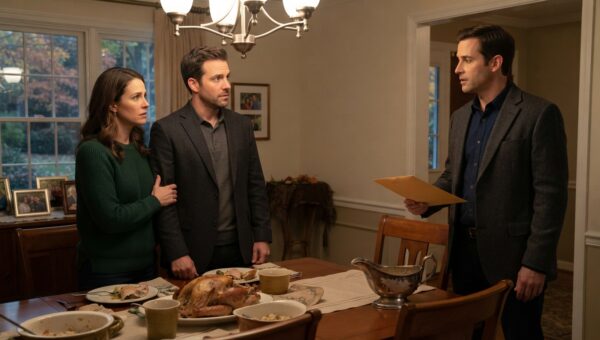
Julian was sitting at the heavy oak dining room table with a laptop open and a mug of coffee steaming beside his hand. He looked up, his face dropping from annoyance to genuine shock when he saw me standing in the doorway with the manila folder tucked under my arm.
“What are you doing here?” Julian asked, his voice defensive before I had even taken a step onto the hardwood. “I told you I was busy with the tax accountant today. We’re still sorting out the final probate filings.”
I walked across the dining room without taking off my coat, dropping the county deed and Marcus’s rent ledgers right on top of his keyboard with a dull thud.
Julian stared down at the white paper, his face turning an ugly, mottled red as his eyes scanned the notarized signature and the parcel numbers. “Where did you get this?” he muttered, his fingers twitching against the edge of the table. “This was supposed to be filed with the old inactive records. It doesn’t mean anything now that probate is closed.”
“It means you’ve been stealing from me and a hardworking family for eight years, Julian,” I said, my voice dropping into that flat, cold register I hadn’t used since we were kids fighting over the last slice of pie. “Eighty-four months of rent. Nearly ninety thousand dollars. Not to mention the tax bill you conveniently let bounce back to my mailbox.”
“Dad didn’t know what he was doing when he signed that,” Julian snapped, standing up so fast his chair scraped loudly against the floorboards. “He was getting old, Marcia. He didn’t understand property law. I managed that house, I fixed the damn roof when the ice storm hit in twenty-nineteenth, I dealt with the plumbing. I earned every penny of that rent.”
“You didn’t fix anything,” I said, stepping closer until I could smell the stale coffee on his breath. “Marcus told me about the roof. He paid for the shingles out of his own pocket because you wouldn’t return his calls for three weeks.”
Julian opened his mouth to argue, looking for some angle, some clever way to twist the numbers back into his favor, but the papers sitting right there in front of him didn’t leave any room for stories. He looked at the certified stamp from the county clerk, then back up at me, his shoulders slumping just a fraction as the bluster drained out of him.
“What do you want?” he muttered, his voice dropping into a sullen whine. “You want to drag this into court and air family business in front of some judge who doesn’t know us?”
“I want every dollar you diverted from those accounts transferred into an escrow fund by Friday morning, or I walk down to the prosecutor’s office with the probate fraud affidavits I’ve already printed out,” I told him, not blinking once. “And you are going to sign a quitclaim relinquishing any right to ever set foot on that property again. Starting tomorrow, Marcus and Elena deal with me.”
Julian didn’t say another word. He sat back down heavily in his chair, his hands shaking slightly as he pulled the paperwork toward him to check the signature lines. He knew he was caught, boxed in by his own greed and the simple, stubborn paper trail Dad had left behind in the county vault.
Two days later, the transfer was official, signed and sealed in front of a neutral attorney downtown. I paid the $1,460 tax bill out of my own savings before noon, clearing the ledger and putting my name where it belonged.
On Saturday morning, I drove back out to Willow Street with a clean, professionally drafted lease agreement in my bag, one that locked in a fair monthly rate for the Morales family and guaranteed they wouldn’t have to worry about sudden rent hikes or secret sales. Marcus met me on the front porch, signing the papers on a small wooden crate while Elena brought out two mugs of hot coffee that tasted faintly of chicory and cream.
After the papers were signed and tucked safely into my bag, I stood out in the side garden for a long time, watching the late November wind catch the small brass chime hanging from the porch overhang. It gave off that same high, clean pinging sound, steady and clear in the cold air. I reached up, my fingers brushing the small metal hook to make sure it was fastened tight against the post, and felt the quiet weight of the garden settle into my bones at last.