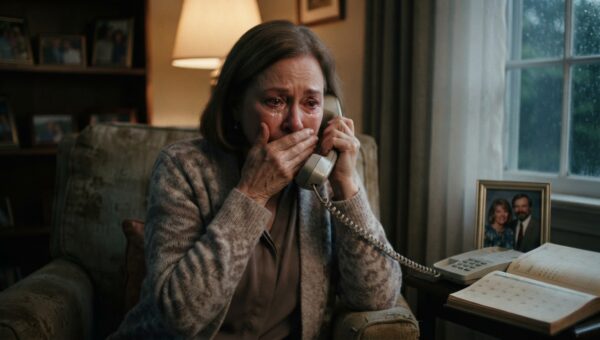
The blue light of my phone screen read 8:14 in the morning when Richard handed me the second cup of coffee, his wedding band clicking against the ceramic rim. He told me to take my time at the spa, that Elena was old enough to manage a weekend by herself, and that we needed this anniversary trip to breathe. I remember thinking how lucky I was to have a husband who planned things like that.
My daughter Elena was fifteen back then, quiet in the way teenagers get when they have decided the world is an enemy they cannot beat. I kissed her forehead before we walked out to the driveway, told her there was lasagna in the freezer, and let Richard lead me away to his car. I did not look back once because I did not want to see the smallness of her shoulders against the kitchen counter. I wanted my peace, and I was willing to let a lot of things look blurry to keep it.
Eleven years passed between that morning and the gymnasium in Wichita where two hundred people sat folding glossy graduation programs. The air smelled of floor wax and damp spring wool, that heavy midwestern May dampness that never quite clears out of old brick buildings. I sat in the second row with my hands folded in my lap, smoothing the silk of my blouse every thirty seconds because my palms would not stop sweating.
Richard sat beside me in his charcoal suit, his knee bouncing a steady, nervous rhythm against the metal chair leg. We had paid for nothing, not a single textbook or uniform fee, because Elena had returned every check we tried to mail her with the stamps torn off. She had worked forty hours a week at the county hospital admissions desk while carrying twenty-one credit hours, hacking away at her $52,000 balance until the last automated confirmation email arrived in her inbox like a quiet gunshot. She was the valedictorian of the 2026 nursing cohort. When they called her name, the applause rolled off the gym walls like thunder, and I stood up so fast my knees popped, my smile stretched tight and proud across my face.
Elena walked across that stage with her head up, wearing navy scrubs under her black gown, her dark hair pulled back into a braid that swung against her spine.
She took the leather folder from the dean, shook his hand, and walked straight to the podium instead of returning to her seat. I adjusted my glasses, waiting for the standard speech about teamwork and sleepless nights. I remember thinking how much she looked like her father, who had died when she was six, all sharp angles and stubborn jawline. She didn’t open the black binder on the stand. Instead, she slid her thumb across the glass of her phone, her thumb moving with a deliberate, cold rhythm that made the hair on my arms prick up. The auditorium settled down, the last few scattered claps dying out until the only sound was the hum of the overhead ventilation fans.
“When I was 12, I told you about my stepfather,” Elena said. Her voice didn’t shake. It came out through the dual PA speakers flat, hard, and amplified enough to rattle the water glasses on the faculty table. “You said I was having nightmares.”
I felt the blood leave my face so fast my ears started to hiss. Around me, people shifted. A woman in the row ahead turned her head halfway around, her eyebrows drawing together. I tried to swallow, but my throat had turned to dry sandpaper. I looked at Richard. His knee had stopped bouncing. His hand was gripping his program so hard the corners were tearing.
“At 14, I showed you bruises,” Elena continued, her eyes scanning the crowd until they locked onto the second row with the weight of an iron beam. “You said I bruised easily. At 16, I left for Aunt Carol’s because you chose him.”
A murmur went through the middle rows, soft and ragged like dry leaves scraping across concrete. My fingers dug into the silk of my skirt until my nails found my skin. I wanted to stand up and shout her down, to tell everyone she was tired, that finals had broken her judgment, that she had always had an imagination that ran away with her. But my tongue felt too heavy for my mouth. I sat there like I was bolted to the metal chair, watching the back of Richard’s neck turn a dark, mottled red. Aunt Carol was sitting three seats down from us, her hands folded over her leather handbag, her expression as still and grey as a gravestone. She didn’t look surprised. She looked like someone waiting out a storm she had tracked across the radar for a decade.
“I became a nurse because of what happened 11 years ago,” Elena said, and the pause she took before the next sentence lasted long enough for me to count my own heartbeat three times. “The weekend you went to the lodge in Eureka Springs for your anniversary, I was left alone in the house with him. When I tried to tell you when you came home, you told me I was clumsy and needed to watch how I walked down the basement stairs. You helped him put the cover story together so you wouldn’t have to look at what was standing in your kitchen.”
The gym went dead. Not a cough, not a shuffle. Just two hundred people holding their breath in the fluorescent glare. Eleven years ago. The Eureka Springs trip. Richard had booked it six months in advance, insisting we needed time alone, acting so tender and attentive that I had practically packed his bags for him. I remembered walking back into the house on Sunday afternoon and finding Elena sitting at the kitchen table with a tea towel wrapped tight around her right wrist, her skin the color of skim milk. She had told me she fell. I had looked at the way her wrist was swollen crooked, told her she was exaggerating for attention, and handed her an ice pack before going upstairs to unpack my sweaters. I had known, down in that dark place where women keep their cowardice locked away, that she hadn’t fallen down the stairs. I had known because the basement door had a deadbolt Richard installed the month before.
Richard grabbed my elbow, his fingers digging into my tendon with a force that brought tears to my eyes. “We’re leaving,” he muttered through his teeth, his face twisted into a grotesque, tight smile for anyone who might be glancing our way. “She’s having a psychotic break. We’re walking out right now.”
He tried to haul me up by my arm, his weight pulling me forward toward the aisle. Ten years of habits made me want to obey him, to smooth it over, to nod and follow him out into the parking lot and pretend we were the victims of a daughter’s cruel delusion. But my feet didn’t move. I looked down at his hand on my arm. Those were the same fingers that had handed me the coffee cup at 8:14 on a Tuesday morning eleven years ago, the same fingers that had signed the mortgage and patted my shoulder when I cried about the bills. I looked at his knuckles, large and square and completely ordinary, and the horror of what I had traded for a clean kitchen and a shared retirement account hit me like a physical blow to the chest.
“No,” I said. My voice was small, but it cut through his whisper like a knife.
Richard blinked, his eyes wide and panicked. “What did you say? Get up. We are not sitting here while she performs a circus act.”
“I said no, Richard,” I said louder this time, pulling my arm out of his grip with a sharp jerk that made him stumble against his chair.
Around us, people were staring openly now. Aunt Carol turned her head, her eyes meeting mine across the empty space between us, and there was no pity in them. There was only an ancient, heavy exhaustion. Elena was still standing at the podium, her phone screen glowing against her dark blue scrubs, waiting. She didn’t look angry anymore. She looked like someone who had finished an impossible shift and was finally putting down the charts.
Richard stood up in the row, his face going from red to a sickly, pale grey as he realized nobody was looking at him with sympathy. Several faculty members near the front were standing up from their folding chairs, their expressions hardening into stone as they connected the dots between the speech and the man sitting in the second row. Richard muttered something foul, shoved past a man in the third row, and bolted up the concrete steps toward the double doors, his shoulder hitting the push-bar hard enough to make the metal bang twice.
I didn’t watch him go. I kept my eyes on my daughter standing up on that stage under the yellow banners that read Class of 2026.
The ceremony ended ten minutes later in a numb, shuffling blur of people packing up cameras and folding up programs. I didn’t try to go backstage. I knew better than that. I walked out into the lobby where the spring air was blowing in through the open double doors, smelling of wet asphalt and fresh-cut grass. Aunt Carol was standing by the trophy case with her canvas tote bag over her shoulder, waiting by the exit.
I stopped three feet away from her. My purse strap felt heavy on my shoulder, the leather digging into the dent in my palm.
“You knew,” I said, and my voice sounded like it belonged to an old woman I had never met before.
Carol didn’t blink. She shifted her bag to her other hand and looked out the glass doors toward the parking lot where Richard’s sedan was probably idling. “She showed up on my porch at sixteen with a duffel bag and a set of emergency room discharge papers from a clinic thirty miles away that we paid cash to keep off your insurance,” Carol said, her voice completely level. “She had a cracked radius that healed crooked because she set it herself with two popsicle sticks and some medical tape she stole from the vet’s office where she was cleaning cages. She asked me not to call you. She told me you already knew what kind of man you married and you just liked his house better.”
The words didn’t burn. They just settled into the empty spaces inside me like lead shot. I reached into my pocket, my fingers finding the gold band on my left ring finger. It came off easier than I expected, sliding past the knuckle where the skin had grown soft from years of washing dishes. I held it out on my palm toward Carol.
“Tell her I filed,” I said. “Tell her the house is in her name as of this morning. I called the lawyers from my cell while she was reading.”
Carol looked down at the ring resting on my skin, then up at my face. She didn’t take it. She just zipped her canvas tote bag shut with a small, sharp metallic snap. “She doesn’t want your house, Marjorie,” Carol said quietly. “She wants a mother who isn’t a coward. And it’s a bit late to go shopping for one of those.”
She turned around and walked out into the sunlight, her sensible shoes clicking against the concrete walkway until she reached the silver hatchback parked by the curb. I stayed by the trophy case for a long time after the lobby cleared out, watching the dust motes drift in the shafts of light coming through the high windows.
That was four months ago. The divorce didn’t take long because Richard didn’t contest anything once he realized I had handed the prosecutor copies of the clinic receipts Carol had saved in her filing cabinet since the day Elena arrived on her porch. He packed his things into his truck while I was at the grocery store and left the front door wide open for the stray cats to wander in. I sold the place on Willow Street for whatever the cash buyer offered on a Tuesday afternoon, didn’t even haggle over the price, and used the remainder to clear out the last of my debts before renting a small two-room flat over an upholstery shop on the south side of town.
Now I live alone behind a green canvas awning that flaps whenever the city buses rumble past on Main Street. My kitchen table is an old pine drop-leaf I found behind the hardware store for thirty dollars, scrubbed clean down to the bare grain. On Saturday mornings, I make one cup of instant coffee and sit by the window where the light hits the linoleum just right, looking at the only thing I kept from that life. It isn’t a photograph of Richard, and it isn’t the wedding album that ended up in the municipal dumpster behind the bank. It’s the graduation program Elena left behind on her chair in the second row, folded in half and creased down the middle where my thumb pressed against it while she was speaking.
Yesterday, a thick white envelope arrived in the mail with no return address, just a Kansas City postmark. Inside was a single index card with a typed note from Carol. It said Elena passed her board exams with a ninety-eight and started her residency in the pediatric trauma unit at St. Jude’s on Monday morning. There was no phone number, no invitation, and no sign of forgiveness, just the clean, sharp facts of a life she built entirely with her own two hands while I was downstairs washing dishes and pretending the house was quiet. I pinned the index card to the corkboard beside my sink with a brass tack, right where I can see it every time I turn on the tap. It is the only honest thing on that wall, and I stare at it until the sun goes down behind the brickwork across the alley, reminding myself of what it costs to look away.