PART 1
I spent ten years carrying trays upstairs, tracking prescription refills, and cleaning up after two aging parents who slowly forgot who I was. While my sister Chloe lived two states away building her corporate marketing career, I stayed in our modest paid-off suburban home in the Rust Belt. I gave up my apartment, put my relationships on hold, and worked my steady municipal water authority job by day while playing full-time nurse by night.
When our mother finally passed away last autumn, I thought we would grieve together. I thought the shared weight of losing both parents would bridge the gap that had grown between us over the years.
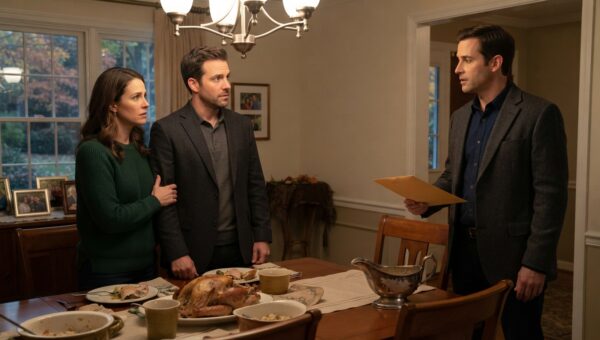
Instead, Chloe flew in for the funeral with a designer tote bag, checked her phone through the eulogy, and handed me a certified legal notice three days after the burial. She did not come as a mourning daughter. She came as an auditor executing a hostile takeover.
The paperwork claimed that I was nothing more than a tenant at will, a deadbeat boarder who had lived rent-free for a decade while contributing nothing to the household. It stated that because my name was not on the original deed from thirty years ago, the house and everything in it belonged solely to Chloe under the terms of an outdated will our parents drafted back when we were kids.
I sat at the kitchen table, staring at the embossed seal while the smell of my mother’s furniture polish still lingered in the air.
“Marcus, let’s be realistic,” Chloe had told me over the phone that morning, her tone brisk and corporate like she was trimming an underperforming vendor. “You didn’t pay rent. You had free room and board for ten years while I built a life. The estate lawyer says the original deed stands. You need to pack your things by the end of the month.”
She was trying to erase a decade of my life with a single legal stroke. What she forgot, or perhaps never knew because she never bothered to ask, was what it cost to keep those walls standing. Over those ten years, I poured every spare dollar into keeping my parents out of state-funded facilities. When the roof leaked during the winter of four years ago, I drained my personal savings to pay the $12,400 repair bill.
When Dad’s medication co-pays spiked and Mom needed specialized home-health equipment, my credit cards absorbed $72,250 in out-of-pocket medical and property-tax expenses.
In total, I had receipts, bank ledger entries, and canceled checks totaling exactly $84,650 invested directly into the property and their care. Against a home equity value of $218,400, Chloe figured she could push me out with zero payout, pocket the full equity, and use it to bail herself out of whatever financial mess she had gotten into out of state.
I didn’t yell at her. I didn’t slam doors or beg for fairness. I simply told her I needed time to review the documents, walked down to my basement workshop, and opened my laptop. I knew something she did not. I knew where the real paperwork was, or at least I knew where it had been kept before Chloe spent an entire afternoon alone in the house rummaging through our parents’ office.
PART 2
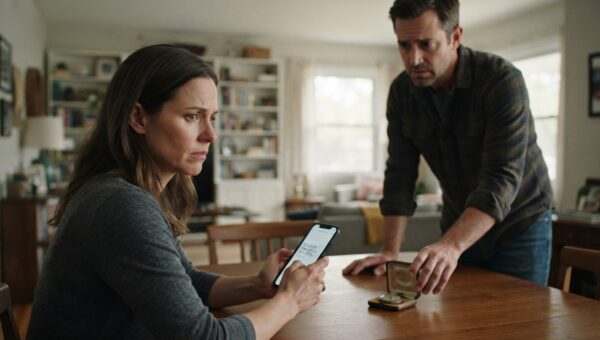
The bank notification came through my phone on a Tuesday morning, exactly four days after the funeral. It wasn’t a bank statement alert, but an automated security ping tied to my safety deposit box at the local branch. The box had been rented jointly by my father and me five years ago when his health started failing, meant to hold emergency medical directives and property documents.
When I drove down to the bank and spoke with the manager, the security log confirmed my suspicion. Chloe had visited the branch using an old power-of-attorney form that had expired the moment Mom drew her last breath. She had cleared out the contents of the box.
When I confronted her about it later that evening, her voice was sharp and defensive.
“Dad gave me access years ago, Marcus,” she snapped through the speakerphone. “Stop making things difficult. The estate is mine to administer as the primary named executor in the original will. You’re just bitter because you never made something of yourself.”
That was her blind spot. She genuinely believed I was the same quiet, compliant brother she had left behind a decade ago. She thought my willingness to stay behind and change bandages meant I lacked the backbone to fight back legally. She didn’t realize that working a municipal department supervisor job for fifteen years teaches you how to read municipal codes, track audit trails, and follow every single paper link until nothing is left hidden.
I didn’t argue with her on the phone. I hung up, called a probate litigation attorney named Sarah Vance—no relation, just a sharp local lawyer who specialized in contested estates—and handed over every single box of financial records I had kept in my closet. Every receipt for roof tiles, every pharmacy bill, every property tax stub, and every bank transfer statement adding up to that exact figure of $84,650.
Sarah looked through the files over her desk, her glasses sliding down her nose. “Marcus, if she’s trying to claim you were just a boarder, we don’t just fight the eviction. We audit the entire estate. But we need the primary instrument. Where is the final codicil your mother mentioned to me during her intake assessment three months ago?”
That was the missing piece. Mom had called me into her bedroom three months before she passed, her breathing shallow but her mind sharp. She had confessed that she worried Chloe would try to sell the house out from under me. She had insisted we draft a new notarized codicil granting me a life estate and full reimbursement priority from the estate proceeds for every dollar I spent out of pocket. We signed it with two neighbors as witnesses and placed the original physical document inside the safety deposit box.
The box that Chloe had just cleaned out.
Sarah leaned back in her leather chair and tapped her pen against the blotter. “If she destroyed it, we have a serious evidentiary hurdle. Unless…”
“Unless what?” I asked.
“Unless the estate attorney who drafted it kept a digital backup in their cloud document management portal.”
PART 3
The following Monday, Sarah filed an emergency motion for discovery and an injunction to freeze the estate assets pending a formal audit. She also served a subpoena to the cloud server backup provider used by the original estate planning attorney who drafted Mom’s final codicil three months before her passing.
Chloe showed up at my front door two days later, her professional composure completely cracked. She pounded on the screen door until I finally unlatched it.
“What are you playing at, Marcus?” she demanded, stepping past me into the living room without an invitation. Her breath was coming fast, and her hands were shaking slightly. “I got a notice from a court officer today. Freezing the accounts? Subpoenaing my bank records? Have you lost your mind? You’re jeopardizing the whole estate sale!”
“I’m just asking for a proper accounting, Chloe,” I said calmly, staying seated at the kitchen table with a cup of black coffee.
“You don’t get an accounting! You’re a tenant! You’re lucky I didn’t charge you back-rent for the last ten years!” She crossed her arms, glaring down at me with the same condescending look she had worn since we were teenagers. “The judge is going to throw your little motion out in five minutes. The original will from ten years ago names me sole beneficiary. End of story.”
“Is it?” I asked.
At that exact moment, my phone buzzed on the table. It was an email notification from Sarah containing the downloaded records retrieved via the court-ordered subpoena to the attorney’s cloud server backup server.
I didn’t even open the attachment. I just looked at Chloe and spoke quietly.
“The attorney’s cloud server keeps automated version logs and digital audit trails, Chloe. Every time a document is accessed, previewed, or printed from their portal, it leaves a permanent timestamp. Not only is the exact text of Mom’s final codicil preserved on their secure server, but the digital log also records your exact IP address and user session logging in to view it the day after Mom passed away.”
Chloe went entirely still. The color drained from her face, leaving her skin looking grayish under the kitchen light.
“You weren’t just reviewing it to help,” I continued, my voice steady. “The server logs show you downloaded the cancellation request form, forged our mother’s signature on a revocation notice using a digital pen tool, and uploaded it back to the portal an hour before notifying me about the original will. That’s not just a probate dispute. That’s mail fraud and document tampering.”
She opened her mouth to speak, but no sound came out. The corporate confidence, the sharp tone, the arrogant assumption that her little brother was too slow to check the digital plumbing—it all evaporated in the quiet space of the kitchen.
“The judge has the certified server logs as of this morning,” I said softly. “Sarah filed them alongside my $84,650 reimbursement ledger. You can either settle this through mediation tomorrow morning and sign over the deed with our reimbursement terms met, or you can explain your digital signature trail to a criminal magistrate.”
ENDING
The probate court proceeding lasted less than twenty minutes once the digital audit logs were entered into evidence. Chloe didn’t contest the findings. Her attorney advised her to fold immediately when confronted with the immutable metadata from the cloud server.
The final judgment was clean and absolute. The court recognized Mom’s valid final codicil, granting me full title to the family home alongside a court-ordered priority lien against the remaining estate assets. Chloe was legally mandated to cover all court costs, forfeit her executor fees entirely, and accept a severely reduced inheritance share offset by my verified $84,650 out-of-pocket reimbursement plus statutory interest.
A month later, the house was finally quiet again. The legal notices were gone, the lawyers were paid, and the deed was filed cleanly in my name at the county clerk’s office.
I stood in the hallway on a quiet Saturday afternoon, holding the small brass key to the safety deposit box that Chloe had tried to empty. I dropped the key into the small ceramic bowl on the entryway table where our parents used to keep their spare change. My phone sat silent on the counter. There were no more text messages from Chloe, no more demands, no more corporate ultimatums. She had blocked my number after the settlement, retreating back to her out-of-state life as if nothing had happened.
I walked out to the back porch, picked up the garden hose, and began watering the tomato plants Dad had planted the summer before he got sick. The water hissed softly against the dry dirt, smelling of wet earth and late summer sun. My hands were steady, my shoulders felt light for the first time in ten years, and for the first time since my parents passed away, the house felt entirely like my own.