PART 1
The insurance letter arrived on a Wednesday in a stiff white window envelope that looked like every other medical bill piling up on my kitchen table. I tore it open expecting the usual explanation of benefits. Instead, I found a formal denial notice stamped in bold red ink. The health plan refused to cover my upcoming heart procedure, priced at $38,600, claiming the treatment was deemed elective and unnecessary under my current policy tier.
I stared at the paper until the black letters blurred into gray streaks. I had never refused the procedure. My cardiologist had scheduled it for the following Tuesday after months of tests, shortness of breath, and sleepless nights where my chest felt like it was wrapped in wet leather.
My son, Caleb, had been handling my mail ever since my bad fall seven months ago when I slipped on the icy back porch and cracked my wrist. He had insisted on stopping by every afternoon to collect the letters, sort the junk from the bills, and keep my kitchen counter clear.
“You’re confused, Mama,” he had told me gently that first week, taking the mail out of my hand with a warm, reassuring smile as he set a carton of homemade vegetable soup on the counter. “You just focus on healing your wrist. Let me manage things for a while so you don’t get overwhelmed.”
I had believed him. I believed him because he brought soup every Sunday, because he drove me to my physical therapy appointments when my car battery died, and because he was my only son.
When Caleb dropped by that evening with a loaf of sourdough bread, I was still sitting at the kitchen table with the denial letter in front of me.
“Caleb,” I said, holding up the crisp white sheet. “The insurance company denied the heart procedure. They say I submitted a written request to withdraw the prior authorization last Tuesday.”
Caleb set the bread down on the counter. His expression didn’t flicker with shock or confusion. He just wiped his hands on a paper towel and walked over to look down at the letter.
“Oh, that,” he said smoothly, his voice entirely too calm. “Right. The doctor’s office called me last week about some billing code mix-up. They told me to cancel that specific request so they could resubmit it under a different category.
I just took care of the paperwork for you, Mama. You don’t need to worry your head about it.”
A cold knot tightened in my stomach. The kitchen was quiet except for the hum of the refrigerator.
“You canceled my prior authorization?” I asked, looking up into his eyes.
“For your own good,” he said with a small, patient laugh, patting my shoulder. “You know how these insurance companies confuse you. Let me handle it. I’ll get it sorted out by next week.”
He kissed the top of my head and told me he had to run home to help his wife with dinner. But after the front door clicked shut, I didn’t feel relieved. I felt a cold, prickling unease that I couldn’t shake.
PART 2
The next morning, I couldn’t wait for Caleb to visit. I put on my heavy winter coat, grabbed my cane, and drove myself down to the community health clinic where my cardiologist’s office was located. The waiting room smelled of rubbing alcohol and old magazines.
After waiting twenty minutes, I was called back to the nurse’s station by Brenda, a nurse practitioner who had known me for ten years and always checked my blood pressure with a kind word.
“Helen,” Brenda said, looking over my file on the computer terminal. “I’m surprised to see you here today. Are you having more chest tightness?”
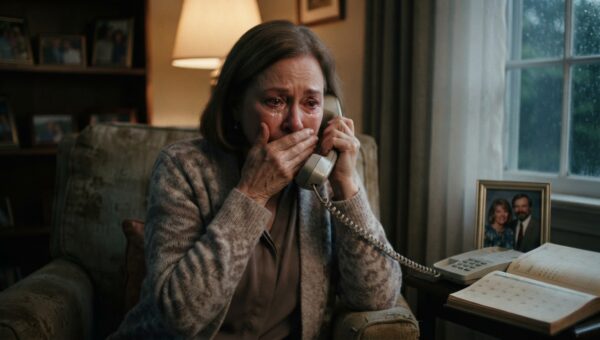
“No, Brenda,” I said, laying the denial letter on the edge of her desk. “I’m here because of this. My insurance company says I withdrew the prior authorization for the $38,600 procedure last Tuesday. Caleb told me he signed a billing correction for you. Did you ask him to do that?”
Brenda stopped typing. She looked at the letter, then up at my face, her brow furrowing into deep creases.
“Helen, we never called Caleb about your billing codes,” she said slowly. “Family members aren’t even on your HIPAA release form for financial decisions. And we certainly didn’t tell anyone to cancel a prior authorization. Your procedure was fully approved two weeks ago.”
I held onto the edge of the laminate desk until my knuckles turned white.
“Then why does the letter say a request to withdraw was submitted with my signature?” I asked, my voice barely above a whisper.
Brenda turned her monitor around so I could see the screen. She pulled up the scanned PDF document attached to the insurance portal.
“Let’s look at the digital submission log,” she murmured, clicking open a file.
On the screen appeared a scanned copy of a signed cancellation form. At the bottom was a signature scrawled in shaky, uneven cursive that bore a rough resemblance to my own name. But as I stared at it, the truth hit me with sickening clarity. I never sign with a shaky line unless my arthritis is flaring up so badly I can’t hold a pen, and last Tuesday my hands had been steady. More importantly, the looping ‘H’ in Helen was drawn backward, exactly the way Caleb used to write his cursive letters when he was a boy practicing at the kitchen table.
Brenda checked the clinic records further, clicking through a secondary menu.
“Wait,” she said, her voice dropping lower. “There’s another document attached here from three weeks ago. It’s a supplemental form regarding your property deed and secondary medical power of attorney designation.”
“What does it say?” I asked, my chest tightening painfully.
“It lists Caleb as the primary financial proxy,” Brenda read, scrolling down the page. “And it includes a secondary amendment regarding your home equity line of credit and your savings distribution. One form was yours from your annual physical check-in. The other… the other says you wanted to transfer your home title into a joint family trust and move into a managed care facility.”
The room seemed to tilt sideways. The $38,600 medical denial wasn’t a billing mix-up. It was part of something much larger. Caleb hadn’t just been sorting my mail; he had been systematically intercepting my financial and medical correspondence, rerouting my statements to his home address, and forging documents to take control of my accounts while convincing everyone I was too confused to manage my own life.
PART 3
I didn’t go home after leaving the clinic. I drove straight to Mr. Vance, an attorney whose office was located in a brick building down by the courthouse. He had handled my late husband’s will ten years ago.
Mr. Vance listened quietly as I laid the insurance denial letter, the printed scan of the forged cancellation, and my genuine signature cards on his desk. I told him about Caleb’s weekly visits, the soup, the kind words, and the constant refrain that I was too confused to handle my own affairs.
The lawyer adjusted his glasses, examined the documents under a magnifying desk lamp, and let out a long, heavy sigh.
“Mrs. Miller, this isn’t just a billing dispute,” Mr. Vance said carefully. “This is a deliberate fabrication of medical proxy authority and financial redirection. If he filed these secondary deeds and banking amendments, he was positioning himself to liquidate your home equity before the end of the year.”
“Can we stop it?” I asked, my voice steady despite the trembling in my hands.
“We can file an immediate emergency injunction freezing all pending estate transfers, revoke every medical and financial power of attorney on file with your providers, and notify the insurance fraud division,” Mr. Vance said, pulling out a yellow legal pad. “And we can have him served with a notice to cease all interception of your mail within twenty-four hours.”
The confrontation didn’t happen in a lawyer’s office. It happened on a rainy Sunday afternoon two days later.
I was sitting at my kitchen table when the front door opened and Caleb walked in, carrying his usual Tupperware container of vegetable soup and a fresh loaf of bread. He took off his wet jacket, hung it on the peg by the door, and walked into the kitchen with a bright, easy smile.
“Hey, Mama,” he said, setting the soup down on the counter. “How are you holding up today? Did you rest well?”
I didn’t stand up. I didn’t smile back. I simply pointed to the two manila envelopes lying on the table between us—copies of the legal injunction, the fraudulent cancellation form, and the bank notification letters that Mr. Vance’s office had sent out that morning.
Caleb stopped with his hand on the counter. The smile vanished from his face, replaced by a cold, hardened look I had never seen on him before.
“What’s this?” he asked, his voice dropping its warm, filial cadence.
“It’s the end of you managing my mail, Caleb,” I said quietly. “Mr. Vance has the original copies of the forms you forged. The insurance company knows the cancellation was a fraud, and the bank has frozen the equity transfer on this house.”
For a second, Caleb stared at me, his eyes narrowing. Then he let out a harsh, bitter laugh and pulled out a chair, sitting down uninvited.
“You think you’re so smart, don’t you?” he snapped, leaning forward across the table. “You’re getting older, Mama. You forget things. You leave the stove burner on. You fall down the back steps. Someone has to look out for the property before you sign it away to some nursing home that takes every last dime. I was just protecting what’s going to be ours anyway.”
“It’s mine,” I said, my voice cutting through his words like a knife. “Every single brick of this house, every dollar in that account, is mine. You didn’t protect me, Caleb. You tried to erase me.”
Caleb stood up so fast his chair scraped loudly against the linoleum floor. He grabbed his jacket from the peg, glared down at me with pure contempt, and spat out a final curse before walking out the front door and slamming it so hard the windows rattled in their frames.
He didn’t come back that Sunday. He didn’t come back the next Sunday either.
ENDING
The legal process took nearly six months to untangle. Every fraudulent document Caleb had filed was formally invalidated by the court, my home title was fully restored to my sole name, and my $38,600 heart procedure was rescheduled and successfully performed by Dr. Evans at the city hospital. My chest hasn’t felt heavy since.
Caleb hasn’t called, and I haven’t reached out. Some bridges cannot be rebuilt once you find out the person standing on the other side was holding a match the whole time.
My mailbox is secure now, fitted with a heavy steel lock that only my key opens. Every afternoon, I walk down the front steps to retrieve the daily post myself, sorting through the circulars and bills in the quiet sunlight.
On a clear Tuesday morning three weeks after my follow-up checkup, I was putting away groceries when I found a small, forgotten container of homemade vegetable soup tucked far back in the corner of my refrigerator shelf—the very last one Caleb had brought over before everything fell apart.
I took the plastic container out, carried it to the back porch, and emptied it into the garden soil near the rosebushes. Then I washed the empty plastic tub in the sink, dried it with a clean dish towel, and set it on the front porch step for him to pick up whenever he finally decided to come and collect his things.