I always thought I understood the math of being a parent. You spend twenty years subtracting from your own life so you can add to theirs, and you just trust that the balance sheet will even out in the end. I was wrong about that. I was wrong about a lot of things, starting with the sixty-four thousand four hundred and nineteen dollars I wired to Lucas last November for his restaurant lease.
The floor of The Veranda smelled like raw pine and floor wax when I walked in for the VIP night. Lucas had worked three years as a line cook down in Dayton, talking about nothing else between shifts. He wanted white oak tables and heavy iron chairs. I didn’t care about the chairs, but I cared that my boy finally looked like he was standing on his own two feet. So when the equipment loan fell through at the credit union, I liquidated my Goodyear stock and signed the co-borrower papers without blinking. I thought I was securing his future. I just didn’t know I was buying myself an eviction.
Chloe caught me by the elbow right as I reached the reserved section near the kitchen doors. Her dress was the color of a wet slate shingle, and she didn’t look at my face once. “Backers don’t belong at the family table,” she said.
Before I could steady my feet, she jerked my wooden chair out from behind me. I went down hard on the imported tile. My right palm came down square on the stem of a fallen wineglass, and the thin crystal snapped right across the meat of my thumb.
Lucas was pouring Pinot Noir for the zoning commissioner ten feet away. He looked right down at me tangled in the chair legs, and then he let out a short, nervous laugh. “Mom, please don’t ruin tonight,” he said. He didn’t drop the bottle. Twenty-three employees stood frozen in their black aprons around the pass-through window, watching me bleed onto the grout like I was a spilled sauce they had to mop up later.
I didn’t make a scene. I pulled a linen napkin from the floor, wrapped it tight around my palm, and walked out the heavy glass double doors into the parking lot.
My Ford Taurus had ice on the windshield. I scraped it off with an old credit card while my hand throbbed inside the linen wrap. By the time I hit the interstate, I was shaking so hard I could barely keep the tires in the lane. I got home, washed the glass shards out of my skin under the kitchen tap, and pulled up my credit union app on my old iPad. I stopped the weekly automatic transfer of twelve hundred dollars that kept their payroll account breathing.
I thought I’d get a frantic text within the hour. Instead, the house stayed quiet until the digital clock on the microwave flipped to 7:03 in the morning. The phone rang, sharp and tinny against the oilcloth table.
“Elena?” I said, recognizing the caller ID from the downtown branch.
“Good morning,” she said. Her voice had that careful, flat professional drop to it that bank people use when bad news is about to hit the air. “I’m looking at the overnight exceptions report.
Did you authorize the emergency transfer request removing you as reserve signer for medical incapacity?”
I stared out the kitchen window at the bare maples in the yard. “I didn’t authorize anything. I was at his restaurant opening last night.”
Elena was quiet for a long second. The only sound on the line was the faint clicking of her keyboard. “The paperwork was time-stamped three weeks ago, Martha. But that’s not why I called you at this hour. There’s something else.”
She told me about the second commercial loan. Chloe had used my primary residence as collateral for a forty-thousand-dollar equipment rider, backed by a forged physician’s certificate stating I was in the early stages of cognitive decline. The signature on the notary stamp wasn’t even mine. It looked like something a high school kid practiced during study hall.
By eight o’clock, two supplier trucks were idling in the narrow gravel alley behind The Veranda downtown, their diesel engines rumbling right through my kitchen floorboards in my head. I didn’t call Lucas. I drove straight down to the bank and sat across from Elena’s gray metal desk while she printed out twenty-four pages of digital audit logs and IP addresses originating from Chloe’s laptop.
“We can freeze the operating accounts by noon,” Elena said, sliding a pen across the blotter. “Once we flag the medical rider as fraudulent, the second loan becomes a criminal matter.”
“Do it,” I said. My hand still stung under the white gauze bandage.
I didn’t wait for the lawyers to finish their coffee. I drove straight over to The Veranda before the lunch rush. The front windows were smeared with condensation from the steam tables inside. When I pushed the door open, the little brass bell chimed just like it did in my daydreams. Lucas was standing behind the host stand, his face pale under the recessed track lighting. He looked like he hadn’t slept, his white chef’s coat wrinkled across the chest.
“You can’t be here,” Lucas said, his voice dropping an octave as three line cooks turned from the kitchen doors. “We have an inspection at eleven.”
I didn’t yell. I laid the bank printouts right on the host stand, square over their reservations tablet. “You signed my house away, Lucas. For a deposit on an apartment in Columbus and three commercial ovens you didn’t even need.”
He looked down at the papers, then up at my bandaged hand. For a second, I thought he might actually reach across the counter. I thought he might say he was sorry about the chair, or the glass, or the way his wife looked at me like I was an old piece of furniture she wanted to leave on the curb.
“Chloe was just trying to protect the business assets,” he whispered. The words came out flat and rehearsed, like a line in a play he’d practiced in the mirror. “You were getting old, Mom. You were forgetting things.”
“I forgot I raised a coward,” I said.
I turned around and walked out before he could finish whatever excuse he had lined up next. I didn’t look back at the white oak tables or the iron chairs.
By three that afternoon, the supplier trucks had backed out of the alley empty, their refrigerated boxes humming as they pulled away from the curb. The credit union locked every terminal associated with the restaurant before the dinner service could even prep its mise en place. Chloe tried calling me four times around four o’clock, her number flashing on my screen with that bright, demanding little photo she used for her social media profile. I didn’t pick up. I blocked the number and then I blocked Lucas’s too, right down the line.
Lucas showed up on my front porch just after dark. He pounded twice on the heavy wooden door, his breath frosting the porch light. “Mom! Open up, please. The bank is holding the payroll checks. The staff is downstairs waiting for their tips.”
I stayed sitting at the kitchen table. I didn’t turn off the overhead light, but I didn’t get up to turn the deadbolt either. The house was silent except for the low hum of the refrigerator in the corner. He stayed out there for ten minutes, his hand hitting the wood every now and then, calling out names and excuses until his voice cracked in the damp evening air. Then the sound of his car doors slamming echoed up the street, followed by the gravel crunch of tires spinning too fast in the drive.
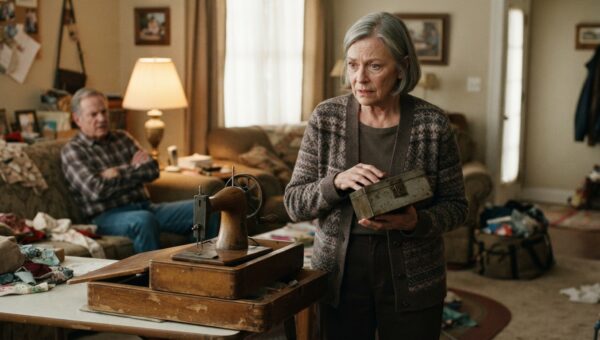
The kitchen has been quiet ever since. The mail comes at eleven every day, mostly circulars and bills I can pay without asking anyone for permission. I keep my cedar sewing box on the sideboard now, right where the old paperwork used to pile up.