PART 1
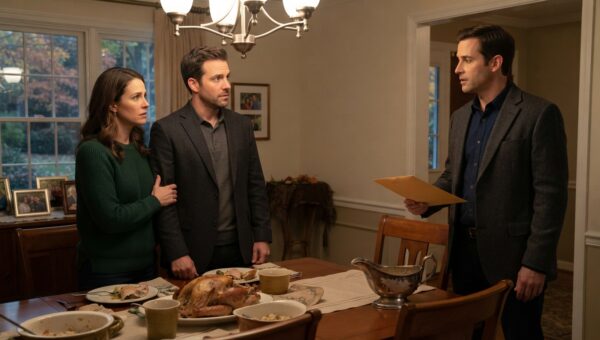
The church basement smelled of stale coffee and damp wool. Outside, a steady November rain beat against the narrow windows, turning the parking lot gray and slick. I sat in the second row between my older sister, Danielle, and my mother, Helen, listening to the estate lawyer drone on about land deeds and bank routing numbers.
When Grandma Rose passed away at eighty-three, most of the relatives assumed there would be little to fight over.
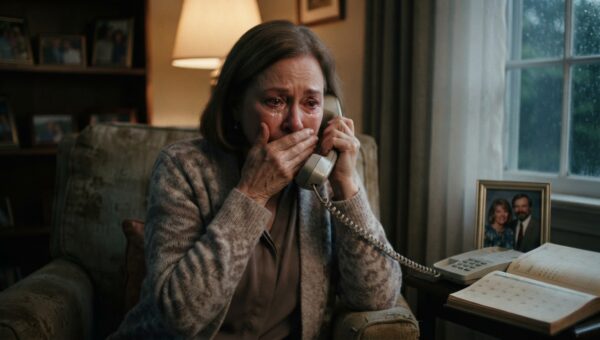
She lived a quiet, frugal life in the small brick house on Maple Street where she had raised me after my mother drifted out of my life to follow a string of bad relationships two towns over. Danielle barely visited Grandma twice a year, and my mother only showed up when she needed grocery money or a place to park her car during a breakup. I was the one who drove Grandma to her doctor appointments, picked up her heart medication every Thursday, and sat at her kitchen table peeling apples while she told stories about her youth.
Attorney Vance adjusted his wire-rimmed glasses and cleared his throat.
“According to the final testament of Rose Marie Callahan,” he read from the stiff parchment, “the primary property located at 412 Maple Street, valued at nine hundred and forty thousand dollars, is bequeathed in full to my daughter, Helen Callahan.”
My mother let out a sharp breath, her hands flying to her mouth as she smiled through sudden, performative tears. Danielle leaned forward, her eyes bright with triumph.
“The 2022 sedan parked in the driveway, valued at thirty-one thousand dollars, is bequeathed to my granddaughter, Danielle Callahan,” Vance continued, turning the page.
Danielle let out a small cheer and elbowed me in the ribs. I sat entirely still, my hands resting in my lap. I didn’t care about the car or the house. I only cared that the woman who had protected me when I was ten years old was gone.
Then Vance reached the final line of the formal document.
“And to my granddaughter Clara Callahan, I leave the framed photograph of us taken at the city zoo during the summer of 2012.”
A heavy silence settled over the folding chairs. My mother dabbed at her dry eyes with a tissue and looked at me with a mixture of pity and smug amusement. Danielle snorted softly under her breath.
“Well, Clara,” Mother whispered, leaning close so only I could hear. “At least you get the memories.”
I didn’t argue. I didn’t cause a scene. When the reading ended and the relatives dispersed to the parking lot with their copies of the deeds and keys, I walked over to the corner where Grandma’s old wooden walker sat beside a cardboard box. Inside the box was the framed photograph.
The glass had a long, jagged crack running across the bottom corner from when Grandma had dropped it while dusting the mantel six months ago. I picked it up, cradled it against my coat, and carried it out into the rain.
PART 2
The next afternoon, the rain cleared away, leaving the autumn air sharp and cold. I set the framed photograph down on my small kitchen table. The wooden frame was old walnut, held together at the corners by tiny brass brads that looked like they hadn’t been touched in decades.
I grabbed a small flathead screwdriver from my tool drawer, intending to swap the cracked glass for a spare frame I had in the closet. I wanted the picture to look nice before I set it on my bedroom dresser.
Working carefully, I pried up the metal tabs holding the cardboard backing in place. The yellowed paper backing came loose with a dry, papery snap, releasing a faint scent of old dust and peppermint. The 4×6 photograph of Grandma and me eating cotton candy at the zoo fell forward into my hand.
I reached for the cardboard insert to lift it out of the wooden rabbet, but it felt unusually thick. I ran my thumb along the bottom edge and realized the backing wasn’t a single sheet. It was a double-layered folder glued shut at the margins.
My heart gave a sharp, heavy thud against my ribs.
I slipped the tip of the screwdriver beneath the seam and gently peeled the cardboard apart. Something thin and crisp slid out from between the layers and drifted down onto the kitchen table.
I picked it up. My hands began to shake so badly I dropped it twice before I managed to hold it steady under the overhead light.
It was a holographic codicil, dated three weeks before Grandma passed away, signed in her familiar, shaky cursive and stamped by a mobile notary public whose license number I recognized from the senior center down the street.
Attached to it was a certified bank statement and a typewritten letter addressed directly to me.
*Clara,* Grandma’s neat handwriting began. *If you are reading this, the official will read at the lawyer’s office went exactly as your mother and sister planned. I let them think they won. Your mother wanted the house so she could sell it and pay off her debts, and Danielle wanted the car to impress her friends. But they forgot something important. They forgot who was here when my legs gave out and my heart got tired.*
I read the words twice, the kitchen around me fading into absolute silence.
The codicil didn’t just leave me a sentimental keepsake. It revoked the transfer of the Maple Street house to my mother, placing the property and all of Grandma’s liquid savings into an irrevocable family trust managed by an independent fiduciary, with me as the sole primary beneficiary. The house they thought Mother had just inherited was already legally shielded, and the official deed transfer was filed with the county clerk twenty-four hours before the lawyer’s meeting.
Grandma had known how they would behave when she was gone. She had set a trap for their greed, using the oldest, most ordinary object in her living room to hide the truth from everyone except the person who actually cared enough to look closely.
PART 3
Two days later, a sharp knock sounded on my front door.
I opened it to find my mother standing on the porch, her face flushed with anger, holding a sheaf of legal papers in her hand. Danielle stood behind her by the driveway, arms crossed tight over her puffer jacket.
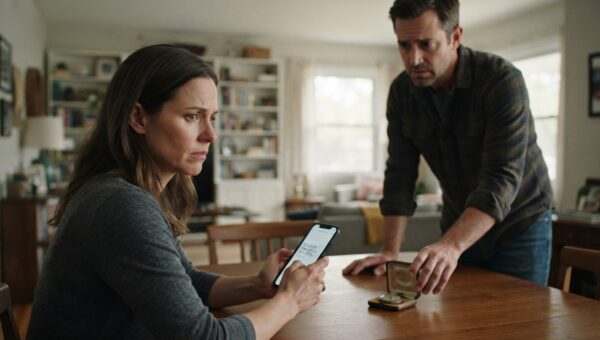
“Clara, what is this?” Mother demanded, pushing past me into the hallway without waiting for an invitation. “The title company just called me. They said the deed transfer for Maple Street was blocked by a trust amendment filed last month. They said you own the property.”
I closed the front door slowly, leaning back against the wood. I didn’t invite her to sit down.
“Grandma left the house to the trust, Mom,” I said, my voice entirely level. “The lawyer filed it before she died.”
“That’s impossible!” Danielle shouted from the entryway, stepping inside. “Vance read the will! The house was supposed to be hers! You tricked her, Clara! You manipulated an old woman while her mind was going!”
“Her mind was sharper than yours ever was, Danielle,” I replied, looking straight at my sister. “She knew exactly what she was doing. She knew who drove her to her cardiology appointments, and she knew who only showed up when the estate was being divided.”
Mother’s face went white, then mottled red. She dropped the papers onto the small entry table. “We are going to contest this in court. We’ll hire an attorney tomorrow morning. You cannot steal our inheritance.”
“You can talk to Mr. Vance about it,” I said, pointing toward the front door. “Or you can talk to the trust administrator. But you aren’t getting Maple Street.”
They stayed for ten minutes, shouting threats and accusations that bounced off the walls of my small house before they finally stormed out to Danielle’s car, tires screaming against the asphalt as they backed down the driveway.
I watched them go from the living room window. My hands weren’t shaking anymore. The heavy knot of hurt that had sat in my chest since the church basement reading began to dissolve, replaced by a quiet, steady peace.
ENDING
The legal challenges lasted nearly six months. My mother and sister hired two different lawyers, trying to prove undue influence and mental incapacity, but the notary public’s video deposition, the medical records confirming Grandma’s complete lucidity until her final day, and the airtight trust documents held firm at every turn.
In the end, they dropped the suit when the legal fees threatened to swallow the value of the car Danielle had received.
I didn’t sell the house on Maple Street. Instead, I packed up my few belongings, locked my old apartment door, and moved back into the brick house where Grandma had raised me.
On a bright spring afternoon, I was sitting at the wooden kitchen table peeling an apple with the same paring knife Grandma used to use. The old framed photograph of the two of us at the zoo, now fitted with clean glass and a fresh backing, hung securely on the living room wall where the sunlight caught the edges of the walnut frame.
I cut a slice of apple, ate it slowly, and looked out the window at the garden where the tulips Grandma planted were finally beginning to push through the dark spring soil.