PART 1
The afternoon sunlight slanted low across my living room rug, catching the floating dust motes in the quiet air. My five-year-old daughter, Lily, sat cross-legged on the floral carpet surrounded by a scatter of plastic dolls and miniature hairbrushes. I was sitting in my usual armchair with a cup of chamomile tea, listening to the soft murmur of her playtime dialogue, enjoying the simple peace of a Tuesday afternoon when her mother was still at work.
Wait. Let me get that straight. I wasn’t the mother sitting there watching her. I was the mother at work. I was standing behind the front counter at CVS, ringing up prescriptions and greeting elderly neighbors on a fourteen-dollar-and-fifty-cent-an-hour wage, while my little girl spent her afternoons with my husband, Mark.
We had been married four years. For the first three, Mark had been kind, steady, and good with Lily. When rent went up to fourteen hundred dollars a month across our town, Mark stepped in and covered it completely without a single complaint. I called him a godsend to my friends at work, grateful that we finally had breathing room after years of scraping by.
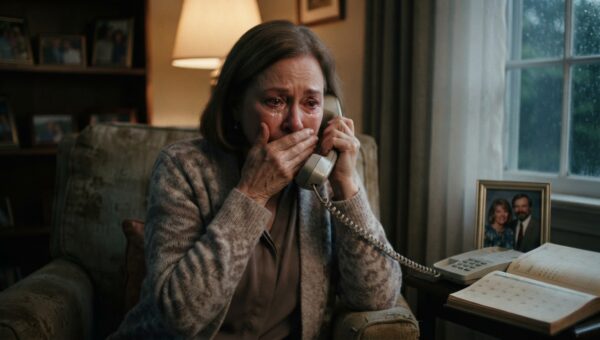
Then the phone on the pharmacy counter rang.
It was 2:15 in the afternoon. Caller ID showed Oak Creek Elementary. My chest tightened with that familiar, cold dread every working mother knows. School calls during the shift usually mean a fever, a playground scrape, or a stomach bug.
“Mrs. Miller?” a calm, professional voice asked.
“Yes. Is Lily okay?” I asked, my fingers gripping the edge of the register plastic.
“Lily is physically safe, ma’am,” the school counselor said carefully. “This is Ms. Vance. Can you step away from your shift and come down to the school right now? We need you in the counselor’s office.”
“Is she hurt?”
“Please just come,” she said.
I didn’t ask permission from my supervisor. I dropped my laminated name tag onto the counter, grabbed my canvas purse from the breakroom hook, and ran out through the sliding glass doors into the parking lot. I didn’t care about the fourteen-dollar-an-hour register or the line of customers waiting behind the cough syrup display. I got into my sedan and drove to the school in twelve minutes, running a yellow light on Maple Street that I usually would have stopped for.
When I hurried through the double glass doors of the elementary school, the hallway smelled of floor wax and cafeteria cleaner.
The principal met me at the end of the corridor and led me straight into the counselor’s office.
Lily was sitting on a blue vinyl couch holding a small brown teddy bear with a missing eye. Her hair was neat, but her little shoulders were hunched forward.
Ms. Vance stood up from her desk and closed the door softly behind me.
“Mrs. Miller, thank you for coming so quickly,” Ms. Vance said, her voice quiet. “Your daughter’s kindergarten teacher brought her to my office thirty minutes ago after a drawing exercise during art class.”
I dropped to my knees in front of the couch, taking Lily’s small, cold hands in mine. “Lily, baby, what’s wrong? Did something happen?”
Lily wouldn’t look at my eyes. She stared at the hem of my cardigan.
“She didn’t want to tell us at first,” Ms. Vance continued, stepping closer. “She drew a picture of her bedroom with the lights turned off.
When her teacher asked her about it, Lily said she has a bedtime game with her stepdad.”
My breath caught in my throat.
“She described it as a game,” Ms. Vance said, her voice dropping an octave. “He turns off the lights and presses on her ribs. She said it hurts, but he tells her good girls don’t cry.”
PART 2
The linoleum floor beneath my sneakers felt like it was tilting away. I couldn’t stand up. My knees gave out completely, and I slid down until I was sitting flat on the office floor, holding onto Lily’s knees like an anchor in a storm.
Four years married. Four years of trusting a man who paid the fourteen-hundred-dollar rent, who brought home takeout on Friday nights, who kissed my forehead when I came home with aching feet from the pharmacy register.
“Does he… does he do this often?” I asked, the words feeling dry and heavy on my tongue.
“She said it happens at bedtime when you’re working the late shift at CVS,” Ms. Vance said gently, kneeling beside me. “She thought it was something all daddies did. She only mentioned it because her teacher asked why she looked sleepy during story hour.”
I looked at Lily’s small face. The realization that my daughter had been enduring pain in the dark while I stood under fluorescent lights selling cold medicine to strangers hit me with a physical force that left me gasping for air.
“We’re going home, baby,” I whispered, pulling her into my arms so hard she let out a small breath. “We’re going right now.”
I didn’t drive back to the house on Elm Street. I drove straight to the local police precinct two blocks from the school.
The front desk officer listened to my broken, shaking sentences for less than two minutes before he hit a switch on his desk intercom. Within three minutes, a detective in a plain gray jacket named Officer Hayes walked out into the lobby. He took one look at my face and Lily’s clutching hands, and he led us back into a private interview room with a round wooden table.
Officer Hayes didn’t treat me like an hysterical mother. He spoke to Lily with incredible patience, offering her a fresh box of colored pencils and a pad of paper. He asked her two simple questions about her room and who turned off the lamp.
Lily answered in her quiet, small voice, describing the heavy hands, the dark room, and the warning that good girls don’t cry.
Officer Hayes stood up immediately. He walked to the door, opened it halfway, and barked a short order to another officer in the hallway.
“Radio for two units to head to the residence on Elm Street,” he said, his voice hard and efficient. “And call child protective services for an immediate home and school interview dispatch.”
He turned back to look at me, his expression grim.
“Ma’am, based on what your daughter described, your husband has been committing aggravated child abuse and assault under the cover of a domestic guardian,” Officer Hayes said quietly. “We are dispatching officers to pick him up at the house right now before he leaves his job site.”
PART 3
The next forty-eight hours were a blur of sterile rooms, social workers, medical examinations at the county hospital, and police statements. The pediatric nurse who examined Lily confirmed the internal bruising along her lower ribcage—evidence of steady, calculated pressure applied over months, hidden beneath normal clothing where no teacher would ever see it.
Mark was arrested at his construction site late Tuesday afternoon. When the officers brought him into the precinct holding area, he looked more annoyed than panicked, still wearing his dusty work boots and a high-visibility vest. He tried to claim it was rough housing, that kids bruise easily, that I was exaggerating routine bedtime play.
He didn’t look at me once during the arraignment hearing on Wednesday morning.
By Friday evening, the house on Elm Street was dead silent. I had packed two suitcases of our clothes while two police officers stood by the front porch to ensure Mark’s brother didn’t show up to cause trouble. We didn’t keep the apartment. We didn’t keep his money. I canceled the lease, cleared out our belongings, and moved us into a small, two-room guest cottage behind my elderly aunt’s house four miles away.
The fourteen-hundred-dollar rent was gone, but so was the terror that lived behind our front door.
On a rainy Sunday morning two weeks after the arrest, I sat at the small wooden kitchen table in my aunt’s cottage, going through the mail that had been forwarded from our old address. Among the grocery circulars and utility notices was a cream-colored envelope with my name written in neat, familiar handwriting.
It was a letter from Mark’s public defender, or so I thought at first. But when I slid my finger under the flap, I found a single sheet of lined notebook paper covered in Mark’s cramped, block-letter scrawl.
*Karen,* it began.
*You overreacted. It was just a way to keep her quiet when she wouldn’t go to sleep after your shifts. If you hadn’t gone running to the police like a lunatic, we could have handled this inside the family. You’re going to regret throwing away a provider over a bedtime game.*
I read the lines twice. There was no remorse. No apology for the bruised ribs, no acknowledgment of the terror in my five-year-old’s eyes. Just the same cold entitlement from a man who thought his rent money bought him ownership over our lives.
I folded the letter, walked over to the small wood-burning stove in the corner of the kitchen, and dropped the paper straight into the glowing embers.
ENDING
The legal proceedings took eight months. Because of Lily’s clear testimony, the medical records, and Mark’s own incriminating written statement, the case never went to a contested trial. He took a plea deal that carried a mandatory multi-year prison sentence with no possibility of early parole.
I went back to work at CVS two weeks after we moved into the cottage. The manager was kind, shifting my hours so I never had to work the late closing shift again.
On a bright Tuesday morning in June, exactly eight months after that phone call from the school counselor, I walked out the front door of the cottage and saw Lily sitting on the grass beneath the old apple tree. She was kneeling in the dirt, making two plastic dolls sit side by side in the green clover, talking to them in a soft, gentle voice about sharing crackers and drinking apple juice.
She wasn’t hiding anyone in a dark closet. She wasn’t whispering about being a good girl.
I walked over, sat down in the grass beside her, and handed her a blue plastic hairbrush. She looked up at me, flashed a quick, bright smile, and went right back to her game.
I watched her for a long moment, listening to the morning birds in the branches above us, feeling the solid, unshakeable earth beneath my knees.