PART 1
The kitchen table at my house was cluttered with tax forms and bank statements when my sister Brenda and her husband Carl sat down across from me and started crying. Not quiet tears, but the heavy, gasping kind that make your chest ache just watching. Carl kept pressing his hands over his face, his wedding ring catching the overhead light, while Brenda clutched a crumpled paper napkin as if it were a life preserver.
They told me the bank had sent the final notice. foreclosure. Three years of struggling with Carl’s failing contracting business, two bad medical years, and a second mortgage they never should have signed had finally caught up to them. If they didn’t come up with seven hundred and fifty thousand dollars by the end of the month, the marshals would be at the door, and they and my teenage niece Chloe would be out on the street.
“We wouldn’t ask if there was anyone else, Sarah,” Brenda sobbed, leaning across the table to grab my hands. Her fingers were freezing. “You know we wouldn’t. We’ve tried every lender in the state. They looked at Carl’s credit score and laughed us out of the office. You’re the only person in this world who has anything saved. Please. We’ll pay you back every single cent. With interest. Just save our home.”
I looked at Carl, my brother-in-law of twenty years, a man who had always taken pride in being a provider.
Seeing him stare down at his boots, completely broken, did something to me. That house had been our family anchor after our parents passed away. It was where Brenda and I grew up, where we dyed Easter eggs on the back patio, and where Chloe took her first steps.
I didn’t make them sign a paper. I didn’t call a lawyer to draft a formal promissory note. We were family. In our house, family meant that when someone was drowning, you pulled them into the boat without stopping to negotiate the salvage fee.
The next morning, I went down to the credit union and arranged the wire transfer. Seven hundred and fifty thousand dollars. It drained the bulk of the retirement account I had spent thirty-one years building as a senior accountant at the county water district.
Brenda called me that afternoon, crying tears of relief, promising a family dinner the following Sunday to celebrate our new beginning.
Sunday came and went. No dinner. No phone call. When I called Brenda on Tuesday, she sounded rushed, told me they were still buried in unpacking boxes, and promised to swing by soon.
Soon turned into six months. Then a year. Then two. Whenever I reached out, there was always an excuse. Carl was working late shifts trying to catch up on old debts. Brenda had a migraine. Chloe was studying for midterms. They lived just twenty minutes away, but they felt as distant as the moon.
I told myself to be patient. I told myself they were just ashamed of how close they had come to losing everything and needed time to heal their pride.
Then came the afternoon at the hardware store in downtown Oak Creek.
PART 2
I was standing in the plumbing aisle looking for a replacement washer for my kitchen sink when someone tapped my shoulder. I turned around and found Arthur Gable, an old friend from the county offices who had retired to Florida two years prior, standing there with a cart full of PVC pipes.
“Sarah?” Arthur said, his face lighting up with a familiar grin. “Well, I’ll be. I thought you moved down south with Brenda and Carl.”
The PVC pipe in my hand almost slipped from my fingers. “What did you say?” I asked, my voice dropping an octave.
Arthur stopped smiling, noticing the sudden stiffness in my posture. “Brenda and Carl. You know. Down in Sarasota. Or was it Naples? My memory is like a sieve these days.”
My stomach dropped so hard I felt lightheaded. “Arthur, Brenda and Carl live on Maple Street in the west end. Their house is right down the road.”
Arthur shook his head slowly, frowning. “No, Sarah. They sold that house three years ago. Right after the auction notice. Didn’t you know? They packed up the moving van about three days after the papers cleared. Carl told everyone at the Elks Lodge that you helped them settle their debts so they could finally afford that early retirement they’d been dreaming about in Florida.”
I stared at him, the fluorescent lights of the hardware store buzzing overhead like a swarm of angry hornets. “Retirement,” I whispered.
“Well, yeah,” Arthur said, looking uncomfortable now, realizing he had stumbled into something heavy. “They bought a place down near the coast. Carl posted photos of the boat on Facebook all last summer. You mean to tell me you didn’t know?”
I didn’t answer him. I set the plumbing washer back on the metal shelf, turned around, and walked out of the store without buying a thing. My truck keys shook so badly in my hand it took me three tries to get the ignition to turn.
I drove straight to Maple Street.
The house looked different. The green shutters had been painted a bright, modern gray, and a sleek black SUV I didn’t recognize was parked in the driveway. The mailbox didn’t have Brenda’s name on it anymore; it had a neat brass plaque with the name *HENDERSON*.
I sat in my truck across the street for twenty minutes, watching a stranger water the hydrangeas I had helped Brenda plant twenty years ago.
When I got home, I pulled out my phone and dialed Brenda’s cell number. It rang four times before going to voicemail. I didn’t leave a message. I dialed Carl’s number. Same thing.
Then I tried calling my niece Chloe. She answered on the second ring.
“Aunt Sarah?” she said, her voice sounding cautious and small.
“Chloe,” I said, keeping my breathing steady through sheer willpower. “Where are you?”
There was a long, terrible silence on the other end of the line. I could hear the sound of ocean waves crashing in the background, muffled by the wind.
“We’re… we’re in Florida, Aunt Sarah,” she whispered.
“Your parents told me they used the money to save the house on Maple Street,” I said, every word tasting like ash.
“No,” Chloe said, her voice breaking. “Dad said the house was too far underwater to save anyway. He said you gave us the money so we could buy the place by the water. He said you wanted us to have a fresh start. Didn’t you?”
PART 3
The next morning, I called a lawyer whose office was located in a brick building two blocks from the county courthouse. Her name was Evelyn Vance, a sharp-eyed woman with silver hair who listened to my story while tapping a tortoise-shell pen against a yellow legal pad.
When I finished, explaining how I had handed over seven hundred and fifty thousand dollars without a single signature, Evelyn didn’t look at me with pity. She looked at me with professional regret.
“Without a written agreement, Sarah, proving that this was a loan rather than an unconditional gift is going to be an uphill battle,” Evelyn said gently. “Especially if they claim you gave it to them freely to help them relocate.”
“They lied to my face,” I said, my voice shaking with a cold, quiet fury that had been building all night. “They told me they were losing the house.”
“Do you have text messages? Emails? Bank memos?” Evelyn asked.
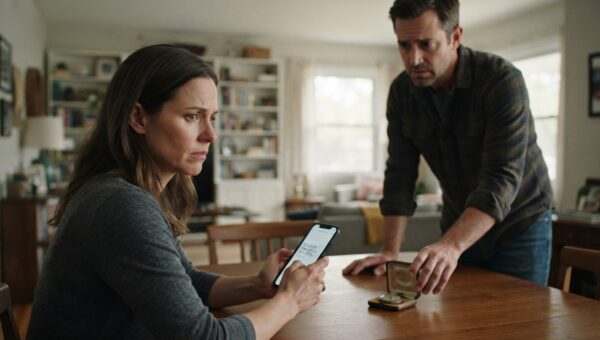
I pulled my phone from my purse and opened our text history. For three years, I had kept every message. Most of them were short. *Thanks for checking in, busy with work.* *We’ll call Sunday.* But right there, dated three days before the wire transfer, was a text from Brenda: *Please Sarah, the bank is taking the house. We have nowhere to go. We need the 750k to pay off the mortgage lien and keep the deed.*
Evelyn leaned over my phone, reading the screen twice. Then she looked up, a small, grim smile touching the corner of her mouth.
“That right there is a written representation of purpose,” Evelyn said, tapping the screen. “They asked for funds explicitly to resolve a specific debt on a specific property. When they used those funds for an entirely different purpose—namely, purchasing unencumbered real estate in another state—that crosses the line from a broken family promise into fraudulent inducement and unjust enrichment.”
“Can we get it back?” I asked.
“We can freeze their assets in this state, place a lien on their new property down in Florida through interstate counsel, and compel a forensic accounting of every dollar,” Evelyn said. “It won’t be quick, and it won’t be quiet. But we can make sure they don’t enjoy a single dime of your retirement.”
I signed the retainer papers right then and there, writing the check from the small operating account I had left after draining my main reserves.
Three weeks later, Brenda and Carl were served with federal and state civil summonses while sitting on the deck of their Florida home.
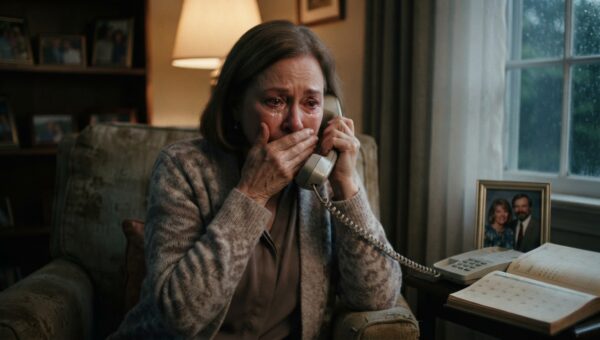
The phone call came that evening. It was Brenda, her voice shrill and hysterical, screaming through the speakerphone.
“How could you do this, Sarah?” she shrieked. “We’re your family! You sent lawyers to our door like common criminals! We needed a fresh start, and you had millions sitting in that bank account doing nothing!”
I listened to her scream for nearly a minute, letting all the years of Sunday dinners, holiday cards, and quiet sacrifices wash away in the noise.
When she finally paused to catch her breath, I spoke.
“You didn’t ask for a fresh start, Brenda,” I said quietly. “You asked me to save a home you had already decided to abandon. And you lied to do it.”
“We don’t owe you anything!” she sobbed, her voice dropping into a frantic plea. “You never made us sign a contract! You gave it to us!”
“Let the judge decide what I gave you,” I said.
And I hung up the phone.
ENDING
The legal battle took fourteen months. In the end, the Florida property was ordered into receivership, and the remaining funds were seized and returned to my account, alongside a mandatory judgment against Carl’s future earnings to cover the difference they had already spent on their boat and furnishings.
They lost the Florida house. They had to move into a small, rented two-bedroom apartment three blocks from the county line, living on whatever Carl could make doing freelance contracting work.
I didn’t take any pleasure in their fall. But something inside me settled into a deep, quiet peace.
Last Tuesday, I walked into the credit union downtown to redeposit the recovered funds back into my retirement account. The young teller at the counter smiled brightly as she processed the paperwork, handing me my updated receipt with a polite nod.
I looked down at the slip of paper, folded it neatly twice, and slid it into the side pocket of my purse.
On the drive home, I passed the house on Maple Street. The new owners had painted the front door a cheerful shade of yellow. I didn’t slow down. I just kept my eyes on the road ahead, turned up the radio, and drove on.