PART 1
The envelope on my kitchen counter had a handwritten return address from my sister Clara, and my hands started shaking before I even slit the paper with a butter knife. For eight years, I sent my mother two thousand dollars every single month without fail. My sister sent nothing. Not a check, not a wire, not a card with a twenty inside.
When people asked how Mom managed her assisted living bills and her steep prescription costs after dad passed, I smiled and said we were all doing our best.
I never mentioned Clara. I covered for her because I thought she was struggling with her husband’s remodeling business and raising three kids in that big house across town.
Then came my forty-fifth birthday.
Mom invited me over for Sunday pot roast, just the two of us at the old laminate table where we used to color outside the lines. After dinner, she cleared her throat, pushed her glasses up her nose, and reached into the pocket of her floral cardigan. She pulled out a folded yellow legal paper with neat cursive writing covering both sides.
“I wanted you to have this now so it’s all settled,” Mom said, sliding the paper across the vinyl tablecloth toward my coffee mug. “I updated my will last week. I am leaving the house to you, Sarah.”
I stared at the thick white fold of the paper, feeling a strange tightness in my chest. That house was our family home on Maple Street, worth at least four hundred thousand dollars in the current market.
“Mom, you don’t have to do that,” I said quietly, looking up into her tired gray eyes. “Clara has three kids. They need the space more than I do. Besides, she has her own family to think about.”
Mom’s expression hardened in a way I hadn’t seen in years. She pulled her hand back and rested it flat on the table.
“Clara has two commercial properties and a vacation cabin in the Poconos that her husband bought her five years ago,” Mom said, her voice dropping into a flat, cold register. “She has kids. You don’t. You’ve spent every spare dollar you earned keeping a roof over my head while she pretended I didn’t exist. The house goes to you. Period.”
I said nothing. I sat there with my hands folded in my lap, feeling the heavy, complicated truth of her words settle over my shoulders. I didn’t argue with her. I knew she was right, but I also knew what kind of storm those words were going to unleash the moment Clara found out.
It took exactly six days for the storm to hit my front porch.
PART 2
The doorbell rang at seven o’clock on a Saturday morning, long before I had even finished my first cup of coffee. When I pulled the wooden door open, Clara was standing on the welcome mat, her face flushed red and her coat half-buttoned over her sweater. She didn’t wait for me to say hello. She pushed past me into the hallway, her sneakers squeaking against the hardwood floor.
“Are you out of your mind?” Clara hissed, spinning around to face me in the small entryway.
Her hands were clenched into tight fists at her sides. “Mom called me yesterday. She told me what she did with the deed. How could you manipulate an old woman into cutting her own daughter and grandchildren out of her estate?”
I stood by the coat rack, holding my coffee mug with both hands to keep them from trembling. “I didn’t manipulate anyone, Clara. I didn’t even know she was changing the will.”
“Don’t lie to me!” Clara shouted, her voice rising so loud I could hear Mrs. Gable’s window sliding open next door. “For eight years you’ve been playing the martyr, acting like you’re the only dutiful daughter in the family, while I was busy raising three teenagers! And now you think you get the house? Four hundred thousand dollars of family property handed to you on a silver platter just because you couldn’t be bothered to have a family of your own?”
The words hit me right behind the eyes, sharp and hot. I had spent eight years working sixty-hour weeks at the dental clinic, skipping vacations, and driving a ten-year-old sedan so I could wire two thousand dollars to our mother’s account every single month without missing a single deadline.
“I didn’t ask for the house, Clara,” I said, keeping my voice low and steady through sheer willpower. “And if you wanted a share of Mom’s care, maybe you should have sent her more than zero dollars a month for the last decade.”
Clara sneered, her chin lifting in righteous anger. “Mom didn’t need my money! She had her pension and her savings! You chose to give her your extra cash to make yourself feel important because your husband left you with nothing!”
That was when the floor fell out from under the conversation.
“My husband didn’t leave me with nothing,” I said slowly, narrowing my eyes. “We divorced because we wanted different things. But how would you know that? You haven’t asked me a single real question about my life since 2018.”
Clara took a step back, her chest heaving as she pointed a trembling finger at my face. “This isn’t over, Sarah. I talked to a probate lawyer yesterday afternoon. A court is going to look at Mom’s mental state, and they’re going to see that you isolated her and manipulated her into rewriting her will behind my back. You won’t get a single brick of that house.”
She turned on her heel, wrenched the front door open, and slammed it so hard the framed picture of our grandparents on the wall rattled against the plaster.
PART 3
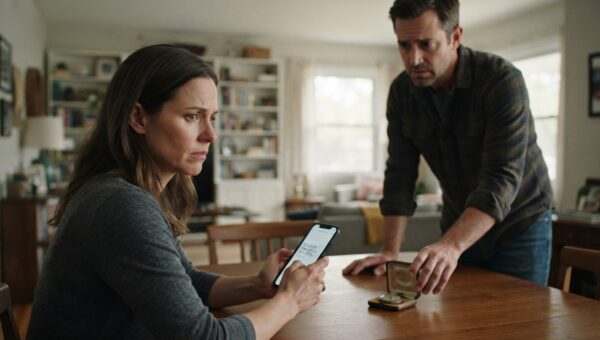
I didn’t call Mom. I didn’t want to upset her over the weekend while she was resting at the facility. Instead, I spent Saturday afternoon sitting at my kitchen table looking through eight years of bank statements and wire transfer receipts, printing out every confirmation number and monthly debit record from my online portal.
By Monday morning, I had a thick manila folder containing ninety-six separate transfer receipts totaling one hundred and ninety-two thousand dollars, all sent directly to Mom’s assisted living account to cover the shortfall between her pension and her actual care costs.
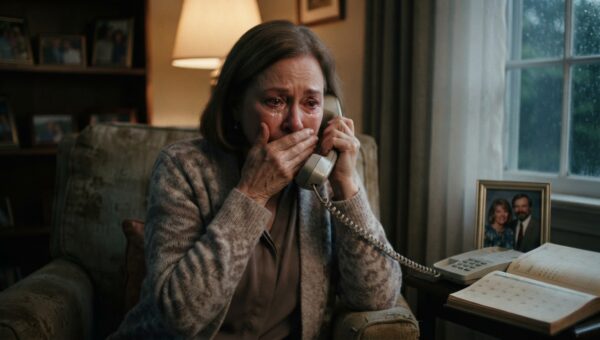
I drove out to the facility during my lunch break, finding Mom sitting by the sunroom window with a crossword puzzle book open in her lap. When she saw me walk in carrying the manila folder, she set the book aside and patted the empty chair beside her.
“Clara came to see me yesterday,” Mom said before I even sat down. Her voice sounded tired, carrying the weight of a battle she had fought forty times before we were even born.
“I know,” I said, taking her thin, soft hand in mine. “She’s threatening to contest the will. She says I manipulated you.”
Mom let out a dry, humorless laugh, shaking her head. “Let her talk to a lawyer. The lawyer who drew up the deed is my second cousin Arthur, and he put a mental competency clause right in the preamble. Clara thinks money is the only thing that measures a child’s love. She forgot that bills have to be paid with real currency, not excuses.”
She reached out and tapped the top of the manila folder. “Did you bring what I asked you to bring?”
I opened the folder and slid the summary sheet across the small table. It listed every single dollar I had sent over the last eight years, itemized by month, along with the receipts from the nursing facility showing exactly what those funds paid for when Mom’s account hit zero.
“Arthur has copies of everything,” Mom said, looking over the figures with quiet satisfaction. “If Clara wants to take this to probate, her lawyer is going to have to explain to a judge why my other daughter contributed zero dollars toward my housing and medical care while you paid for my roof, my heat, and my nurse’s aides for nearly a decade. Under state law, a court can adjust an estate distribution to offset unpaid care contributions from ungrateful children.”
I stared at her, surprised. “You planned this?”
“I didn’t plan for Clara to be so selfish,” Mom said softly, squeezing my fingers. “I just prepared for the day when her greed finally outweighed her patience. That house is yours, Sarah. Every nail in it. Don’t you dare give an inch to her.”
ENDING
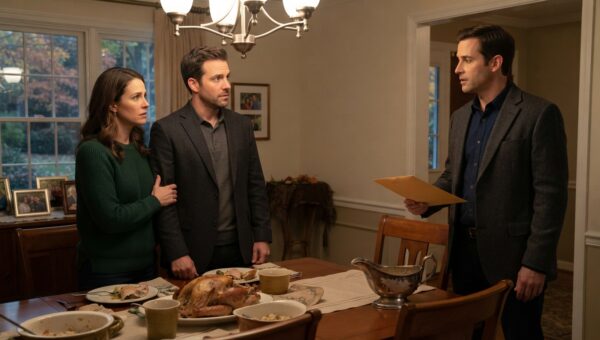
Two weeks later, Clara’s lawyer sent me a formal letter on heavy cream stationery demanding that I renounce all claims to the Maple Street property within ten days or face a full civil suit for undue influence.
I didn’t call Clara. I didn’t yell, and I didn’t write an angry letter back. I simply took my manila folder down to Arthur’s office on Tuesday morning, signed the final acceptance paperwork for the deed transfer, and let Arthur handle the response.
Arthur attached a simple three-page addendum to his reply: a complete accounting of the one hundred and ninety-two thousand dollars I had spent keeping Mom alive while Clara bought a vacation cabin in the Poconos, along with a polite note suggesting that any probate judge would likely dock Clara’s future inheritance by double that amount to cover back-pay caregiving costs.
The lawsuit threat vanished by Thursday afternoon. No phone call came from Clara, and no text messages arrived to argue about family loyalty.
On a quiet Friday evening after work, I drove over to Maple Street. The house was empty now, waiting for the movers to clear out the remaining boxes before I put it on the market or moved in myself. I unlocked the front door, walked into the kitchen, and set my keys on the laminate table.
The room was quiet except for the hum of the refrigerator in the corner. I reached out, picked up Mom’s old copper kettle from the stove, and filled it with water for a cup of tea, standing by the window as the sun dipped below the trees across the street.