I should have known that peace is only ever rented. For eleven years I walked around in the quiet rhythm of my little shop on Elm Street, sweeping up dry eucalyptus leaves and cutting stems at a sharp forty-five-degree angle, pretending that the twelve years before that never happened. I convinced myself that Elena Vance the florist was the real person, and that the other Elena, the one whose thumbprint opened secure black-site terminals and whose signature sealed threat assessments under JSOC oversight, was just a ghost I had put to sleep. But ghosts do not stay down when someone hurts your kid.
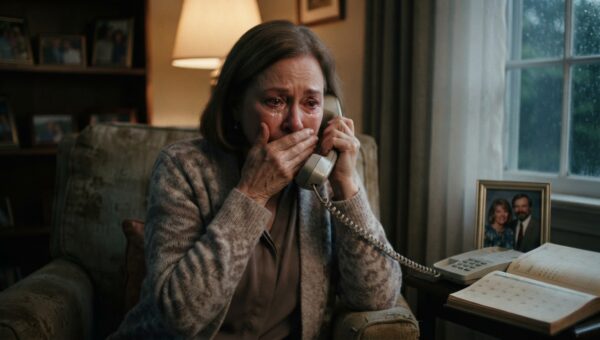
The notification came at 11:15 on a Tuesday night, right as I was finishing up an order of white snapdragons for a Wednesday morning funeral. The phone on the workbench did not ring with a normal tone; it had that harsh, digital stutter that county dispatchers use when they are calling next of kin. A tired voice told me Maya had been brought into St. Jude’s emergency ward after being dropped off anonymously at the ambulance bay. When I got to the hospital, the smell of bleach and old linoleum hit me the same way waiting rooms always did, but nothing in my old life prepared me for the sight of my nineteen-year-old sophomore daughter hooked to a nasal cannula with her face bruised purple and her right arm set in a temporary splint.
The intake nurse tried to use that gentle, professional voice that always means bad news.
She said Maya had suffered severe blunt-force trauma to the head and ribs after being pulled from an off-campus lodge where the fraternity heirs had been throwing a private party. Maya had spent the last two months gathering documentation on hazing and campus assaults, threatening to take her findings straight to the regents. The boys who jumped her thought they were untouchable because their fathers owned the town council, the zoning board, and half the local judges. They dumped her body by the back doors like garbage and went back to their drinks.
I sat in that hard plastic chair beside Maya’s bed for hours, watching the steady green blip of her heart monitor, feeling the old, cold machinery inside my head boot back up from a very long sleep. By 3:30 in the morning, the hospital hallway outside the ICU started echoing with expensive leather shoes and low, confident murmurs.
Richard Sterling, the billionaire real estate tycoon whose son Julian led the assault, walked through the door like he owned the entire county. He brought an entourage: his corporate defense lawyer, Mr. Hayes, and two other shaken fathers who looked like they were used to buying their way out of property disputes.
Sterling did not even look at Maya in the bed. He stopped three feet from my chair and laid a leather folder down on the small rolling tray next to the water pitcher. His voice had that smooth, oily timber of a man who had never heard the word no in his entire life. He gave me a thin, practiced smile that did not reach his eyes. “Mrs. Vance, let us be entirely practical about this unfortunate misunderstanding,” he said, tapping the leather folder with a heavy gold ring.
I did not stand up. I just looked at him, feeling the familiar, dead silence settle behind my ribs.
Sterling opened the folder to reveal a pre-drafted non-disclosure agreement and a cashier’s check made out to my name for exactly one million dollars. He leaned in closer, dropping his voice to a conspiratorial whisper. “Your daughter is a bright girl, but she made a foolish mistake wandering where she shouldn’t have. Take the draft, sign the papers before sunrise, and your shop gets a very generous expansion grant. Refuse, and you will find out just how expensive it is to fight people who actually run this state.”
Hayes, the lawyer, nodded like a well-trained dog backing up its master. “The local police have already classified this as a disputed fraternity altercation with no cooperating witnesses,” Hayes said. “You have no leverage, Mrs. Vance.”
I looked at the check. I looked at Julian’s father, whose smug arrogance was so thick it practically smelled like old bourbon and bad intentions. They thought I was just a tired single mother who ran a florist shop and sold funeral wreaths. They had no idea why my old military personnel file remained permanently classified under a BLACK compartment code, or why my former commanding officer still owed me his pension and his life.
I picked up the check with two fingers, looked him straight in the eye, and tore it right down the middle, letting the pieces flutter onto the linoleum floor. I followed it by ripping the NDA across twice more. Sterling’s smile vanished instantly, his face tightening into an ugly, mottled red.
“You’re making a terrible mistake,” Sterling hissed, his voice rising in panic.
“Get out of my daughter’s room,” I said. My voice did not shake. It had the flat, absolute authority that made junior officers stand at attention twelve years ago.
Sterling backed up a step, staring at me like I had suddenly grown a second head, while Hayes grabbed his elbow and muttered something about calling Detective Miller at the precinct. They backed out into the corridor, slamming the private ward door behind them. The moment the latch clicked, I locked the deadbolt, pulled my old encrypted satellite communicator out of the bottom lining of my battered leather handbag, and keyed in the seven-digit direct routing code for General Marcus Cole.
Marcus picked up on the second ring, his voice gruff and instantly awake from a secure desk in Washington. “Vance,” he said, dropping all pleasantries. “It is eleven years. You don’t use this channel unless the world is burning down.”
“It’s burning, Marcus,” I said, keeping my eyes on Maya’s pale face. “I need Title 18 federal intervention, immediate asset freezing for three specific family estates, and a federal marshal detail dispatched to St. Jude’s Memorial Hospital in the Ozarks before local PD overwrites the ER security footage.”
There was a brief pause on the line, the sound of a keyboard clacking with practiced speed, and then Marcus let out a long, heavy sigh that sounded like iron on stone. “Who touched her, Elena?” he asked.
“Sterling’s boy,” I said. “And the senator’s son. They’ve got local police protection locked down.”
“Give me ten minutes,” Marcus said, and the line went dead.
The next hour moved with the terrifying, beautiful precision of a black-ops extraction. By 4:55 AM, heavy black SUVs with federal plates pulled up silently to the emergency entrance, bypassing the local police cruisers entirely. United States Marshals in tactical vests secured the perimeter, while a digital forensics team seized the hospital’s main server backup before Detective Miller could even reach the front desk to demand the drive-up security tapes.
At 5:30 AM, Detective Miller arrived at the ICU entrance, his badge out and his face flushed with bureaucratic anger, demanding to know what federal jurisdiction applied to a local fraternity scuffle. Before he could finish his sentence, two federal marshals stepped out from either side of the doorway, gently relieving him of his sidearm and handing him a federal preservation order for obstruction of justice. Miller went completely gray, looking from the marshals to me sitting quietly in my chair by Maya’s bed.
At sunrise, federal warrants were executed simultaneously across the county. Richard Sterling was pulled out of his gated estate in handcuffs while live local news crews, tipped off by the federal press desk, recorded every second of his expensive suit getting wrinkled in the damp morning grass. His son Julian and the other two heirs were lifted straight from their fraternity house beds, still half-asleep and wearing designer pajamas, bundled into unmarked vans under non-bailable federal racketeering and civil rights violation charges.
By 7:00 AM, the hospital corridor outside was completely silent again, save for the hum of the vending machines and the gentle rhythm of the IV pump. The morning sun finally cleared the top of the ridge, casting a warm, pale shaft of light through the high window and across the foot of Maya’s bed.
The door clicked open softly, and Marcus stepped inside in a plain gray civilian suit, looking older than he had a decade ago, carrying a small paper cup of coffee. He stopped at the foot of the bed, looked down at Maya, and then looked over at me with a quiet, respectful nod. “The arraignments are set for noon,” Marcus said quietly. “Sterling’s lawyers are already trying to cut deals, but the judge is federal. They aren’t going anywhere.”
“Thank you, Marcus,” I said.
He tipped his head, gave my shoulder a brief, heavy squeeze, and slipped back out into the hall, leaving me alone with my daughter.
A moment later, Maya’s eyelashes fluttered. She groaned softly, her fingers twitching against the white cotton blanket as her eyes fought to focus against the morning light. I leaned in close, wrapping my hand around her cold fingers, feeling the familiar, stubborn grip that she must have gotten from me.
“Mom?” she whispered, her voice rough and cracked.
“I’m right here, sweet girl,” I said, brushing a stray lock of hair away from her forehead. “You’re safe. Nobody is ever going to touch you again.”
She blinked, looking past me toward the windowsill where a simple glass vase sat filled with fresh white gardenias I had brought in from my shop window just before midnight, their sweet, clean scent finally pushing the smell of the hospital away for good.