The cedar chest in my dad’s workshop has always smelled like old linseed oil and pine shavings. On our wedding day, though, the house smelled like stale ham and the cheap sparkling cider Steve insisted we buy in bulk. At 39, after three different rings in my drawer that didn’t stick, I figured practical was better than fireworks. Dad was thrilled when Steve started coming around for Sunday coffee six months ago.
Arthur, my dad, was seventy-one then and his memory had started playing little tricks on him. He’d forget where he put the 3/4-inch chisel or repeat a story about the 1984 flood twice in one afternoon. Steve would just nod, slap Dad on the knee, and say, “Don’t you worry about a thing, Artie, I’ve got you covered.”
The wedding was small because I didn’t see the point in a circus. Just thirty people in the backyard under strung yellow lights that flickered every time the compressor on the back porch fridge kicked on. I wore a plain ivory sheath dress with a sweetheart neckline that I bought off the rack at a boutique down in Cairo. When Steve slipped that heavy gold band onto my finger, his thumb felt cold. I told myself it was just nerves. Forty-eight is an awkward age for a bachelor to finally settle down, and I figured he was just feeling the weight of it.
Dad cried when he hugged us both, wiping his eyes on his flannel shirtsleeve and telling anyone who would listen that Steve was the best thing to happen to our family since the lumber yard expanded back in ninety-two.
After the guests cleared out and the paper plates went into the trash, Steve drove us the three miles to his place out on Route 3. It was a brick rancher with a wide gravel driveway that needed grading. Steve unlocked the front door, dropped his car keys on the side table with a loud rattle, and rubbed the back of his neck. He looked tired. Not the good tired of a wedding night, but the twitchy, wired tired of a man who had too many plates spinning in the air at once. He told me to go on and get comfortable in the master bedroom while he checked the back sprinklers.
I kicked off my sensible block-heel shoes right there in the hallway because my arches were screaming, and I walked down the dim corridor.
The bedroom was neat. Too neat. There were no pictures of me on the dresser yet, just a stack of trade magazines and a leather briefcase unsnapped on the desk. I went into the adjoining bathroom, turned on the cold water, and started scrubbing the heavy pancake makeup off my face with a rough hotel washcloth. My ears were still ringing from the aunt who cornered me by the punch bowl to ask if we were planning on trying for a family right away. I pulled the hairpins out one by one, tossing them onto the glass shelf by the sink until my scalp finally relaxed. It took ten minutes to peel myself out of the ivory dress without ripping the zipper, hanging it carefully over the back of the white painted bathroom door so it wouldn’t crease.
When I stepped back into the bedroom to grab my overnight bag, I didn’t hear Steve at the sprinklers. I heard his voice coming through the cracked door of the small walk-in closet. It was low, sharp, and stripped of the warm, easygoing drawl he always used around Dad. I stopped dead on the braided rug. My bare feet felt the chill of the pine floorboards coming up through the weave.
“I told you, the signature is already notarized,” Steve was saying into his phone, his voice hard as gravel. “Old man didn’t read the rider. Thought it was just regular medical proxy stuff for the daughter. We clear the title by Monday or the whole thing goes under.”
I didn’t move. My brain felt like it was stuck in heavy mud, trying to process the words before they could sink in. Steve shifted his weight inside the closet, the hangers clattering against the metal rod. “Yeah, once the deed transfer clears through the county clerk, we list the lot to the commercial outfit in Paducah. She’s none the wiser. She thinks she finally got her white picket fence.”
A cold sweat broke out across my collarbone, right where the lace of my slip ended. I took two silent steps toward the desk by the window. Sitting right there on top of a stack of bank statements was a green legal folder with my father’s unsteady handwriting scrawled across the bottom signature line in black ink. Arthur. Right above the date from that very morning, signed in the kitchen while the coffee was still dripping. Beside it was a thick appraisal report for the downtown woodshop, the one Dad built with his own two hands back when my mother was still alive. Estimated market value: three hundred and forty thousand dollars. Steve’s personal mortgage default notices were pinned to the back page with a yellow Post-it note.
“Who are you talking to?” I said. My voice didn’t shake. That surprised me the most. It sounded flat, like someone reading a weather report on the local radio.
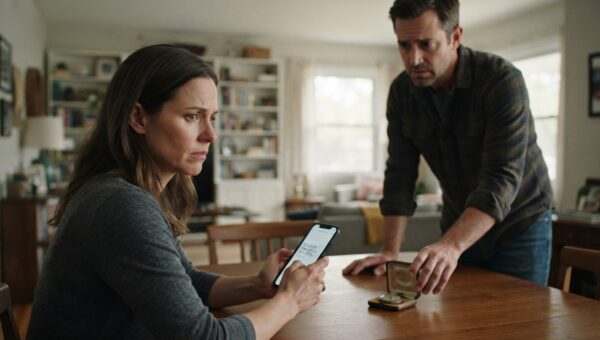
Steve spun around so fast he dropped his phone against the doorframe. The plastic case cracked with a small pop. He stared at me standing there in my plain cotton slip with my bare feet on his rug, the heavy gold band still loose on my ring finger. For three seconds, neither of us breathed. The digital clock on the nightstand clicked over to 11:42.
“Honey,” Steve started, taking a half-step forward with his hands raised palms up, the exact same gesture he used when he was trying to smooth over a botched drywall job with a client. “Honey, you’re not supposed to be out here yet. Let me explain how this works.”
“Don’t call me that,” I said. I reached down and picked up the green folder. The paper felt heavy and cheap in my palms. “Explain what, Steve? Explain why my dad signed over his commercial license to a man he’s known for six months?”
“Your dad’s failing, Clara,” Steve snapped, the nice-guy mask slipping off entirely as his face flushed a dull, ugly red. “He can’t run that shop anymore. You know it and I know it. He forgets where his drills are half the time. Someone has to liquidate the assets before the city condemns the property for back taxes, and your old man sure as hell wasn’t going to do it himself.”
“So you married me,” I said, looking right into his eyes and seeing nothing at all behind them. “You spent six months bringing over doughnuts and listening to his old war stories just so you could get a clean title on a hardware warehouse.”
“I saved you both a mess,” Steve said, his voice rising, stepping closer now, his chin jutting out. “You’re thirty-nine years old, Clara. You were living in a back room at your father’s house working part-time at the dry cleaners. I gave you a home. I gave him peace of mind. We’re husband and wife now, whether you like the paperwork or not.”
I looked down at the gold band on my finger. It felt like a lead weight. I didn’t scream. I didn’t throw a lamp. I just slid the heavy ring off, my knuckle catching slightly on the dry skin, and set it right in the middle of the open ledger over my father’s signature.
“We aren’t anything,” I told him.
I walked past him into the bathroom, grabbed my canvas overnight bag from the floor, and shoved my clothes back inside without folding them. Steve stayed in the doorway of the closet, watching me with a look that wasn’t regret or fear, just irritation. Like a customer whose car part didn’t arrive on time.
“You walk out that front door tonight and you’ve got nothing,” Steve said behind me as I zipped the bag shut. “You try to undo those filings tomorrow and you’ll find out how hard it is to prove mental incompetence without a court battle that’ll cost your old man every cent he’s got left.”
“Try me,” I said.
I grabbed the green folder off the desk, tucked it under my arm, and walked out through the living room. The front door was still unlocked. I stepped out onto the porch into the damp midnight air, the gravel crunching hard under my bare feet as I ran back toward my old car parked by the hedge.
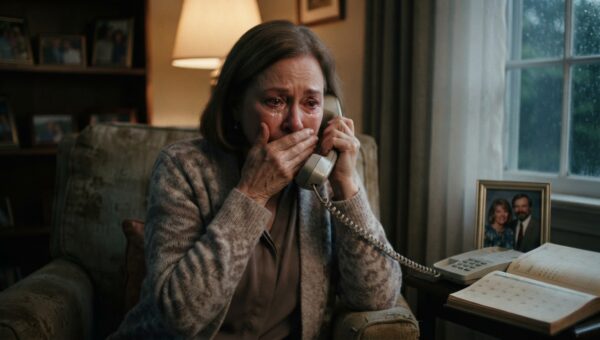
The drive back to Dad’s house took four minutes. The porch light was still burning, throwing a yellow circle over the faded green siding. I didn’t knock. I let myself in through the back kitchen door, the familiar squeak of the screen door sounding like a gunshot in the quiet house. Dad was sitting up in his old armchair by the television, the screen showing static because the local station had signed off for the night. He was wearing his flannel pajama top with the top button missing, looking down at his slippers like he was waiting for someone to tell him where he was.
“Clara?” Dad looked up, blinking against the kitchen light, his voice small and confused. “Honey, what are you doing back? Where’s Steve?”
I walked over, knelt down on the worn linoleum right beside his chair, and laid the green folder across his knees. My hands finally started to shake then, a fine, cold tremor that wouldn’t stop, but I kept my voice steady for him.
“Dad,” I said, putting my hand over his liver-spotted knuckles. “We need to call the lawyer first thing in the morning. We’re going to tear these papers up.”
Dad looked down at the signature he’d made twelve hours ago, his brow furrowing as the fog in his mind slowly parted just enough for him to see the trap. He didn’t ask questions. He just reached out with his heavy, calloused hand, the one that had held a chisel for fifty years, and covered mine.
The next morning at 8:30, Dad and I sat across the walnut desk from Mr. Henderson, our family attorney for thirty years. We had the folder, the text transcripts I’d downloaded from Steve’s tablet before leaving the house, and a pot of black coffee Henderson’s secretary brought in on a cracked porcelain tray. By noon, the emergency injunction was filed, the power of attorney was revoked under grounds of fraudulent misrepresentation, and the county clerk had been notified in person. Steve didn’t call once. He knew the game was over before the ink on the marriage license had even dried.
Now, three weeks later, the workshop smells like fresh red oak and turpentine again. Dad stands by the band saw in his grease-stained apron, squaring up a length of maple for a customer down in Murphysboro, while I wipe down the counter with a damp rag. We don’t talk about Steve. We don’t need to. The sun hits the copper kettle on the shelf just right, throwing a warm circle across the wood where we used to map out our cuts, and for the first time in my life, that’s enough.