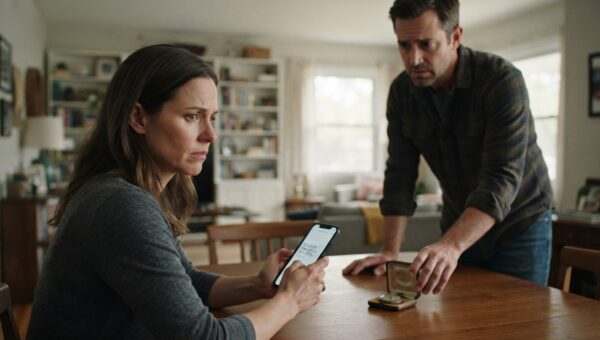
The phone on the supply shelf at the clinic rang at 11:42 in the morning, right as I was middle-sorting a shipment of gauze pads and antiseptic wash. Greg never called me at work unless the car wouldn’t start or he forgot which shelf the spare breaker switches lived on in the basement. I picked up the receiver with my thumb still smeared in printer ink from the inventory log.
“Pack your things,” he said without even saying hello. His voice had that sharp, thin edge it always got when he was trying out a new persona in front of his golf buddies. “Uncle Arthur just died. And the probate firm just wired the preliminary figures. I inherited $800 million. Be out of the apartment before I get home.”
I didn’t drop the phone. I didn’t even drop the roll of gauze. I just looked out the frosted basement window at the wet gravel in the alley behind the clinic where the delivery trucks always backed up too fast.
“Eight hundred million,” I said. It sounded like a number from a board game.
“Every cent,” Greg said, and I could hear the wet, heavy grin in his teeth. “You’re done here. Don’t touch my desk. Don’t touch the good pans. Just get your clothes into a couple of duffels and leave the key on the counter. I’ve already got the papers printed.”
Then he hung up. He didn’t wait to see if I heard him. He never did.
The drive back across town took twelve minutes because the traffic lights on Fourth Street were timed for people who didn’t have anywhere important to be. I didn’t rush. I parked the sedan by the old maple tree that always dropped those sticky pods on the windshield and walked up the three concrete steps to our front door.
The apartment smelled like nothing. We had lived there four years, and it had always smelled like Greg’s cedar-scented soap and cheap coffee beans, but today it smelled like cold air and paper.
The divorce papers were sitting right there on the white quartz kitchen island, weighted down by a heavy glass paperweight Greg had taken from his father’s desk. They weren’t rough drafts. They were completely filled out, signed in his own neat, aggressive handwriting on the petitioner lines, with my name misspelled by one letter in the middle name slot just like it always was when he filled out tax forms without asking.
He had checked every box that waived alimony, every box that split our zero joint savings down the middle, and every box that signed away any claim to future property.
He hadn’t even waited to see the body in the ground before he started clearing the deck. That was Greg all over. He lived his whole life like he was running behind schedule for a train that had already left the station.
I didn’t cry. I didn’t even feel that hot, heavy ache behind my ribs that people talk about when their lives fall apart. I felt hollowed out, the way you feel after you spend six hours cleaning out a stove that hasn’t been scrubbed since the previous tenants moved out. I walked to the hall closet, grabbed my blue canvas bag from the top shelf, and filled it with four shirts, two pairs of work trousers, and the small leather box with my mother’s garnet earrings inside.
Then I sat down at the kitchen island, picked up the ballpoint pen Greg had left beside the papers, and signed my name on every designated line. I made sure my signature was clear and straight, right across the little blue sticker his lawyer had marked with an arrow.
I laid the pen down beside the paperweight, dropped the apartment key on top of the stack, and walked back out to the car.
By three o’clock that afternoon, I was sitting in a vinyl booth at the diner three blocks from my new temporary room, eating a turkey sandwich that tasted mostly like mustard and white bread. The phone in my pocket stayed quiet for the rest of the shift at the clinic, and it stayed quiet through the evening news while I watched the local weather man point at a low-pressure system moving down from the mountains.
The first call came at 8:14 on a Thursday morning, exactly thirty-two hours after I left the apartment.
It wasn’t Greg. It was his mother, Evelyn, and her voice sounded like someone was dragging a bag of gravel across a tin roof.
“Clara,” she said without any preamble, which was her way of pretending she hadn’t spent the last three years telling the bridge club I was too quiet for her family. “Greg is beside himself. You need to come back over here right now and fix this.”
“Fix what, Evelyn?” I asked, holding the coffee mug against my cheek because the kitchen in my new place had a drafty window.
“The paperwork,” she snapped, and I could hear papers rustling in the background like a flock of startled birds. “You signed it too fast. You didn’t even consult a lawyer. You can’t just leave him high and dry like this when everything is sitting right here on the table.”
“He told me to leave,” I said plainly. “I left.”
“That was before he talked to the estate lawyer again,” she hissed, her voice dropping an octave into that conspiratorial tone she used whenever she was trying to get the dry cleaner to waive a rush fee. “Mr. Vance is here right now. He’s saying… well, he’s saying things aren’t quite the way Greg thought they were.”
“Tell Mr. Vance I’m busy with the morning tray count,” I said, and hung up the phone.
The second call came forty minutes later from Greg himself, but I let it go straight to voicemail because I knew what his voice sounded like when he was scared. It sounded small. Like a boy who had dropped his father’s watch down a well and was trying to figure out how to lie about the splash.
I didn’t have to guess what Mr. Vance had told them. Uncle Arthur wasn’t just some old man who lived out by the reservoir with two dogs and a rusted-out Ford pickup. He was the one who built the timber supply business from three mules and a crosscut saw back in the fifties, and he had spent forty of those years watching his brother’s family, Greg’s side, spend every dime they could touch on new trucks, country club dues, and worthless land speculation.
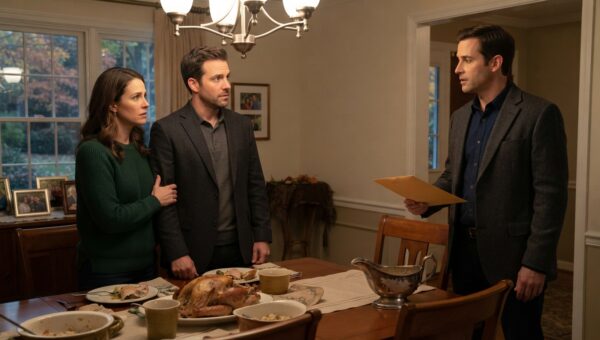
Arthur didn’t like people who threw things away just because they found something shinier. That was why he spent every Thanksgiving dinner staring at Greg across the turkey platter with those flat, pale eyes that didn’t miss a thing.
By Friday afternoon, the story had come together through the girls at the clinic switchboard who listened to the courthouse scanner while they filed insurance claims. Greg had rushed down to the probate office with his preliminary notification letter on Tuesday morning, waving the $800 million figure like a winning lottery ticket and demanding that the estate administrator expedite the first distribution wire before the weekend.
He hadn’t read the fine print in the trust codicil attached to the second page of the probate notification. The part that Mr. Vance had highlighted in yellow ink right before Greg snatched the folder off the desk.
The entire $800 million estate was contingent upon one absolute, non-negotiable condition: the primary beneficiary had to remain legally married and in good standing with his spouse of record as of the date of the decedent’s death through the final distribution audit. If the beneficiary initiated divorce, separation, or legal abandonment prior to the sixty-day probate window closing, the entire sum defaulted immediately to the regional vocational trade trust and the children’s hospital endowment.
Zero dollars for Greg. Just the honor of being the man who legally divorced his way out of an empire while simultaneously signing away his rights to any shared marital property because he had checked the wrong box on the summary waiver.
The sun was just starting to clear the ridge behind the lumber yard when Greg finally showed up at the clinic parking lot on Friday evening.
He looked different. His coat was missing one of the leather buttons on the cuff, and his hair was sticking up on the left side like he’d been sleeping in his car with the heater running. He caught up with me right by the sliding glass doors where the linen truck drops off the clean sheets every other day.
“Clara,” he said, and his voice cracked right in the middle like dry pine under a boot. “Clara, you have to help me. You have to sign an affidavit saying the filing was a mistake. Vance says we can file an emergency retraction if we both swear it was just a domestic misunderstanding.”
I stopped right there on the concrete slab, with a bundle of laundry invoices in my left hand and the cold wind coming off the river biting through my sweater.
“A misunderstanding,” I said.
“I was stressed,” he muttered, looking down at his shoes the way he used to do when he backed the mower into the garden fence. “Uncle Arthur dying… the money… my head wasn’t on straight. You know how my mother gets when things get complicated. She was the one who said we needed to protect the assets until the dust settled.”
“There aren’t any assets, Greg,” I told him, and my voice didn’t shake once. “You made sure of that when you filled out the petitioner lines.”
“We can fix it,” he reached out, his fingers hovering near my sleeve like he wanted to grab my arm but remembered just in time that I wouldn’t let him. “If you just sign the paper for Vance, the trust goes through. We’ll split it fifty-fifty. I swear to God, Clara. Four hundred million dollars. You can buy whatever you want. You can stop working here today.”
“I like working here,” I said. “The people here don’t yell about the laundry.”
“Clara, please,” he whispered, and for a second he looked like he was going to drop right there on the greasy concrete by the linen bins. “The bank already approved the bridge loan for the new house on the bluff. I used the probate letter as collateral. If the trust doesn’t clear on Monday, they’re going to foreclose on the truck. They’re going to take everything.”
“Then I guess you better start looking for a smaller truck,” I said.
I stepped around him, pushed through the sliding glass doors, and let them hiss shut behind me.
The courtroom on Monday morning smelled like floor wax and old wool. It took less than ten minutes for the judge to bang his little wooden block and make the separation final, since neither of us had any lawyers left to argue over the toaster or the microwave. Greg didn’t even look at me from the other side of the aisle; he sat between his mother and his sister with his hands jammed deep into his coat pockets, staring fixedly at a water stain on the wood paneling near the flag.
By noon, I was back in my own kitchen.
It wasn’t much of a kitchen, just two burners, a small white refrigerator that hummed like a refrigerator twice its age, and a square wooden table with one leg that needed a folded matchbook underneath to keep it from rocking.
I set my coffee mug down on the wood surface, right next to the crisp, stamped single-status court decree that had my name spelled correctly for once. The morning light came through the uncurtained window and hit the paper just right, making the black ink look sharp and clean against the grain.
Outside, the delivery truck shifted gears down on the corner, its engine roaring once before fading out into the hum of the afternoon traffic. The phone in the hallway didn’t ring. It didn’t buzz. It just sat there on the shelf, quiet as a stone, while the coffee went slowly cold in my hand.